
Last updated October 16, 2026
 Water damage drying
 Fire & smoke cleanup
 Mold remediation
 Storm response
 Sewage cleanup
 Reconstruction
Free visual inspection and a written scope of work before any mitigation begins - photos, moisture readings, and drying logs go in your claim file
The scope we write is the scope we bill. Anything new gets shown to you, in writing, before we touch it.
Get your free estimateSeasonal Damage Restoration Care for Orlando: Year-Round Homeowner’s Guide
Orlando doesn’t have four seasons in any way that maps to a standard home-maintenance calendar. It has two aggressive seasons and two transition windows, each carrying a completely different set of water damage risks. Treating them as “spring” and “fall” leaves homeowners blindsided every year by the same preventable losses. This guide breaks down what actually happens to Orlando homes month by month, what fails first, and the one maintenance action that matters most in each phase, so you can stop reacting to damage and start getting ahead of it.
Restoration work we handle
Quick Answer
Orlando’s seasonal damage cycle breaks into four phases: Pre-Wet Season (April – May), Hurricane Season (June – November), Dry Transition (December – January), and Peak-Dry (February – March). Each phase has a dominant risk type: AC condensate failures and wind-driven rain in the wet months, slab leaks and humidity-related material stress in the dry months. The single most effective year-round habit is a quarterly moisture and drainage check on your AC system, roof flashing, and plumbing, because those three systems cause roughly 80% of the water damage calls we see in Orlando.
Table of Contents
- The Four-Phase Orlando Calendar: What Actually Happens to Your Home
- Pre-Wet Season (April – May): The 30-Day Window That Prevents Most Summer Damage
- Hurricane Season (June – November): Why Condensate Lines Fail When Humidity Spikes
- Dry Transition (December – January): When Slab Leaks Become Detectable
- Peak-Dry (February – March): The Season Nobody Watches
- Pre-Hurricane Roof and Flashing Audit: What a Drone Inspection Should Document
- High Humidity and Building Materials: Why a Dry-Looking Wall Can Still Be Wet
- Post-Storm Re-Entry Assessment: The Room-by-Room Order That Saves You Money
- Common Mistakes to Avoid
- When to Call a Professional
- Frequently Asked Questions
- The Bottom Line
The Four-Phase Orlando Calendar: What Actually Happens to Your Home
June 1 is not just the official start of hurricane season in Florida. It’s also the week Orlando’s relative humidity spikes past 80%, air conditioners run 18+ hours a day, and condensate drain failures jump to their annual peak, a convergence that restoration crews refer to informally as “claims season.” That spike doesn’t come out of nowhere. It’s the predictable end of a 60-day buildup that starts in early April, and it repeats every single year.
Here’s what the real Orlando calendar looks like from a water damage perspective:
- Pre-Wet Season (April – May): Humidity climbs from the 50s into the 70s. AC systems start running hard for the first time since fall. This is when clogged condensate lines, dirty coils, and failing drain pans surface. The dominant risk is interior water intrusion from your own HVAC system. The one maintenance action that matters most: have your condensate drain line flushed and your drain pan inspected before Memorial Day.
- Hurricane Season (June – November): Daily thunderstorms, afternoon downpours, and the occasional named storm. Wind-driven rain finds every gap in flashing, every worn shingle, every caulk joint that dried out over winter. The dominant risk is wind-driven rain intrusion through the building envelope. The one action that matters most: a roof and flashing audit before the first named storm forms, not after the watch is issued.
- Dry Transition (December – January): Humidity drops, temperatures moderate, and the ground begins to contract. Slab leaks that started months ago become detectable because the soil pulls away from pipes and the symptoms finally show up. The dominant risk is under-slab plumbing failure. The one action that matters most: watch your water bill and check for hot spots on tile floors.
- Peak-Dry (February – March): The driest stretch of the year, when Orlando’s clay-heavy soil shrinks to its maximum. Pipes under slabs shift, and existing slab leaks get worse. The dominant risk is slab leak escalation and mold growth in walls that never fully dried from summer. The one action that matters most: a whole-home moisture scan of exterior walls and baseboards using a moisture meter, not just a visual check.
The reason most Orlando homeowners get blindsided isn’t that these risks are unknown. It’s that they’re spaced far enough apart that by the time one season’s lesson is learned, the next season’s problem is already here. This guide walks through each phase in detail, including what we actually see on job sites in Orlando and what you can do about it before it becomes a restoration project.
Pre-Wet Season (April – May): The 30-Day Window That Prevents Most Summer Damage
Every April in Orlando, the same thing happens: AC systems that sat mostly idle since November get pressed back into full-time duty, and within two to four weeks, the condensate drain lines that worked fine last summer start overflowing. The reason is simple. Over the dry season, dust, algae, and biofilm accumulate inside the drain line. When the AC starts running hard again, condensation volume jumps, and a line that could handle low flow suddenly backs up.
What does an AC condensate failure actually look like in an Orlando home?
- Water stains appear on the ceiling below an attic air handler, often in a hallway or closet.
- Baseboards near a closet-mounted air handler start to warp or discolor.
- You hear a dripping sound inside a wall when the AC cycles on.
- Your digital thermostat reads a humidity level that won’t drop below 60%, even when the AC is running constantly.
- Dark spots form on the underside of the air handler platform or the drywall surrounding it.
None of these are subtle, but all of them are easy to ignore in the first few weeks. A small drip in the attic soaks into insulation, spreads across the ceiling joists, and saturates drywall from above. By the time you see the stain on the ceiling, the affected area is typically two to three times larger than the visible watermark. That’s why the single highest-leverage action in April is a condensate drain line flush. It costs less than a dinner out and takes about 20 minutes. If you’re not comfortable doing it yourself, any HVAC tech or Water Damage Restoration in Orlando company can handle it during a routine maintenance visit.
The second April task is checking your AC drain pan. Pans crack with age, and a cracked pan fails exactly when the system is working hardest. We’ve replaced more rusted-through drain pans in May than any other month, and the pattern is always the same: the pan was original to the unit, the unit was 12 to 15 years old, and the homeowner had no idea it was rusting until the ceiling below it fell in.
Beyond the AC system, April is also the month to walk your exterior perimeter and look at grading. Orlando’s summer rains are intense, and if the soil around your foundation slopes toward the house, every afternoon storm sends water toward your slab. Regrading a flower bed is cheap. Replacing flooring and drywall after a summer of water intrusion is not.
Hurricane Season (June – November): Why Condensate Lines Fail When Humidity Spikes
The headline risk of hurricane season is wind-driven rain. But the far more common, far more frequent damage we see in Orlando during these six months is interior water intrusion from AC condensate failures and humidity-related material stress. A named storm makes the news. A $4,000 ceiling repair from a backed-up condensate line doesn’t, but it happens hundreds of times more often across Orlando in any given summer.
Here’s the physics problem. Orlando’s summer humidity regularly sits above 80% relative humidity. Your AC is a dehumidifier as much as a cooler. It pulls moisture out of the air, and that moisture condenses on the evaporator coil, then drips into the drain pan and out through the condensate line. When outdoor humidity is 85%, the system produces dramatically more condensate than it does at 50% humidity. A drain line that was perfectly adequate in April can be overwhelmed by July. The line doesn’t just clog, it overflows, and because the system runs 18+ hours a day, the overflow can dump gallons of water into your attic or wall cavity before anyone notices.
Our technicians at Wendell Restoration Orlando home see the same pattern every summer: a homeowner calls about a small ceiling stain, and when we open the drywall, we find insulation soaked across half the joist bay. The water traveled. It always travels.
There’s a second humidity-driven problem most homeowners don’t know about: equilibrium moisture content. Wood framing and drywall are hygroscopic, which means they absorb moisture from the air around them. In Orlando’s summer, even indoor wood that has never been directly wetted can sit at 12% to 14% moisture content. That’s not high enough to cause damage on its own, but it’s high enough that when a small leak or condensation event happens, the material reaches its saturation point much faster than it would in a drier climate. A wall that looks dry can be holding moisture you can’t see, and the only way to know is with a moisture meter reading at multiple depths.
If you’re interested in the professional side of this, the process we use is called psychrometric drying, which simply means tracking the air’s moisture level so we know when your home is truly dry, not just surface-dry. That’s the difference between a repair that lasts and one that grows mold six months later. For Mold Remediation in Orlando, that distinction matters more than anywhere else in the country because our baseline humidity is already so high.
Dry Transition (December – January): When Slab Leaks Become Detectable
Most Orlando homeowners think of slab leaks as a random failure. They’re not. They’re seasonal, and the season is December and January.
Here’s what happens. Orlando’s soil, particularly in neighborhoods built on clay-heavy fill, expands when wet and contracts when dry. During the wet season, the soil around your foundation is saturated and swollen. It presses against the pipes under your slab and actually helps support them. When the dry season starts in December, that soil shrinks. It pulls away from the pipes, leaving small gaps and uneven support. If a pipe was already stressed, even slightly, that’s when it fails.
The symptom pattern is specific, and most people misread it:
- Hot spots on tile floors: A hot water line under the slab is leaking, and the heat is radiating up through the tile. If you walk barefoot and feel a warm patch that shouldn’t be there, that’s a slab leak until proven otherwise. Most people assume it’s a radiant heating system they don’t actually have.
- Water bill spikes without explanation: A slow slab leak can waste 10,000 gallons a month without ever showing visible water. Compare your December and January bills to the same months last year.
- The sound of running water when nothing is on: Turn off every fixture and appliance, put your ear to the floor in a quiet room, and listen. If you hear water moving, it’s moving somewhere it shouldn’t be.
- Cracks in flooring or baseboards: The water from a slab leak pools under the slab and then wicks up through the concrete, warping wood floors and lifting tile from below.
- Flashing condition at every roof penetration: Vents, pipes, skylights, and chimneys. Florida’s wind-driven rain doesn’t fall straight down. It comes in sideways at 40 to 60 mph, and it finds any gap in flashing that a calm-day visual inspection would miss.
- Valley flashing and shingle condition: Central Florida roofs take a beating from UV exposure and afternoon storms. Cracked, curling, or missing shingles in valleys are the most common entry point for wind-driven rain.
- Ridge vent and soffit vent integrity: These are designed to let air flow, not water. But if the ridge vent is loose or the soffit is cracked, high wind can push rain directly into your attic.
- Gutter and downspout attachment points: Loose gutters catch wind like sails and tear away from the fascia, taking a strip of shingles with them. Downspouts should extend at least 4 feet from the foundation.
- Drip edge condition: The metal strip along the roof edge that prevents water from wicking back under the shingles. Missing or corroded drip edge is invisible from the ground and an open door for wind-driven rain.
- Skylight and chimney sealant: The caulk and sealant around these openings degrades faster in Florida’s UV than anywhere else in the country. What looked fine in January can be cracked and separated by June.
- Attic (if accessible): Water enters at the top and travels down. Check for wet insulation, water trails on rafters, and daylight visible through the roof deck. This is where wind-driven rain intrusion shows up first, often hours before it reaches living spaces.
- Ceilings on the top floor: Look for discoloration, bubbling paint, or sagging. A ceiling stain that wasn’t there before the storm is the first visible sign of attic water intrusion.
- Exterior walls, top to bottom: Run your hand along the top of baseboards and check for dampness. Wind-driven rain can enter through wall penetrations and run down inside the wall cavity without leaving a visible stain until it pools at the bottom.
- Windows and door frames: Check the drywall around every window and door for softness or discoloration. Storm-driven rain often enters where the window flashing meets the rough opening, not through the window itself.
- Floors and baseboards: Look for warping, cupping, or discoloration. Water that entered the wall cavity or crawled in under an exterior door settles at the floor level first.
- Garage and utility rooms: Check the hot water heater, washing machine connections, and any plumbing penetrations through the slab. Storm surge and heavy rain saturate the ground, and hydrostatic pressure can force water up through the slab.
- Treating Orlando’s calendar like a northern state’s calendar. “Spring cleaning” and “fall maintenance” don’t map to Central Florida’s two aggressive seasons. If you’re prepping for winter in October, you’re already six months late for hurricane season prep.
- Assuming a visible water stain is the full extent of the damage. In Orlando’s summer humidity, the actual wetted area is typically two to three times larger than the visible watermark. The water traveled through insulation and joist bays before showing up on your ceiling.
- Drying a water event with household fans and dehumidifiers. Household equipment doesn’t move enough air volume or remove enough moisture to dry wall cavities below the 19% mold threshold in Orlando’s ambient humidity. The surface dries; the inside doesn’t.
- Ignoring a hot spot on tile flooring. In Orlando, that’s not radiant heating. It’s a hot water slab leak, and it’s actively damaging your subfloor and flooring every day you ignore it.
- Waiting until a hurricane watch to check your roof flashing. By the time a named storm is approaching Central Florida, every roofer and restoration company is booked. The audit needs to happen in May, not when the cone is already pointed at Orlando.
- Assuming the dry season means no water damage risk. December through March is when slab leaks become detectable and when hidden summer moisture finally dries out just enough to hide the problem. The dry season is for detection and repair, not for ignoring the property.
- Skipping the moisture meter after a “minor” water event. Orlando baselines are too high and the mold threshold is too close. If you don’t measure it, you don’t know if it’s dry. “Looks dry” is not a standard any professional would accept, and it shouldn’t be yours either.
In our experience, the “hot spot on tile, probably just the AC” assumption is the most common and most expensive misread in Orlando homes. By the time a homeowner calls us, the leak has usually been running for six to eight weeks, the flooring is damaged, and the subfloor moisture has crept into walls.
The one action that matters most in December and January: compare your water bill month over month and year over year, and have a plumber do a pressure test if the numbers jump. It’s a $150 to $300 diagnostic that can save you five figures in restoration work.
Peak-Dry (February – March): The Season Nobody Watches
February and March are Orlando’s driest months. The risk isn’t new water intrusion. It’s what happens to water that’s already inside your walls from the summer before.
Here’s the scenario we see every year. A home had a small water event in August, a condensate overflow or a minor roof leak. The homeowner dried the visible surface with towels and a fan, and it looked fine. But the moisture inside the wall cavity never actually left. During the warm, humid summer, the wall stayed damp enough for mold spores to colonize but not enough to show visible growth. Then February arrives with lower humidity, and the wall finally dries out. Homeowners assume the problem resolved itself. It didn’t. What actually happened is the moisture level dropped below the threshold for active growth, but the mold went dormant, not dead. It reactivates the moment humidity climbs back up in April or May.
This is why we recommend a whole-home moisture scan in February or March. A professional-grade moisture meter can read through drywall and detect elevated moisture content inside wall cavities, subfloors, and ceiling spaces. The threshold that matters is 19% moisture content. Above that, mold growth begins. Below that, it doesn’t. But “looks dry” and “is dry” are not the same thing, and in Orlando’s climate, the gap between them is measured in weeks, not days.
If a February moisture scan finds a wall cavity at 17% or 18%, that’s a warning sign. It means water got in at some point, didn’t fully dry, and is one humidity spike away from becoming an active mold problem. The fix is usually simple at that stage: remove the affected section of drywall, verify the framing is dry, and replace it. Wait until April, and the fix is a full Water Damage Repair in Orlando with antimicrobial treatment and structural drying.
February is also the best month to schedule any interior repairs that were deferred from the summer. Contractors in Orlando are less busy, materials are easier to source, and the dry air means new drywall and paint cure properly without fighting ambient humidity. If you had a summer water event that you “temporarily” patched, February is the time to actually fix it.
Pre-Hurricane Roof and Flashing Audit: What a Drone Inspection Should Document
The single best preparation for Orlando’s wind-driven rain season is a roof and flashing audit in May, before the first named storm forms. Waiting until a hurricane watch is issued means every roofer and restoration company in Central Florida is booked solid, and you’ll be triaging rather than preventing.
What should a proper audit document? Here’s the list we recommend, and this is exactly what a qualified drone inspection should capture:
A drone inspection with high-resolution photos should take 30 to 45 minutes for a standard Orlando home. The photos should be close enough to read the condition of sealant joints and flashing seams. If the report is just a wide-angle roof shot, it’s not an audit, it’s a flyover. The value is in the details.
If the audit finds issues, address them in May. The cost of replacing flashing or resealing a skylight in May is a fraction of the restoration cost if that same gap lets wind-driven rain into your attic during a July thunderstorm. And in Orlando, the July thunderstorm is a certainty, not a risk.
High Humidity and Building Materials: Why a Dry-Looking Wall Can Still Be Wet
Here’s a number that matters: 19% moisture content. That’s the threshold at which mold growth begins in wood and drywall. Below 19%, mold spores are present but dormant. Above 19%, they germinate and grow. In Orlando’s climate, the difference between a safe wall and a mold colony can be as little as 2% to 3% moisture content, which is invisible to the naked eye and undetectable by touch.
The concept behind this is equilibrium moisture content (EMC), which is the moisture level a material settles at based on the relative humidity and temperature of the surrounding air. In a dry climate, indoor wood framing might sit at 6% to 8% EMC. In Orlando, during the summer, it’s routinely 12% to 14%. That means Orlando homes live much closer to the danger line than homes in most of the country, and a small water event that would be trivial in Arizona can push an Orlando wall over the 19% threshold within hours.
This is why professional restoration in Orlando doesn’t rely on visual inspection. We use moisture meters with penetrating probes that read the actual moisture content inside the wall cavity, and we use psychrometric drying to calculate exactly how much water is in the air and how long it will take to remove it. The goal isn’t “looks dry.” The goal is a measurable moisture content that will actually stay below the mold threshold in Orlando’s ambient humidity.
What does this mean for a homeowner? Two things. First, after any water event in Orlando, even a small one, the risk of hidden moisture is higher than you think. Second, a wall that was wet and then “dried” with a household fan is almost certainly still above safe moisture levels inside the cavity, even if the surface feels dry. The only way to know is with a moisture meter, and the only way to fix it properly is with professional drying equipment, the kind we run every day from brands like Dri-Eaz and Phoenix.
Post-Storm Re-Entry Assessment: The Room-by-Room Order That Saves You Money
After a named storm passes Orlando, the instinct is to start checking windows and doors. That’s backwards. The correct order is based on how water moves through a structure, and checking in the right order can mean the difference between catching a small intrusion early and discovering a major problem days later.
Here’s the room-by-room order we recommend, and why:
When you find water intrusion, the question becomes who to call first. The answer depends on what you found. If there’s active water coming through the roof, call a roofer to tarp and stop the intrusion. If water is standing inside the home or saturating building materials, call a restoration company immediately, because the clock on mold growth starts as soon as materials hit 19% moisture content. If the damage is extensive and you’re filing an insurance claim, call your insurer and a public adjuster. The order matters: stop the water, dry the structure, then sort out the claim. Starting the claim while water is still entering the home means more damage, longer remediation, and a bigger fight with the insurance company.
Common Mistakes to Avoid
When to Call a Professional
Call a restoration professional when visible water damage is larger than a bathroom mat, when water has been sitting for more than 24 hours, when you can smell mustiness you can’t locate, when a water bill spike coincides with a warm spot on the floor, or when a storm has driven water into your attic or walls. These are not DIY situations. The equipment required to properly dry an Orlando home after water intrusion, professional-grade air movers and dehumidifiers from brands like Dri-Eaz and XPOWER, isn’t available at any hardware store, and the expertise to know when a wall is actually dry, not just surface-dry, comes from years of working in this specific climate. Wendell Restoration Orlando offers free estimates in Orlando, call (850) 771-2670 and a real person answers, 24/7.
Frequently Asked Questions
The single most important window is April through May, before Orlando’s humidity and storm season peaks. A pre-summer AC condensate line flush, roof flashing audit, and exterior grading check in this window prevents the majority of water damage we see throughout the rest of the year. Call (850) 771-2670 if you want a professional moisture assessment scheduled before June.
A dry-season water bill spike in Orlando usually means a slab leak caused by soil contraction pulling away from under-slab pipes. The soil around your foundation shrinks during the dry winter months, stressing pipes that were supported during the wet season, and small leaks become detectable as the bill climbs. Compare your December and January usage to the same months last year, and call a plumber or restoration company if the numbers jump without explanation.
Mold growth begins when building materials reach 19% moisture content, and in Orlando’s summer humidity, that threshold can be reached within 24 to 48 hours of a water event. Orlando homes live closer to that line than homes in drier climates because the ambient humidity already keeps wood framing at 12% to 14% moisture content before anything goes wrong. Call (850) 771-2670 for an assessment if you suspect hidden moisture.
No. Stop the water and start drying first, then sort out the insurance claim. Every day of delay in Orlando’s humidity pushes more material past the mold threshold, and your insurer will ask why you didn’t mitigate the damage sooner. A restoration company will document the damage with photos and moisture readings before any work starts, which actually strengthens your claim. Contact Water Damage Repair in Orlando for immediate assistance.
Restoration is the emergency work: water extraction, structural drying, and antimicrobial treatment to stop the damage and prevent mold. Repair is the reconstruction that follows: replacing drywall, flooring, trim, and paint to return your home to its pre-loss condition. Most Orlando water events require both, and a good restoration company will give you a written price for the full scope before work starts. Learn more about Water Damage Restoration in Orlando services.
You can’t know without a moisture meter. Visual inspection misses moisture inside wall cavities and under flooring, and in Orlando’s climate, the difference between safe and mold-susceptible is often invisible to the naked eye. A professional moisture scan in February or March, or after any storm event, gives you actual moisture content readings at multiple depths. Call (850) 771-2670 to schedule one before the next wet season starts.
The Bottom Line
Orlando’s damage cycle is predictable, and that predictability is the opportunity. Pre-Wet Season demands AC and drainage prep. Hurricane Season demands roof and flashing vigilance plus humidity awareness. Dry Transition demands slab leak detection. Peak-Dry demands moisture scanning and deferred repairs. The homeowners who get ahead of these cycles spend hundreds on prevention; the ones who react to them spend thousands on restoration. The single best habit is a quarterly walk-through of your AC system, roof penetrations, and plumbing with the right tools and the willingness to act on what you find. If you’re not sure what you’re looking at, ask. The assessment costs less than the mistake.
Written by Blake Sorensen, Owner at Wendell Restoration Orlando, serving Orlando since 2006.
See the difference
 Before
 After
After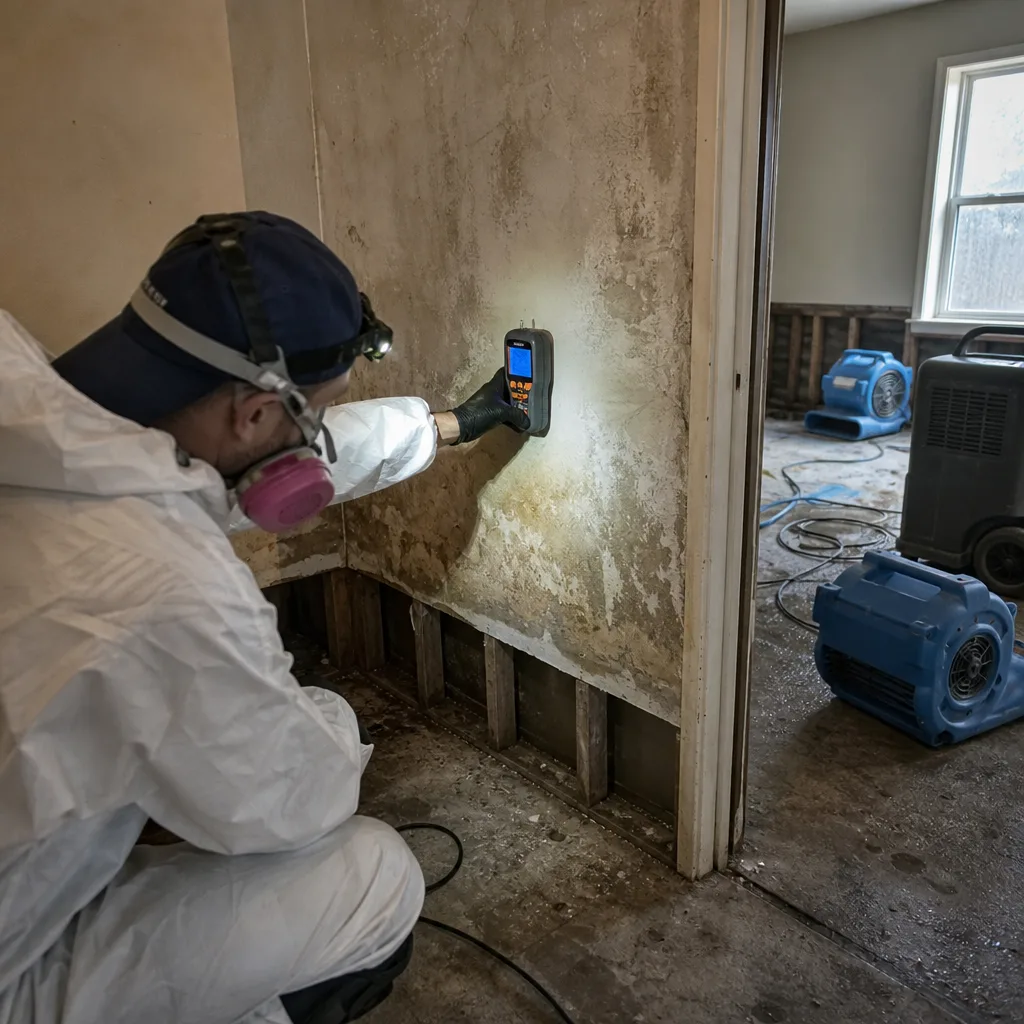 Before
 After
After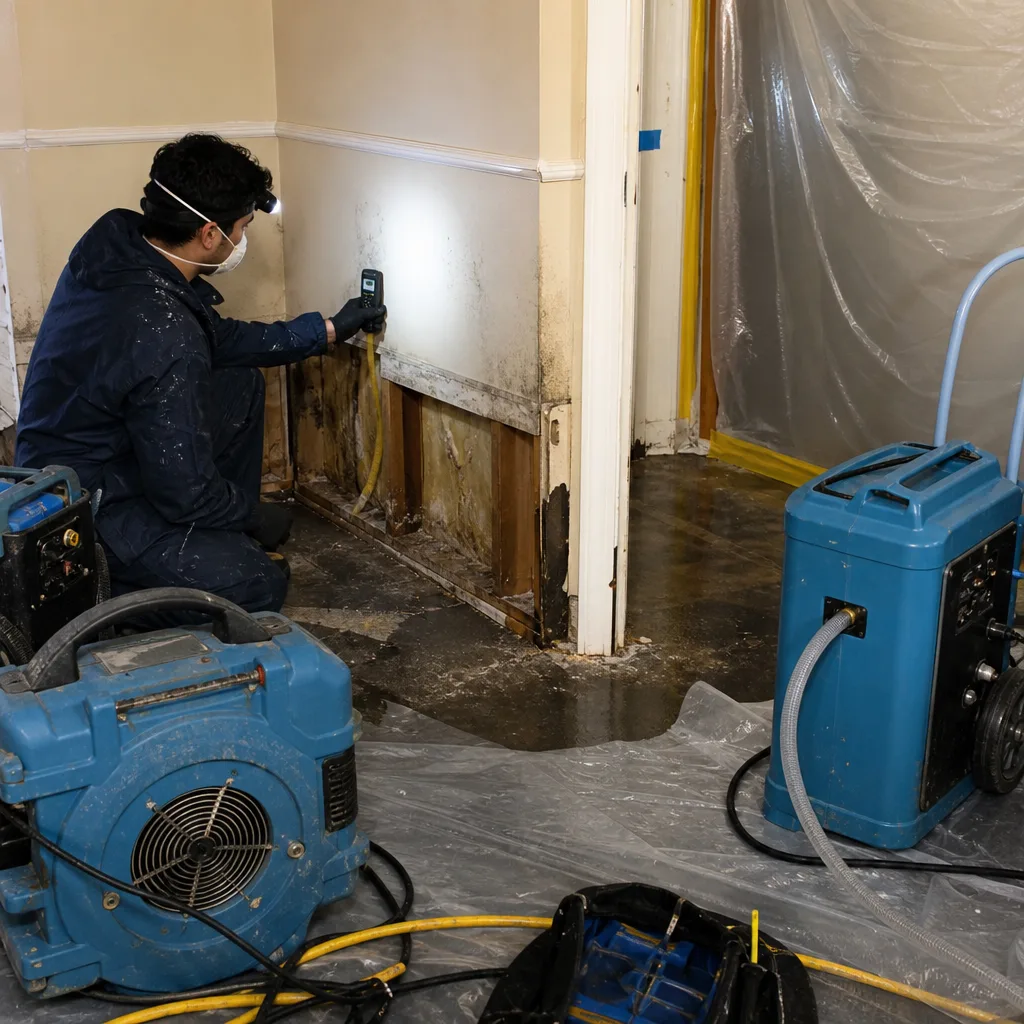 Before
 After
After