
Last updated October 16, 2026
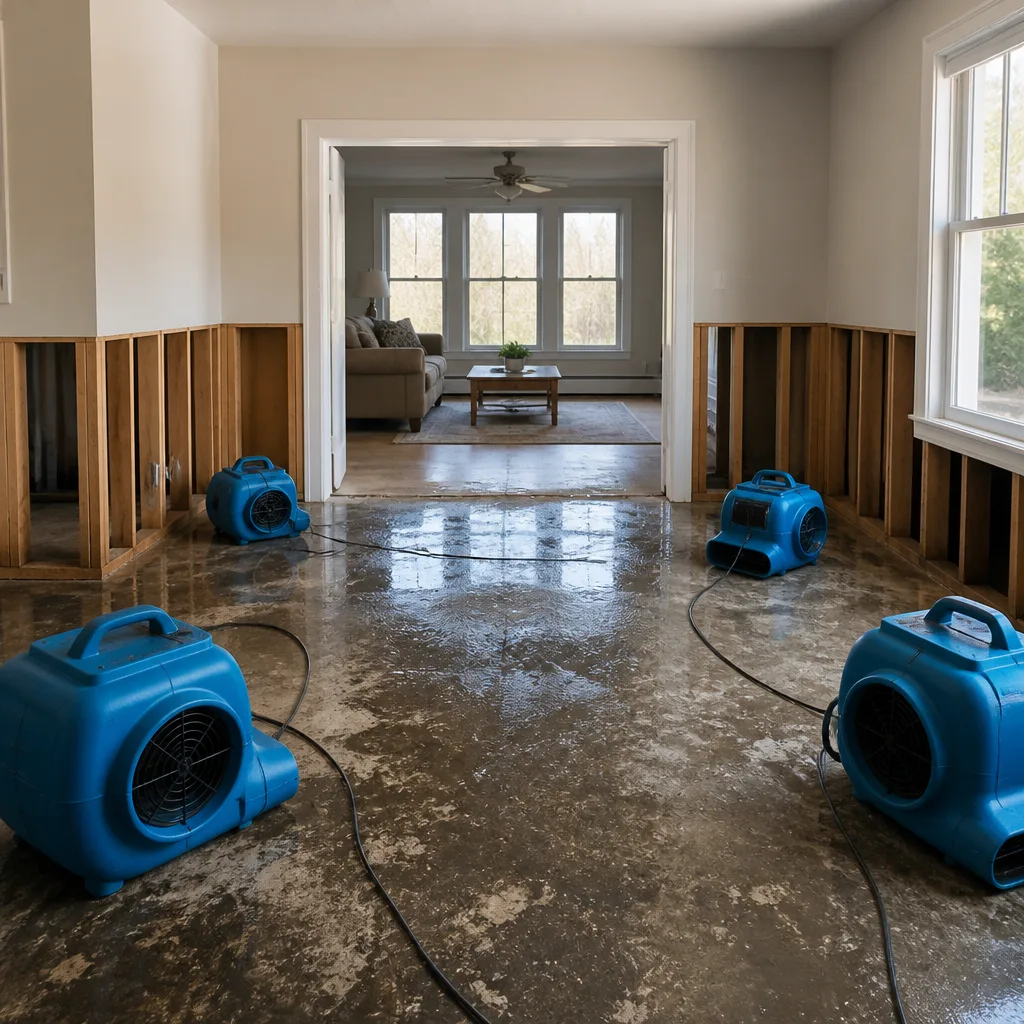 Water damage drying
 Fire & smoke cleanup
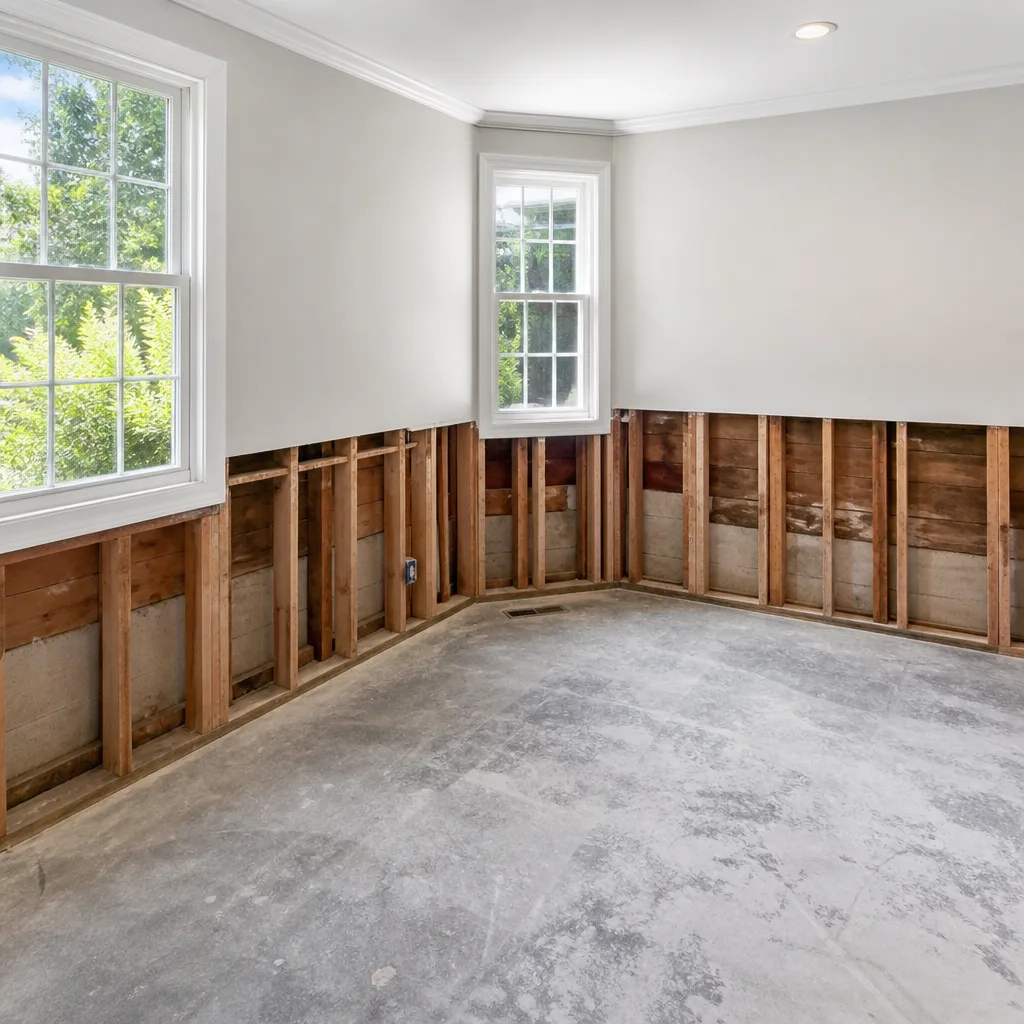 Mold remediation
 Storm response
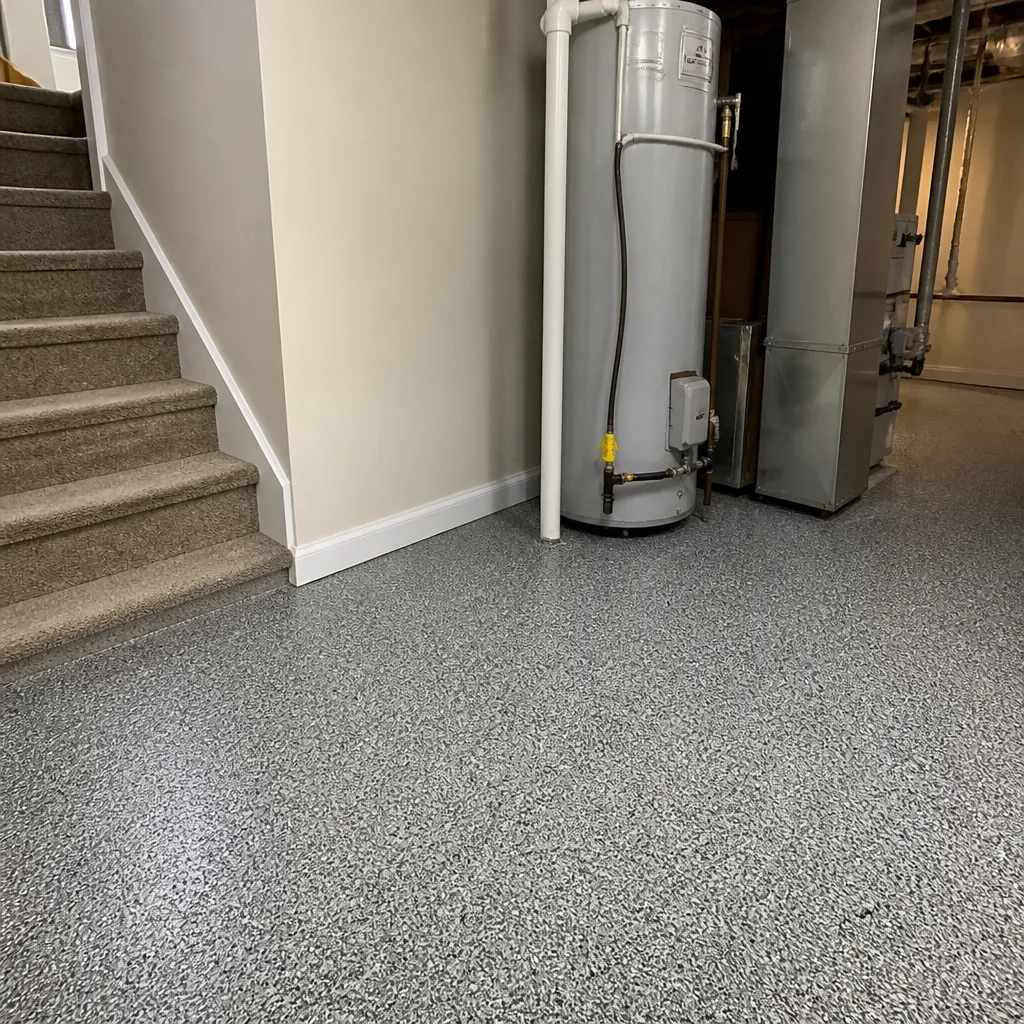 Sewage cleanup
 Reconstruction
Free visual inspection and a written scope of work before any mitigation begins - photos, moisture readings, and drying logs go in your claim file
The scope we write is the scope we bill. Anything new gets shown to you, in writing, before we touch it.
Get your free estimateWater Damage Restoration Maintenance Checklist for Orlando Homeowners
Orlando averages 53 inches of rain per year, nearly double the U.S. average, and it falls hard and fast. A single afternoon thunderstorm can dump two inches in 45 minutes, which means a partially clogged roof drain isn’t a future problem. It’s a next-Tuesday problem. Most maintenance checklists handed to Orlando homeowners are copied from Midwest home-improvement blogs and miss the three failure points that cause the majority of local water damage claims: aging polybutylene plumbing in pre-2000 builds, AC condensate lines that drip silently into walls for months, and roof-to-wall flashing failures unique to Florida’s wind-driven rain. This guide covers all three, month by month, with the exact steps to catch them before they become a claim. For a deeper dive, see The Complete Guide to Damage Restoration in Orlando.
Restoration work we handle
Quick Answer
A water damage prevention checklist for Orlando homeowners starts with three tasks most generic guides skip: locate and photograph any polybutylene pipe sections in pre-2000 homes, flush the AC condensate drain line every 60 days with a wet shop vac, and inspect roof-to-wall flashing on hip roofs before hurricane season and after any wind-driven rain event. Add monthly moisture-meter readings at known risk points, and you’ll catch most water intrusion before it becomes structural damage or mold.
Table of Contents
- Why Orlando’s Climate Creates Water Damage Most Checklists Ignore
- Polybutylene Plumbing: The Hidden Risk in Pre-2000 Orlando Homes
- AC Condensate Drain Lines: The Highest-ROI Maintenance Task in a Florida Home
- Roof-to-Wall Flashing: What Wind-Driven Rain Does to Hip Roofs
- Building a Homeowner Moisture Log: Readings, Locations, and Call Thresholds
- Month-by-Month Orlando Maintenance Calendar
- Common Mistakes to Avoid
- When to Call a Professional
- Frequently Asked Questions
- The Bottom Line
Why Orlando’s Climate Creates Water Damage Most Checklists Ignore
Orlando’s water damage profile is unlike anywhere else in the country. It’s not just the volume of rain. It’s the combination of intensity, humidity, and heat that turns small leaks into structural problems faster than most homeowners realize. When rain falls at two inches per hour, even a properly sloped roof gutter can overflow, sending water down the exterior wall and into the sill plate. When that water sits in 92-degree heat with 80 percent humidity, mold can begin colonizing within 24 to 48 hours. A slow AC condensate leak behind drywall may go unnoticed for months while feeding mold growth the entire time. This is why our team at Wendell Restoration Orlando approaches Orlando water damage differently than restoration companies that operate in drier climates. The standards we follow, including IICRC protocols for structural drying, are built around moisture removal down to the material’s dry standard, not just the surface. We track the air’s moisture level with psychrometric equipment so we know when your home is truly dry, not just surface-dry. For a homeowner, the goal of any maintenance checklist is to find water before it finds the inside of your walls.
Polybutylene Plumbing: The Hidden Risk in Pre-2000 Orlando Homes
Polybutylene pipe was installed in an estimated six to ten million U.S. homes between 1978 and 1995. In Central Florida, those homes are concentrated in the wave of construction that built out neighborhoods like Conway, Azalea Park, Pine Hills, and parts of Winter Park before the year 2000. Polybutylene is a gray, flexible plastic pipe, typically half-inch to one-inch in diameter, and it’s most often found running from the main water shutoff valve to the water heater, toilets, and sinks. The problem with polybutylene isn’t the pipe itself. It’s the acetal fittings and the pipe’s reactivity to chlorine and other oxidants in municipal water. Over decades, the pipe degrades from the inside out. The first visible sign is often a slow leak at a fitting, or discoloration that looks like a dull gray or bluish-white chalky film on the exterior of the pipe near a joint.
The reason this matters for water damage prevention in Orlando specifically is that polybutylene failures rarely announce themselves. A hairline crack behind a wall or under a slab can leak for weeks or months, wicking into drywall, insulation, and subflooring. By the time a homeowner sees a water stain on the ceiling, the damage is extensive. We’ve responded to Orlando homes where a single polybutylene fitting failure under a bathroom vanity caused water to travel along the slab and damage three rooms. The homeowner’s first clue was a musty smell. The repair required our Water Damage Restoration services, including full water extraction, structural drying, and mold remediation.
How to Locate and Test Polybutylene in Your Orlando Home
- Find your main water shutoff valve. In most Orlando homes, it’s located near the front of the house, often in the garage or on an exterior wall. Shut it off.
- Look at the pipe material. Polybutylene is gray and flexible, with a slightly waxy feel. It’s commonly stamped with the code “PB2110” or “PB” along its length. Copper is rigid and reddish-brown. PEX is typically white, red, or blue. PVC is white or cream and rigid.
- Check visible runs. Look under sinks, behind toilets, around the water heater, and in the garage. Any gray flexible pipe with copper or brass-colored fittings is likely polybutylene.
- Photograph every fitting you find. Take close-up photos of joints, especially any that show discoloration, corrosion, or a chalky white or blue-gray residue. These photos are what you’ll show a plumber before deciding whether to replace or monitor.
- Check for a class-action settlement marker. Many polybutylene homes were part of the Cox v. Shell Oil settlement, which provided replacement funds through the early 2000s. If your home was built before 1996 and still has polybutylene, some replacement assistance may have expired, but a plumber can tell you what’s covered by your homeowner’s policy.
If you find polybutylene, don’t panic and don’t rip anything out yourself. Call a licensed plumber for a full assessment. Then call your insurance agent. If a failure has already occurred and you need water damage restoration, our team at Wendell Restoration Orlando provides a written price before any work starts, so you know exactly what the repair will cost before a single tool comes off the truck. See our Damage Restoration Cost Breakdown: The Orlando Homeowner’s Reference for 2026 for typical pricing details.
AC Condensate Drain Lines: The Highest-ROI Maintenance Task in a Florida Home
In Orlando, your air conditioner runs nearly year-round. During the dry season from October through April, it runs almost constantly during the day. That means the evaporator coil is pulling gallons of moisture out of the air every single day. All that condensate has to go somewhere, and in most Florida homes, it goes through a white PVC pipe called the condensate drain line. That pipe runs from the air handler, usually located in a closet, garage, or attic, to the outside of the house. Here’s the catch: Florida’s warm, humid air creates the perfect environment for algae and biofilm to grow inside that pipe. A clog can form in as little as 60 days. When the line clogs, the condensate backs up and overflows the drain pan. In an attic air handler, the water drips through the ceiling and into the drywall below. In a garage or closet unit, it spills onto the floor and wicks into baseboards and drywall. We’ve seen Orlando homeowners return from a week away in July to find a ceiling collapsed over their living room, caused by nothing more than a $2 piece of PVC pipe that algae plugged up.
The 60-Day Condensate Line Flush Protocol
- Locate the condensate line access point. Most Orlando homes have a T-shaped PVC fitting with a cap near the air handler. It’s often visible in the garage or a utility closet.
- Remove the cap. Use your fingers or a small pair of pliers. Don’t force it. If it’s glued in place, pour a cup of white vinegar into the line from the drain pan side instead.
- Attach a wet shop vac to the access point. A wet vac with a one-and-a-half-inch hose fits directly over most condensate line openings. Seal the connection with a rag or duct tape.
- Run the shop vac for one full minute. You’re pulling algae, sludge, and standing water out of the line. If you hear a gurgling sound, that’s the clog breaking loose. Keep going until the sound stops.
- Pour one cup of white vinegar down the access point. Vinegar kills algae and biofilm without corroding the PVC or damaging your plumbing. Do not use bleach. Bleach degrades PVC over time and can release harmful fumes.
- Pour two cups of warm water down the line. This flushes the loosened debris through the line and out the exterior drain.
- Check the exterior drain exit. Walk outside and find where the condensate line exits the house, usually near the AC condenser unit. You should see water flowing out within a few minutes. If you don’t, the clog is still there.
Set a recurring phone reminder for every 60 days. This single task takes ten minutes and costs nothing, and it’s the highest-ROI maintenance action you can take as an Orlando homeowner. In our experience, more water damage claims in Orlando trace back to a clogged condensate line than to hurricanes. The damage is rarely dramatic, but it’s always expensive: water behind drywall means cutting out the affected area, drying the wall cavity with professional equipment, treating for mold, and rebuilding. A ten-minute flush prevents all of it.
Roof-to-Wall Flashing: What Wind-Driven Rain Does to Hip Roofs
Orlando’s dominant residential roof style is the hip roof, where all four sides slope downward toward the walls. Hip roofs perform well in high winds, which is why they’re standard in hurricane-prone areas. But they have a weak point that most maintenance guides never mention: the flashing at the roof-to-wall intersection. In a hip roof, the roof deck meets the exterior walls at a shallow angle, and the metal flashing that covers that joint takes repeated abuse from wind-driven rain. Florida rain doesn’t fall straight down. It comes at an angle, sometimes nearly horizontal during afternoon thunderstorms and tropical systems. That angled rain finds its way under flashing that has lifted even a quarter inch. Once water gets under the flashing, it works its way into the wall cavity, where it saturates insulation, rots the top plate, and slowly migrates down into the ceiling below. The damage can take months to become visible, and by then, the repair involves more than just flashing.
What Early Flashing Separation Looks Like From Ground Level
You don’t need to climb a ladder to spot early flashing problems. Stand in your yard and look at the roofline. Walk the perimeter of the house. What you’re looking for:
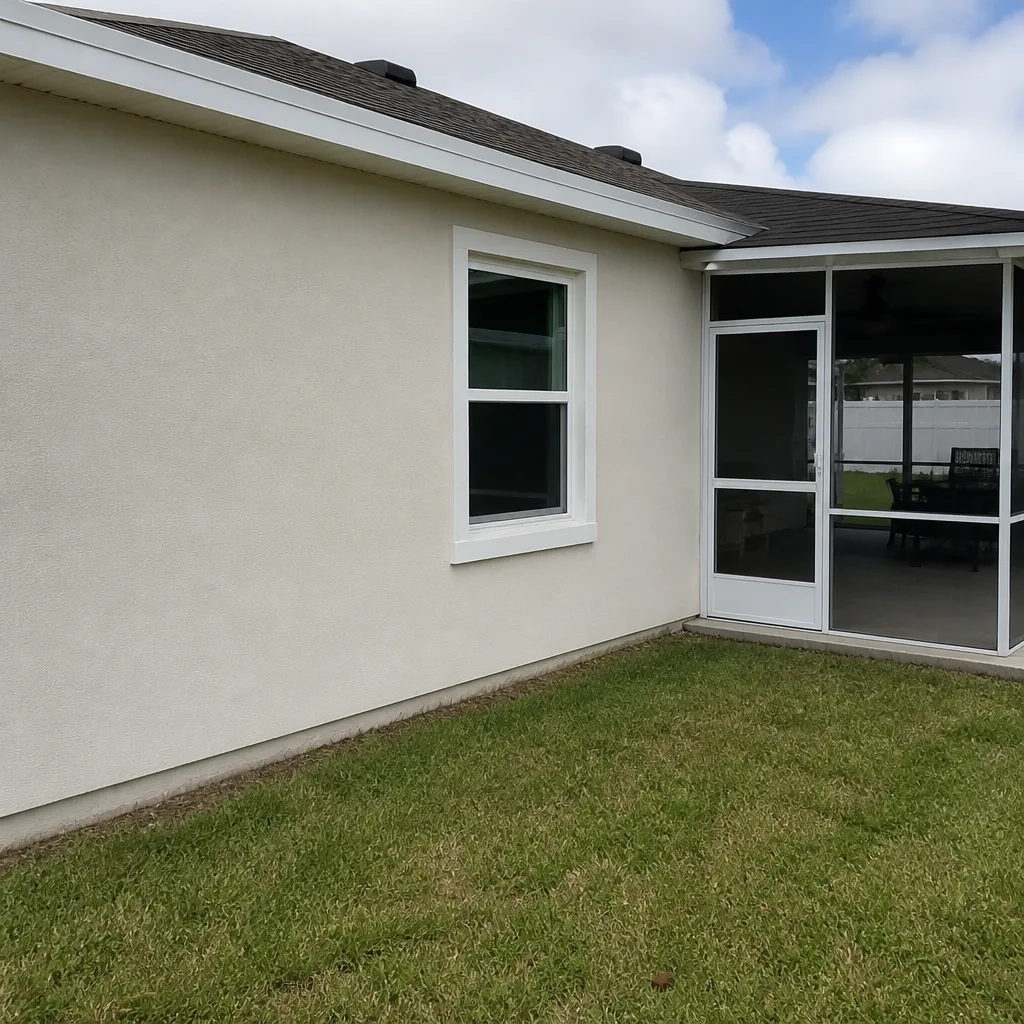
- Gaps between the flashing and the wall. The metal should sit tight against the wall surface. If you can see daylight or a gap wider than a quarter inch from the ground, the flashing has lifted.
- Rust streaks or staining on the wall below the roofline. This indicates water has been running down the wall, behind the flashing, or over the flashing for some time.
- Missing or lifted shingles near roof-to-wall intersections. A single missing shingle at a hip roof corner allows water to reach the flashing from above, bypassing it entirely.
- Peeling paint or bubbling stucco near the top of exterior walls. This is often the first visible sign that water is trapped inside the wall cavity.
- Dark staining on the underside of eaves. Water that gets under flashing often travels along the fascia board and leaves a visible water mark on the soffit.
If you see any of these signs, photograph them from multiple angles and call a roofing contractor. Minor flashing repair is typically a few hundred dollars. Ignoring it for six months turns a flashing repair into a water damage restoration project that involves wall cavity drying, insulation replacement, drywall work, and possibly mold remediation. The math is simple: look at the roofline every time you mow the lawn or pull into the driveway. Two minutes a week is the cheapest insurance policy you’ll ever buy. For a deeper look at how we handle water intrusion that’s already begun, see our guide to Water Damage Restoration in Orlando.
Building a Homeowner Moisture Log: Readings, Locations, and Call Thresholds
A $30 pin-type moisture meter is the single most useful tool an Orlando homeowner can own. It measures the moisture content inside building materials, not just the air. The pin meter has two small probes that you press into the surface you’re testing. Drywall, wood, and stucco all have known dry standards, and once you know those baselines, you can spot water intrusion weeks before you can see it. The reason this matters in Orlando is that our ambient humidity levels are so high that relative humidity readings alone don’t tell you much. A hygrometer that says 70 percent humidity in your living room is normal in July. But a moisture meter that reads 22 percent inside a baseboard is not normal. That’s water where it shouldn’t be.
Where to Measure Every Month
- Baseboards in bathrooms and laundry rooms. Press the pins into the bottom six inches of baseboard trim, especially behind toilets and under sink cabinets.
- Drywall beneath windows. Window leaks in Orlando homes are common after wind-driven rain. Test the drywall directly below each window sill.
- Ceiling areas under attic air handlers. If your AC is in the attic, test the ceiling drywall directly below the unit and along the condensate line path.
- Wall cavities adjacent to plumbing fixtures. Test the wall surface around any toilet supply line, sink shutoff valve, and washing machine connections.
- Door frames and baseboards near exterior doors. Wind-driven rain can push water under door thresholds, especially on east- and south-facing walls that take the brunt of afternoon storms.
Understanding the Numbers
Dry interior wood in an air-conditioned Orlando home typically reads between 8 and 12 percent on a pin meter. Drywall in good condition reads below 12 percent. Stucco on an interior wall reads below 15 percent. When a material that’s normally dry starts reading above 20 percent, water is present. Above 25 percent, you have active moisture intrusion. Above 30 percent, structural drying is needed, and you should call a professional immediately. Keep a simple log. Date, location, reading. If a baseboard reads 10 percent this month and 18 percent next month, something is changing behind that wall, even if you can’t see a stain yet. A moisture log doesn’t prevent water damage, but it gives you the earliest possible warning, and in water damage restoration, early warning is the difference between a $500 repair and a $15,000 claim. For more on what professional drying involves, see our guide to Water Damage Repair in Orlando.
Month-by-Month Orlando Maintenance Calendar
Rather than a generic spring and fall checklist, here’s a month-by-month routine built around actual Orlando weather patterns, with more guides & resources available on our blog. Florida has two seasons: wet and dry. The wet season runs from late May through October and brings daily afternoon thunderstorms, frequent tropical activity, and the highest humidity of the year. The dry season runs from November through April and is characterized by lower humidity but heavy AC use, which shifts the risk profile toward condensate line clogs and plumbing leaks that dry season routines often miss.
January and February
Dry season peak. AC runs constantly, and condensate lines clog fast. Flush the line early in January and again in late February. Test all toilet shutoff valves and sink connections for slow leaks. The dry air makes slow leaks evaporate faster, which actually makes them harder to detect. A moisture meter reading on baseboards near plumbing fixtures is more reliable than a visual check. Check water heater connections and the pressure relief valve for any drops or mineral buildup.
March and April
Before the rains return. Clean gutters and downspouts completely. In Orlando, oak trees drop leaves and pollen through late March, and a single clogged downspout can send water cascading over the gutter and down the exterior wall. Walk the roofline and photograph the flashing. Check the AC drain pan under the air handler for standing water or rust. Test all exterior hose bibs and irrigation connections for slow drips. These small leaks at the foundation can wick into the slab and travel under flooring.
May
Pre-hurricane season. Hurricane season officially starts June 1, and May is the time to get serious. Inspect the roof-to-wall flashing closely after the first few strong afternoon storms. Trim any tree branches that overhang the roof. Falling limbs are the leading cause of roof punctures during Orlando thunderstorms. Test the sump pump if you have one, and make sure any landscape drainage is flowing away from the foundation. Confirm that your homeowner’s policy covers water damage and what your deductible is before the season starts. If you need a professional assessment, our Wendell Restoration Orlando home page has more information on what we cover.
June through September
Peak thunderstorm and hurricane months. This is when Orlando gets most of its 53 inches of annual rain, and it falls hard. After every storm with wind speeds above 40 mph, walk the exterior and check the flashing. Check the attic for water stains around roof penetrations, vents, and chimneys. Test the moisture level in drywall below windows after any heavy rain event. Flush the AC condensate line every 30 days during these months instead of every 60. The humidity load is higher, the AC runs harder, and the algae growth accelerates.
October
Hurricane season winds down. Take advantage of the last month of the official season to do a full roof inspection. Hire a roofer for a professional assessment of the flashing, shingles, and seals. Clean gutters again after the late summer oak leaf drop. Check for any water stains that appeared during the summer and were never addressed. October is the best time in Orlando to schedule repairs before the holiday season and before the dry season sets in.
November and December
Dry season returns. Flush the AC condensate line in November and again in late December. Test all plumbing fixtures for slow leaks now that the AC is not masking them. The transition from wet to dry season is when wood framing that sat damp all summer begins to shrink, and small cracks in caulking and seals become visible. Re-caulk around windows, doors, and tub surrounds. Check the water heater again. The mild winter months in Orlando are the ideal time for any repair work that sat on the back burner during the summer heat.
Common Mistakes to Avoid
- Relying on visual checks alone. Water damage in Orlando hides behind drywall for months. A moisture meter is not optional. If you’re not taking monthly readings at known risk points, you’re waiting for a stain to tell you what a $30 tool could have caught weeks earlier.
- Using bleach in the condensate line. Bleach corrodes PVC and creates fumes that can circulate through your AC system. White vinegar kills the algae and biofilm just as effectively without the damage.
- Ignoring polybutylene until it fails. Photographing and assessing polybutylene now costs nothing. Waiting for it to fail costs thousands in water damage restoration and mold remediation, often in rooms far from the original leak.
- Skipping the gutter check after oak leaf season. Orlando’s live oaks drop leaves in February and March, and again after the summer rains. A clogged downspout sends water down the exterior wall, and by the time you see the interior stain, the wall cavity is already wet.
- Treating the AC condensate flush as optional. Every Orlando AC air handler produces gallons of condensate daily. A clog is not a matter of if. It’s a matter of when. The 60-day flush is non-negotiable if your air handler is in the attic or a finished space.
- Not testing moisture levels after wind-driven rain. Orlando rain comes sideways. Even a properly sealed window can leak when rain hits the glass at 45 mph. After any storm with high winds, spend five minutes with a moisture meter on the drywall below windows.
- Calling a restoration company before documenting. Before you call anyone, photograph everything. Water stains, wet drywall, the source of the leak, the extent of the visible damage. Good photos support your insurance claim and give the restoration team a clear picture before they arrive. Our policy at Wendell Restoration Orlando is to provide a written price before any work starts, and the more we know from your photos, the more accurate that written price will be.
When to Call a Professional
Call a professional water damage restoration company when you see a water stain that’s growing, smell a musty odor you can’t locate, or get a moisture meter reading above 25 percent in any interior material. Call immediately if water is actively running from a ceiling, if a wall is soft to the touch, or if you see visible mold growth larger than a dinner plate. In Orlando, the heat and humidity mean mold can begin colonizing within 24 hours of a water event. The faster a professional begins structural drying with the right equipment, the less damage you’ll be repairing. Wendell Restoration Orlando offers free estimates in Orlando, and every job includes a written price before any work starts, a trackable technician arrival time, and before-and-after photo updates by text. Call (850) 771-2670 any time, day or night, and a live person answers.
Frequently Asked Questions
Every 60 days during the dry season and every 30 days during Orlando’s wet season from June through September. The higher humidity and constant AC operation during the wet season accelerate algae growth inside the line, and a clog can form in as little as 30 days when conditions are right. Set a recurring phone reminder. It’s a ten-minute task that prevents one of the most common and expensive water damage scenarios in Central Florida homes. If a clog has already caused damage, call (850) 771-2670 for a free estimate and a written scope of work.
Look for gray, flexible plastic pipe, usually a quarter-inch to one-inch in diameter, with the code “PB” or “PB2110” stamped along the outside. Check under sinks, behind toilets, around the water heater, and in the garage. Homes built in Orlando between 1978 and 1995 in neighborhoods like Conway, Azalea Park, and Pine Hills are the most likely candidates. The pipe degrades from the inside, so photograph any discolored or chalky fittings and call a plumber for an assessment before a slow leak becomes a restoration project.
Interior wood that reads above 20 percent on a pin-type moisture meter has active water present. Drywall above 20 percent is wet. Anything above 25 percent needs professional drying. Dry interior wood in an air-conditioned Orlando home typically sits between 8 and 12 percent, and drywall below 12 percent is normal. Take monthly readings at baseboards, under windows, and around plumbing fixtures, and call a professional the moment you see a reading that’s 10 points higher than your baseline for that location.
It depends on your policy and the source of the leak. Most standard homeowner’s policies cover sudden and accidental water damage, like a burst pipe. They often exclude or limit coverage for damage that results from gradual leaks, poor maintenance, or neglect. That’s why a monthly moisture log matters. If you document that you were actively monitoring your home and the failure was sudden, you have a stronger case with your adjuster. We photograph everything on every job and work directly with insurance adjusters, which makes the claims process smoother for Orlando homeowners.
Not immediately, but the risk in Orlando’s climate is extremely high. Mold spores are already in every home. What they need is moisture, and Orlando’s heat and humidity create ideal conditions once water intrudes. Mold can begin colonizing within 24 to 48 hours after a water event. If water has been trapped behind drywall or under flooring for more than 48 hours, assume mold is present or developing, and call a professional for an assessment. For more on this, see our guide to Mold Remediation in Orlando.
Within hours, not days. Water damage doesn’t keep business hours, and neither does a good restoration company. Wendell Restoration Orlando answers every call with a live person, 24/7, and dispatches background-checked, uniformed technicians with a live arrival time you can track. We give you a written price before any work starts, and before-and-after photos by text so you see exactly what was done. If water is actively entering your home, call (850) 771-2670 immediately. Every hour counts in an Orlando home.
The Bottom Line
Orlando homeowners face a water damage risk profile that’s genuinely different from the rest of the country. The rain is heavier, the humidity is higher, and the AC runs longer. A maintenance routine built around those three realities, rather than a generic seasonal checklist, is the only kind that actually works. Find the polybutylene, flush the condensate line, watch the flashing, and log your moisture readings every month. Most water damage in Orlando is preventable with about 20 minutes of attention per month and a $30 moisture meter. For everything else, Wendell Restoration Orlando is a phone call away. Set up your maintenance calendar this weekend. The next thunderstorm is already forming.
If water has already found its way in, don’t wait. Call (850) 771-2670 for a free estimate, a written price before any work starts, and a live person on the line, 24 hours a day.
Written by Blake Sorensen, Owner at Wendell Restoration Orlando, serving Orlando since 2006.
See the difference
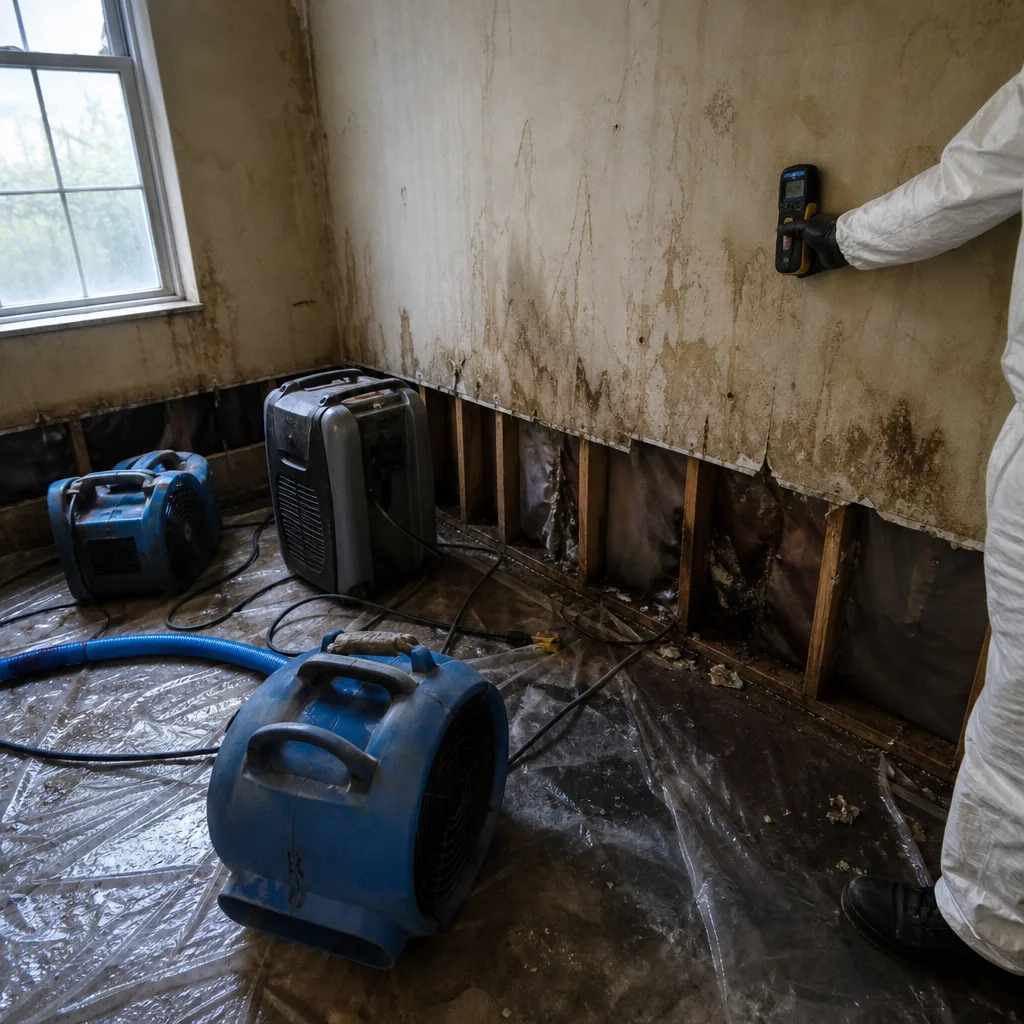 Before
 After
After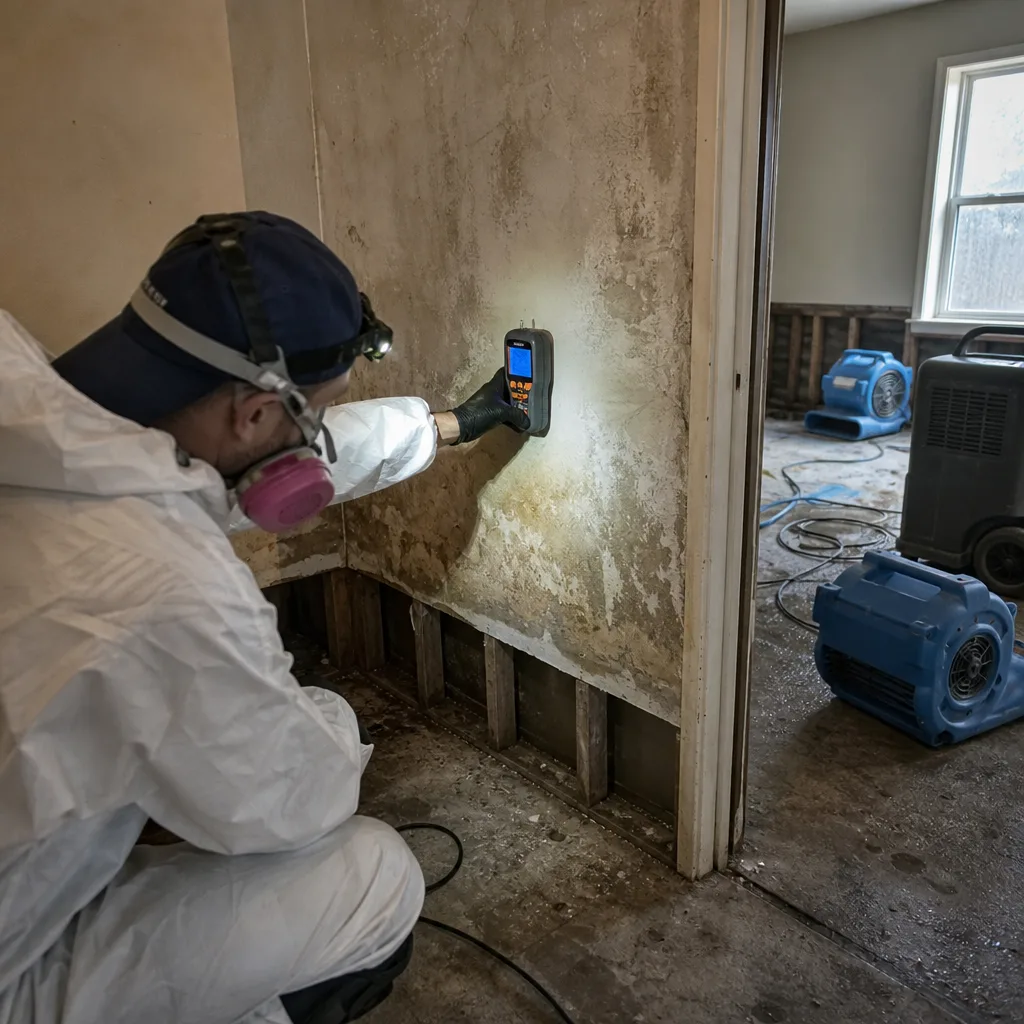 Before
 After
After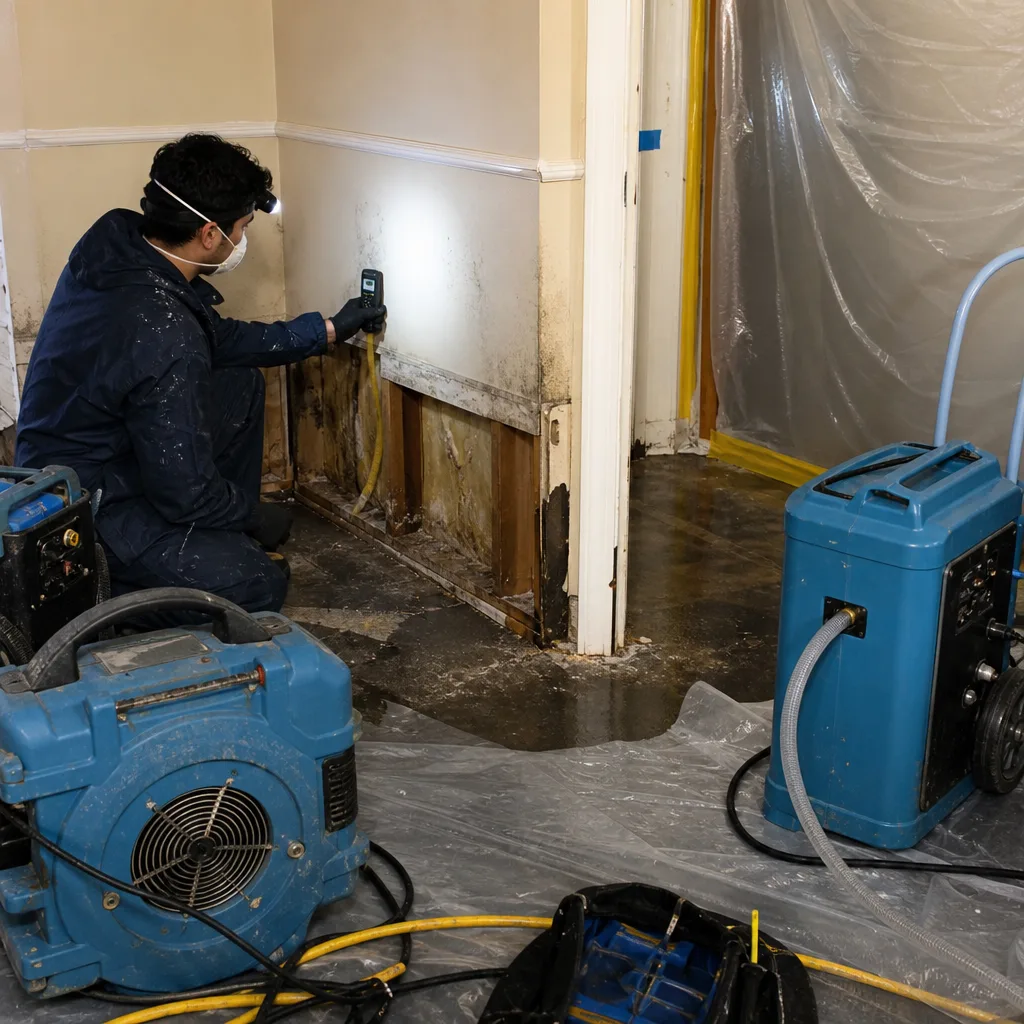 Before
 After
After