
Last updated October 16, 2026
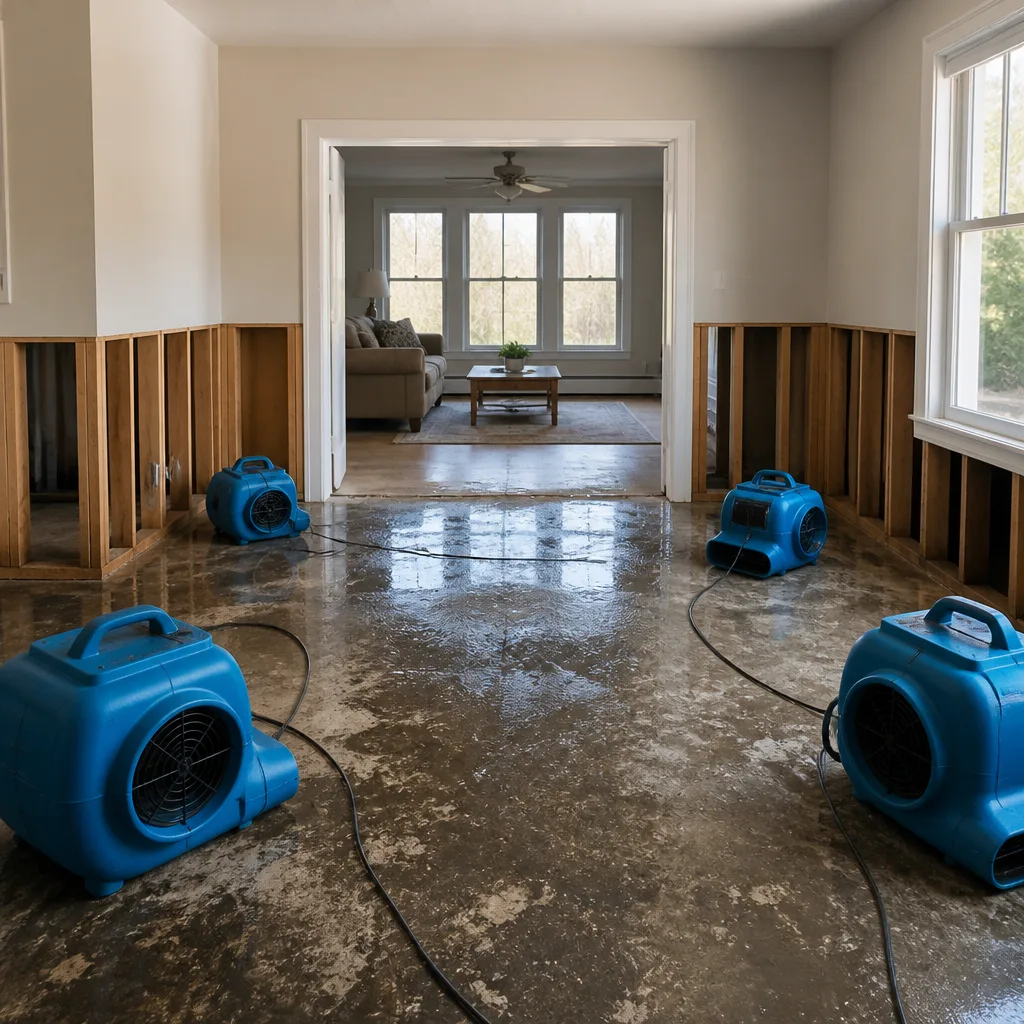 Water damage drying
 Fire & smoke cleanup
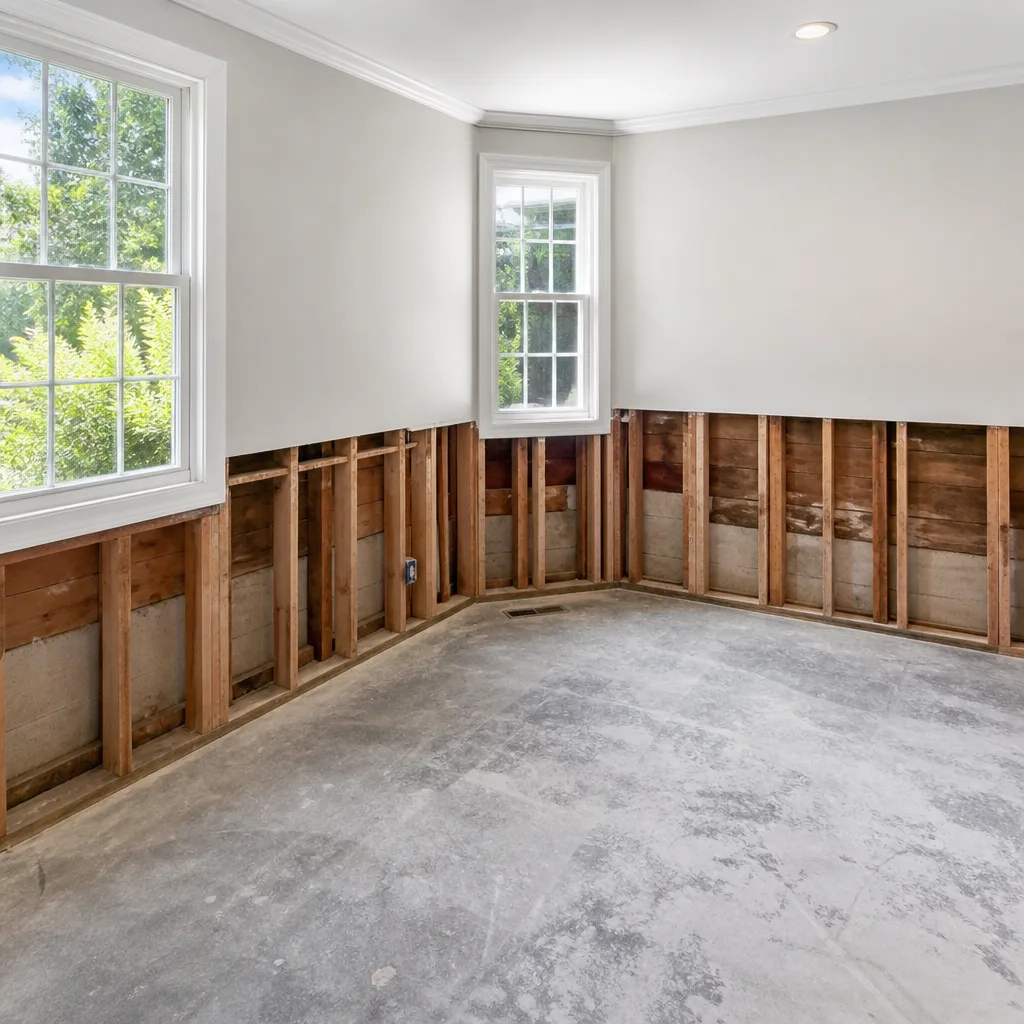 Mold remediation
 Storm response
 Sewage cleanup
 Reconstruction
Free visual inspection and a written scope of work before any mitigation begins - photos, moisture readings, and drying logs go in your claim file
The scope we write is the scope we bill. Anything new gets shown to you, in writing, before we touch it.
Get your free estimateDamage Restoration Cost Breakdown: The Orlando Homeowner’s Reference for 2026
Here’s the number most Orlando homeowners never hear: the single biggest driver of your water damage bill isn’t how many square feet got wet. It’s how many hours passed before a dehumidifier was actually running. After 48 hours, Category 1 clean water degrades into Category 3 biohazardous water through contamination, and remediation costs jump an average of 340%. That’s the difference between a $2,800 dry-out and a $9,500 gut-and-remediate. This guide walks through exactly what restoration companies in Orlando charge in 2026, which line items are legitimate, which ones get padded, and how to read an estimate before you sign it.
Quick Answer
Water damage restoration in Orlando typically costs between $2,500 and $7,500 for a moderate Category 1 or 2 loss (roughly 300 to 800 square feet) in 2026. That range covers extraction, drying equipment, antimicrobial treatment, and basic reconstruction. Category 3 black water jobs run $8,000 to $25,000 or more depending on square footage and whether drywall, insulation, and flooring get replaced. The best way to control cost is to start mitigation within 48 hours and get a written scope of work before any equipment gets unloaded.
Restoration work we handle
Table of Contents
- The Three Cost Drivers That Actually Matter in Orlando
- 2026 Category-by-Category Cost Benchmarks for Orlando
- Every Equipment Line Item on Your Invoice, Explained
- How IICRC S500 Moisture Mapping Determines Your Scope
- The Three Most Commonly Hidden Line Items
- How a Written Price Before Work Starts Works in Practice
- Will Insurance Cover This? What Orlando Homeowners Need to Know
- Common Mistakes to Avoid
The Three Cost Drivers That Actually Matter in Orlando
Any honest restoration contractor in Orlando will tell you the same thing: the square footage matters, but it’s third on the list. The real cost drivers are time, water class, and the building material that got wet.
Time is the multiplier. In Orlando’s humidity, which sits above 75% relative humidity for most of the year, wet drywall and carpet don’t just stay wet. They actively pull moisture from the air. A Category 1 loss (clean water from a supply line) that gets dried within 24 hours might cost $2,800 to $4,500. Wait 72 hours, and that same square footage has become a Category 2 or 3 job with mold risk, and you’re looking at $7,000 to $11,000. The water didn’t change. The contamination level did.
Category determines labor and safety protocol. Category 1 water from a burst supply pipe doesn’t require full PPE or disposal of porous materials in most cases. Category 3 water from sewage or stormwater flooding requires containment barriers, HEPA air filtration, and disposal of pad, carpet, and sometimes drywall below the flood line. That labor differential is where the 340% cost jump comes from.
Material matters more than people think. Water wicking up drywall in a block-construction Orlando home behaves differently than in a wood-framed home. Block walls don’t absorb water the same way, but the furring strips and drywall attached to them do. Plaster over block in older Winter Park or College Park homes dries slower than drywall. Tile on concrete slab in a Dr. Phillips home might only need grout repair. Carpet over slab in a MetroWest apartment might need full pad replacement. The same volume of water produces wildly different scopes depending on the house.
2026 Category-by-Category Cost Benchmarks for Orlando
These are the numbers we use when building written estimates in Orlando right now. They reflect Central Florida contractor pricing with 2026 labor rates, not national averages from a cost-survey website. They assume standard 8-foot ceilings, basic finish levels, and no asbestos or pre-existing mold complications.
Category 1: Clean Water
Source water from a supply line, water heater, or appliance with no contact with soil, sewage, or chemicals. This is the best-case scenario. In Orlando homes, we regularly see these from AC condensate line backups (very common in August), water heater failures, and refrigerator supply line splits.
- Under 100 sq ft: $1,800 to $2,800
- 100 to 400 sq ft: $2,800 to $5,200
- 400 to 1,000 sq ft: $5,200 to $9,500
- Over 1,000 sq ft: $9,500 to $16,000+
At these levels, drying usually takes 3 to 5 days. Most porous materials can be saved if drying starts within 24 to 48 hours.
Category 2: Grey Water
Water with significant chemical or biological contamination: washing machine overflow, dishwasher discharge, toilet overflow with urine only. This requires antimicrobial treatment and removal of saturated pad. Drying time extends, and the equipment count goes up because the air is dirty, not just wet.
- Under 100 sq ft: $2,500 to $3,800
- 100 to 400 sq ft: $3,800 to $7,000
- 400 to 1,000 sq ft: $7,000 to $13,500
- Over 1,000 sq ft: $13,500 to $22,000+
Category 3: Black Water
Sewage, river water, hurricane flooding, or any Category 1 or 2 water that sat longer than 72 hours. This requires containment, full PPE, HEPA air scrubbing, demolition of affected porous materials, and in most cases, structural drying after demo. Orlando sees these during hurricane season and after sewage backup events in older neighborhoods like Colonialtown and Audubon Park, where cast iron sewer lines are hitting end of life.
- Under 100 sq ft: $4,000 to $6,500
- 100 to 400 sq ft: $6,500 to $14,000
- 400 to 1,000 sq ft: $14,000 to $28,000
- Over 1,000 sq ft: $28,000 to $60,000+
Why Orlando pricing differs from national charts: Central Florida labor rates for certified water techs ran $28 to $42 per hour in early 2026. Emergency after-hours rates (which is when most water damage is discovered) typically add 1.5x to 2x. And Orlando’s summer heat means our drying equipment runs harder and longer than equipment in drier climates, which shows up as higher total kilowatt-hour charges on the equipment line. A Water Damage Restoration in Orlando estimate should reflect these local realities, not a flattened national average.
Every Equipment Line Item on Your Invoice, Explained
Most homeowners get a restoration invoice and see a list of equipment charges that looks like alphabet soup. Here’s what should appear, what it’s called, what you should pay per day in Orlando in 2026, and what it actually does.
The Four Core Machines
- LGR dehumidifier (low-grain refrigerant): $85 to $140 per day per unit. This is the workhorse. It pulls moisture out of the air and out of wet materials through vapor pressure differential. Expect one LGR for every 300 to 500 square feet of wet area. If you see two units for a 200-square-foot bathroom dry-out, that’s a red flag.
- Air mover: $25 to $40 per day per unit. These create airflow across wet surfaces to speed evaporation. The rough standard is one air mover per 150 to 200 square feet, but in Orlando’s humid summers, good contractors run more because the air is already moisture-saturated.
- Hydroxyl generator: $75 to $125 per day. Used for odor control and organic decomposition. Not scented, not ozone. These run 24/7 and are legitimate line items for Category 2 and 3 jobs and any job with odor.
- Thermal imaging camera: Usually billed as a single assessment fee of $75 to $150, not a daily rate. A tech uses this at intake to map moisture behind walls and under flooring. If a contractor never pulls out an imager, they’re guessing.
These are the standards under IICRC and RIA protocol. Equipment from Dri-Eaz dominates the Orlando market because the local supply houses stock it heavily. If you see equipment line items without a daily rate or without a number of days, ask for both. An invoice that says “drying equipment: $1,800” with no breakdown is an invoice you can’t audit.
What Should Not Appear Inflated
The most common equipment-billing trick in Florida is the “equipment setup and monitoring” line, which contractors use to rebundle things that should already be in the daily rate. A legitimate monitoring fee (the tech visiting daily to check moisture levels, adjust equipment, and log readings) runs $150 to $300 per visit depending on drive distance in metro Orlando. If a company charges $450 per day for “monitoring” on a 3-day dry-out, that’s padding. Equipment should come off the job as soon as the materials reach their drying goal, which is what the psychrometric log tells you. That’s the hour-by-hour record of moisture readings that charts when the structure is actually dry.
How IICRC S500 Moisture Mapping Determines Your Scope
The S500 is the IICRC’s Standard and Reference Guide for Professional Water Damage Restoration. It’s the rule book every legitimate Orlando restoration company works from. Here’s how it actually affects your price.
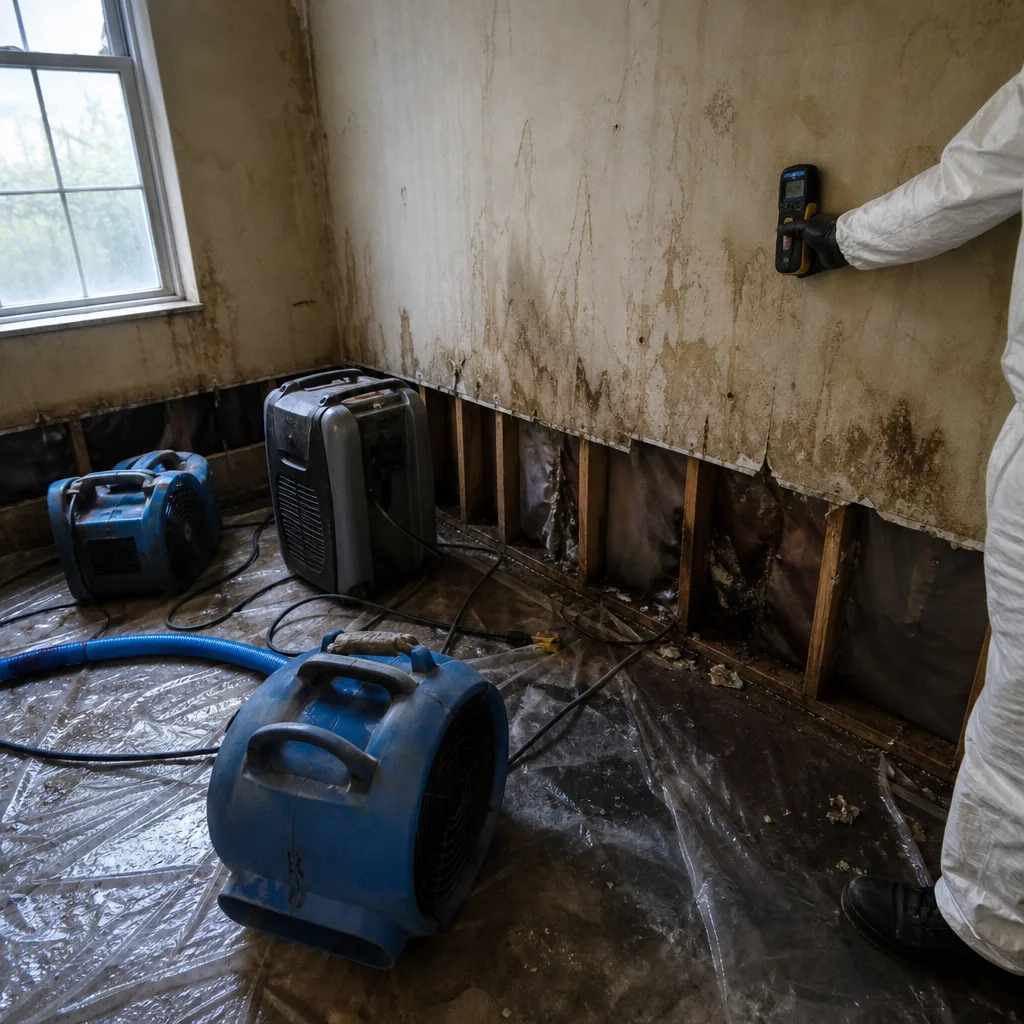
Step 1: Mapping. Before any equipment gets deployed, the tech should be walking your home with a penetrating moisture meter and a non-penetrating meter, checking walls, baseboards, flooring, and subfloor. They should be marking readings on a floor plan, not just eyeballing it. In our experience in Orlando, this is the step most often skipped by the lowest-priced bidders.
Step 2: Classification. The S500 defines four water classes. Class 1 is the least evaporation surface, meaning maybe 5% of the room’s surfaces are wet. Class 4 means deep saturation in materials with low evaporation, like hardwood floors and concrete. A Class 4 hardwood floor dry-out in a Winter Park bungalow might need a specialty drying system from Injectidry (a mat system that pulls water from below the floor) at $75 to $150 per day per mat. That’s a legitimate, necessary cost. It only shows up if the contractor actually mapped the saturation depth.
Step 3: The psychrometric log. This is the daily record of temperature, relative humidity, and specific humidity in each affected area. Without it, there’s no way to prove the structure is dry rather than just surface-dry. A company that can’t produce a psychrometric log at the end of the job cannot tell you why they pulled equipment when they did. This is exactly why Wendell’s written estimate includes a drying protocol with target moisture levels before work starts. You can’t validate what wasn’t measured.
Why this matters for your invoice: The S500 standard says you stop drying when the materials reach a dry standard, not when your rental equipment has been on site for some arbitrary number of days. A 5-day dry-out might legitimately run 7 days in Orlando if the AC is down (which it often is during water events) and outdoor humidity is above 85%. But a 14-day dry-out for a 200-square-foot Class 1 loss is either a miscalculation or a billable-equipment scam.
The Three Most Commonly Hidden Line Items
Every contractor knows these exist. Most homeowners don’t, until the final invoice arrives. Here are the three surprises Orlando homeowners call us about most often.
1. Contents Manipulation
Moving furniture so drying equipment can be placed. Packing out affected belongings. Wrapping and storing items while drywall gets cut. On a typical 400-square-foot living room loss, contents handling runs $350 to $900 depending on how much furniture is in the room and whether it needs to be moved off-site. Many contractors bury this as “labor” and only itemize it when challenged. A proper written estimate should show it as its own line item with the number of rooms and estimated hours.
2. Antimicrobial Application
After extraction and during drying, affected framing, drywall, and flooring get treated with an antimicrobial product to prevent mold and bacterial growth. This is standard on Category 2 and 3 jobs and prudent on Category 1 jobs that sat for more than 48 hours. The going Orlando rate is $0.35 to $0.75 per square foot of affected surface. A 600-square-foot affected area with walls and baseboards means roughly 1,200 square feet of surface, so $420 to $900. If you see “antimicrobial fogging: $2,500” on a modest job, ask for the square-footage math.
3. Post-Remediation Clearance Testing
After a Category 3 job or any job with mold remediation, a third-party environmental hygienist or mold assessor should collect air samples and surface samples to confirm the space is clean. This is a separate company from the restoration contractor. In Orlando in 2026, clearance testing runs $400 to $800 for a standard single-room test. It should never be performed by the same company that did the remediation, because that’s a conflict of interest. And it should not appear as a surprise. It belongs in the written estimate. For mold-specific details, see our Mold Remediation in Orlando guide.
How a Written Price Before Work Starts Works in Practice
This is where the industry splits. Most restoration companies in Orlando still use time-and-materials billing: they deploy equipment, run time as needed, and send a bill when they’re done. The final number is whatever it is. We’ve had homeowners show us competitor invoices where a $3,800 estimate became $9,200 because “it took longer than expected.” Time-and-materials inherits the risk and puts it on the homeowner.
Here’s how Wendell’s written price process works, step by step.
- First call: A live person answers at (850) 771-2670. You describe the situation. We schedule a technician with a tracked live arrival time, not a four-hour window.
- Assessment: The tech arrives, maps the moisture, identifies the category and class, and writes a scope of work. This happens before any equipment is unloaded from the truck.
- Written estimate: You get a printed document with line items for extraction, equipment rental (daily rate times estimated days), labor, antimicrobial treatment, contents handling, and any reconstruction that’s needed. The number on that page is the number you’ll pay.
- Digital invoice: The same estimate gets texted to your phone as a digital invoice. You can pay from the link. No paper check, no mailed bill.
- Change orders only with your approval: If drying reveals hidden damage behind a wall that was mapped as dry, or if the insurance adjuster requests additional scope, we bring you a written change order before doing that extra work. No surprise additions at the final bill.
- 365-Day Done Right Promise: Every repair includes a written guarantee. If it’s not done right, we make it right. If the repair fails within 365 days, we return at no charge. That free second visit is in writing on the estimate before you sign.
The comparison matters. The industry-standard approach leaves you signing an authorization form that says, essentially, “we’ll do what’s needed and bill you after.” That’s not a quote. That’s a blank check with extra steps. A written price before work starts shifts the risk where it belongs: on the contractor, who is supposed to know the trade well enough to scope a job.
Will Insurance Cover This? What Orlando Homeowners Need to Know
Insurance covers sudden and accidental water damage from a covered peril. That means a burst supply line, a water heater failure, or a storm-driven roof leak is usually covered. Gradual leaks (a pinhole leak that has been dripping behind a wall for six months) are often denied as “long-term seepage” or “lack of maintenance.” Sewage backup coverage varies by policy and often requires a specific endorsement.
Where Orlando gets specific: Florida has the highest average homeowner insurance premiums in the nation, and many Orlando homeowners have hurricane deductibles of 2% to 5% of the home’s insured value. That means a $400,000 home with a 5% hurricane deductible has a $20,000 deductible if the water damage came from hurricane-related flooding or roof damage. You should know your deductible before you call any contractor, because on a $7,000 restoration, a $20,000 deductible means you’re paying out of pocket.
Photo documentation matters. Your restoration company should be photographing the damage before, during, and after. Those photos go to your adjuster. Wendell’s technicians document every stage and text the photos directly to you so you have your own record and can forward them to your adjuster. This is not a courtesy. It’s how claims get paid. For after-mitigation repairs, see our Water Damage Repair in Orlando page.
Who Deals With My Adjuster?
You do, but your restoration company should be prepared to supply everything the adjuster needs: moisture readings, drying logs, scope of work, before-and-after photos, and line-item pricing justification. Wendell works directly with adjusters to justify scope, which is different from “we handle everything and you don’t have to think about it.” You should always retain your own involvement in the claim. A company that wants to deal directly with your insurance company without keeping you in the loop is a red flag, because the incentive runs the wrong way.
Common Mistakes to Avoid
- Waiting to call because you want to get your own estimate first. Every hour that passes expands the scope. Your insurance company expects reasonable mitigation. Waiting 72 hours to “shop around” converts a $3,000 dry-out into a $9,000 remediation. Call a restoration company first, then your insurance company, in that order.
- Signing an authorization form without a written scope. If the form says “payment based on time and materials” and doesn’t include a dollar figure, you’re signing a blank check. Ask for a written scope with a dollar amount.
- Accepting a verbal estimate. A contractor who won’t put the price in writing before starting work is telling you how the end of the job will go.
- Ignoring the category rating. Some contractors quote a low price by treating Category 3 water as if it were Category 1. Sewage in your home requires containment and antimicrobial treatment. If the price seems too good for a sewage loss, it’s because the scope isn’t honest.
- Not checking whether the company is IICRC-certified. In Florida, the restoration industry has relatively low barriers to entry. IICRC certification is not a legal requirement, but it’s the industry’s own standard. “Licensed and insured” in Florida doesn’t necessarily mean water-damage-trained. Ask who holds the certification and what it covers.
- Paying in full before the job is complete and you’ve reviewed the before-and-after photos. A legitimate restoration company invoices at completion, not upfront. Some 50% deposit for reconstruction work is normal in the industry, but a full payment before any work is not.
- Assuming your insurance won’t ask questions about the invoice. Inflated invoices are a form of insurance fraud in Florida, and the homeowner signs the claim. If a contractor offers to “work with your deductible” or “bill the insurance for more than the actual cost,” walk away. That’s a felony in Florida, and it’s your signature on the claim.
See the difference
 Before
 After
After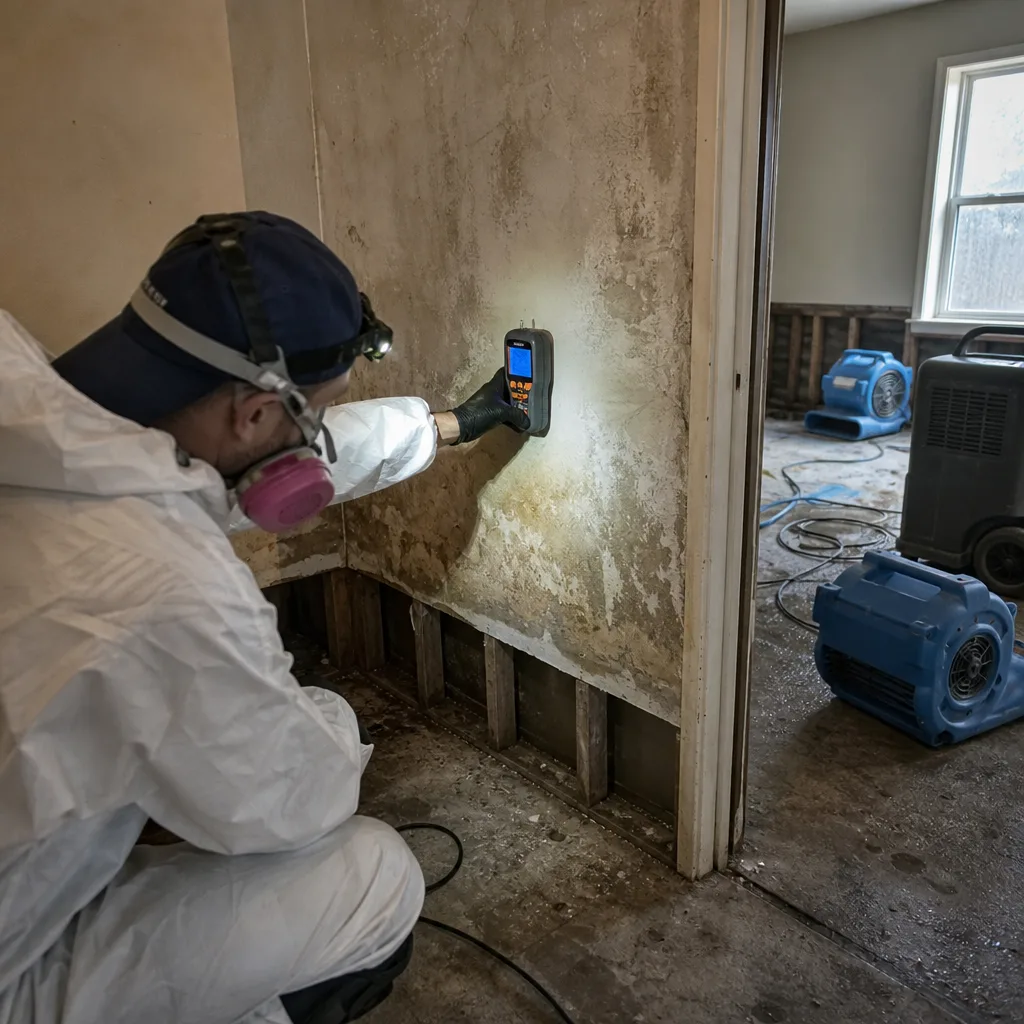 Before
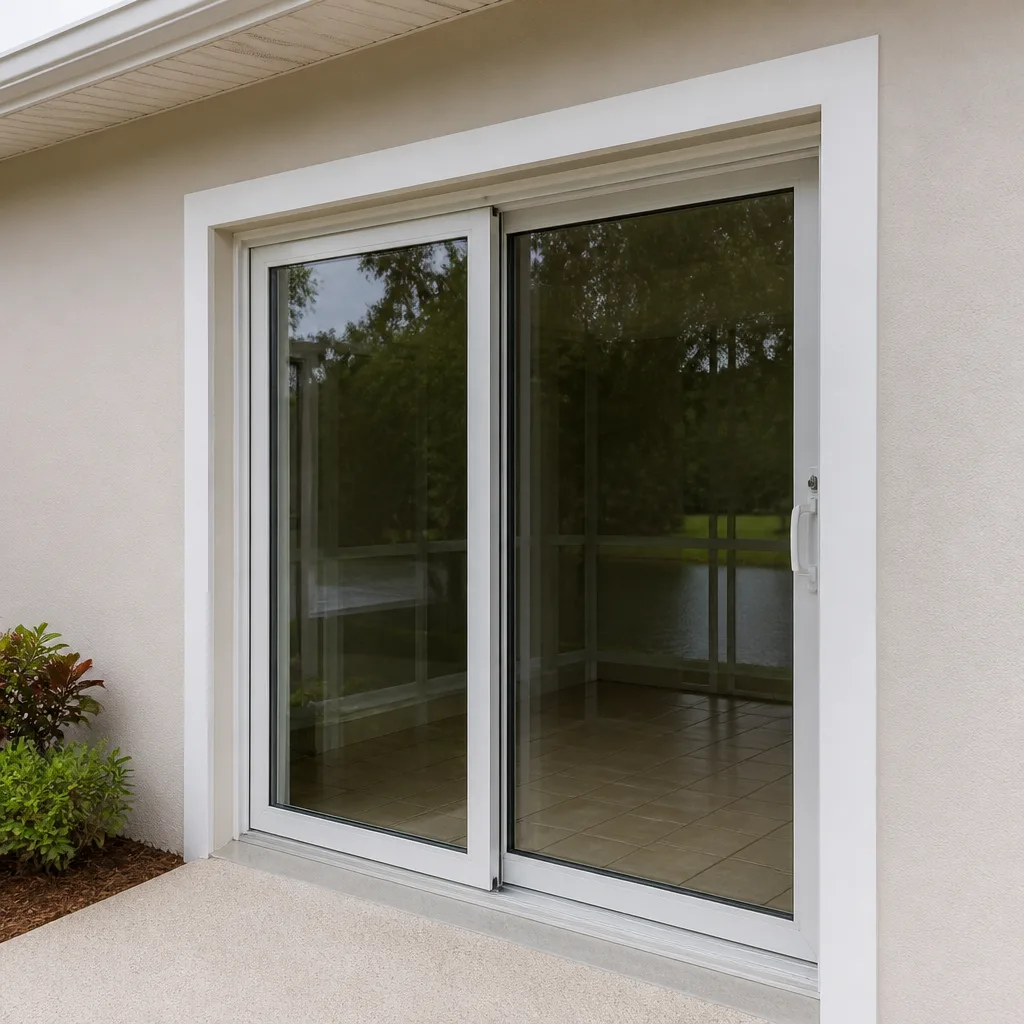 After
After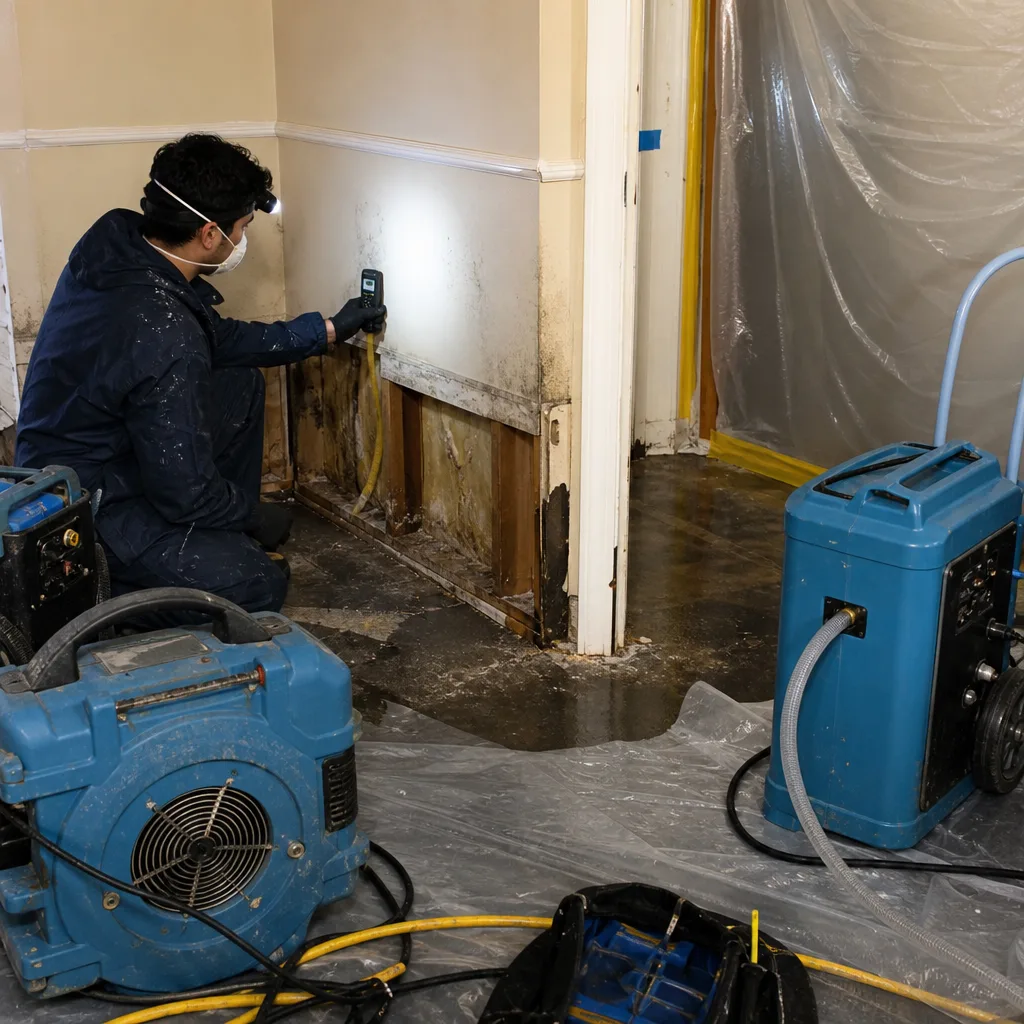 Before
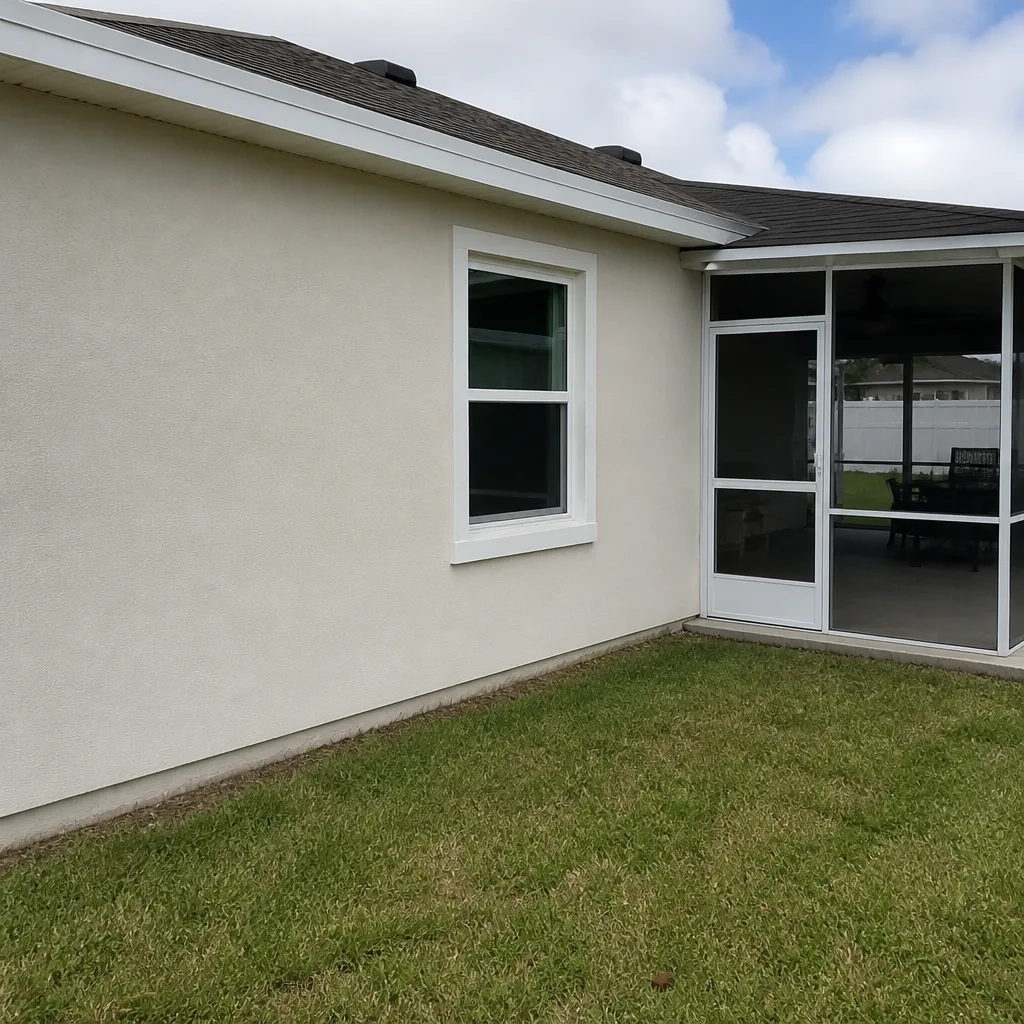 After
AfterWhen to Call a Professional
If water has been sitting for more than 24 hours, if the water came from sewage or outside flooding, if water has wicked up drywall, or if you can smell a musty odor, call a restoration company immediately. Do not attempt to dry a Category 2 or Category 3 loss yourself. The mold risk from improper drying in Orlando’s humidity is real, and the cost of mold remediation six weeks later will be triple the cost of proper drying today. Wendell Restoration Orlando offers free estimates in Orlando. Call (850) 771-2670 and a live person answers, 24/7. We’ll give you a written price before any equipment rolls in, a live arrival time, and before-and-after photos by text so you know the job was done right. You can also start with our Wendell Restoration Orlando home page to see the full scope of what we do.
Frequently Asked Questions
For Category 1 clean water, which is the cheapest scenario, Orlando restoration companies charge between $4 and $9 per square foot for drying and mitigation in 2026. Category 2 grey water runs $6 to $13 per square foot. Category 3 black water runs $10 to $25 or more per square foot, because demolition and disposal are involved. These numbers include equipment, labor, and antimicrobial treatment. If someone quotes you below $3 per square foot for a wet room needing extraction, you’re getting a scope that cuts corners somewhere.
Structural drying for a Category 1 loss typically takes 3 to 5 days in Orlando, assuming the AC is running and outdoor humidity is not extreme. Category 2 losses take 5 to 7 days. Category 3 losses with demolition and reconstruction can take 2 to 6 weeks depending on the rebuild scope. The S500 drying log determines exactly when equipment comes off, not the calendar. Call (850) 771-2670 for a realistic timeline on your specific situation.
Yes, for sudden and accidental damage from covered perils like burst pipes, water heater failure, or storm damage. Gradual leaks are often denied. You need to know your deductible, and in Florida, hurricane-related water damage carries a separate hurricane deductible which can be 2% to 5% of your home’s insured value. Get the claim filed within 24 hours and take photos before any work starts.
Water damage restoration is the drying and mitigation of water that has entered your home, typically within the first few days. Mold remediation is the removal, containment, and treatment of mold colonies that have formed after water sat too long or after long-term humidity exposure. Many Orlando homes need both, because if drying doesn’t happen fast enough, mold sets in within 48 to 72 hours. Our guides explain the difference in full: Water Damage Restoration in Orlando and Mold Remediation in Orlando.
Compare the line items. A fair estimate itemizes extraction, equipment rental with daily rates and number of days, labor hours, antimicrobial treatment with square footage, contents handling, and any reconstruction. An estimate that lumps everything into “restoration services” with one big number is not transparent. Fair 2026 Orlando rates are in the ranges given in this guide. If an estimate is 40% below or 40% above these ranges, ask for justification.
Some negotiation room exists on reconstruction work, where material choices drive price. On mitigation work (extraction, drying, antimicrobial), the price is set by the scope and the equipment counts, which are determined by the S500 mapping. A contractor who negotiates on mitigation scope might be cutting drying days or equipment, which costs you more later. The better negotiation is on the front end: get a written scope, verify the equipment counts are justified, and confirm the psychrometric log will be provided.
For a typical Orlando home with 300 to 600 square feet of Category 3 flooding, expect $8,000 to $18,000 for the full mitigation, demo, disposal, antimicrobial treatment, and structural drying. That does not usually include the rebuild. Reconstruction of drywall, flooring, trim, and paint typically adds $4,000 to $12,000 depending on finish level. Full Category 3 jobs can push well past $25,000 if the affected area is large or if the home is older and materials require more labor to remove and replace.
The Bottom Line
Water damage in Orlando is not a fixed-price item. It’s a scope-driven cost where time is the biggest variable, and every hour before professional drying starts changes the category, the protocol, and the price. This guide gives you the 2026 Orlando rate ranges by category, the equipment line items to expect, the hidden costs to question, and the single most important protection: a written price before any work starts. If you’re looking at an estimate that doesn’t itemize anything, or a contractor who won’t put a dollar figure on paper, keep looking. And if you’re standing in water right now, call (850) 771-2670. A live person answers. The estimate is free. The price goes in writing before anything else happens.
Written by Blake Sorensen, Owner at Wendell Restoration Orlando, serving Orlando since 2006.