
Last updated October 16, 2026
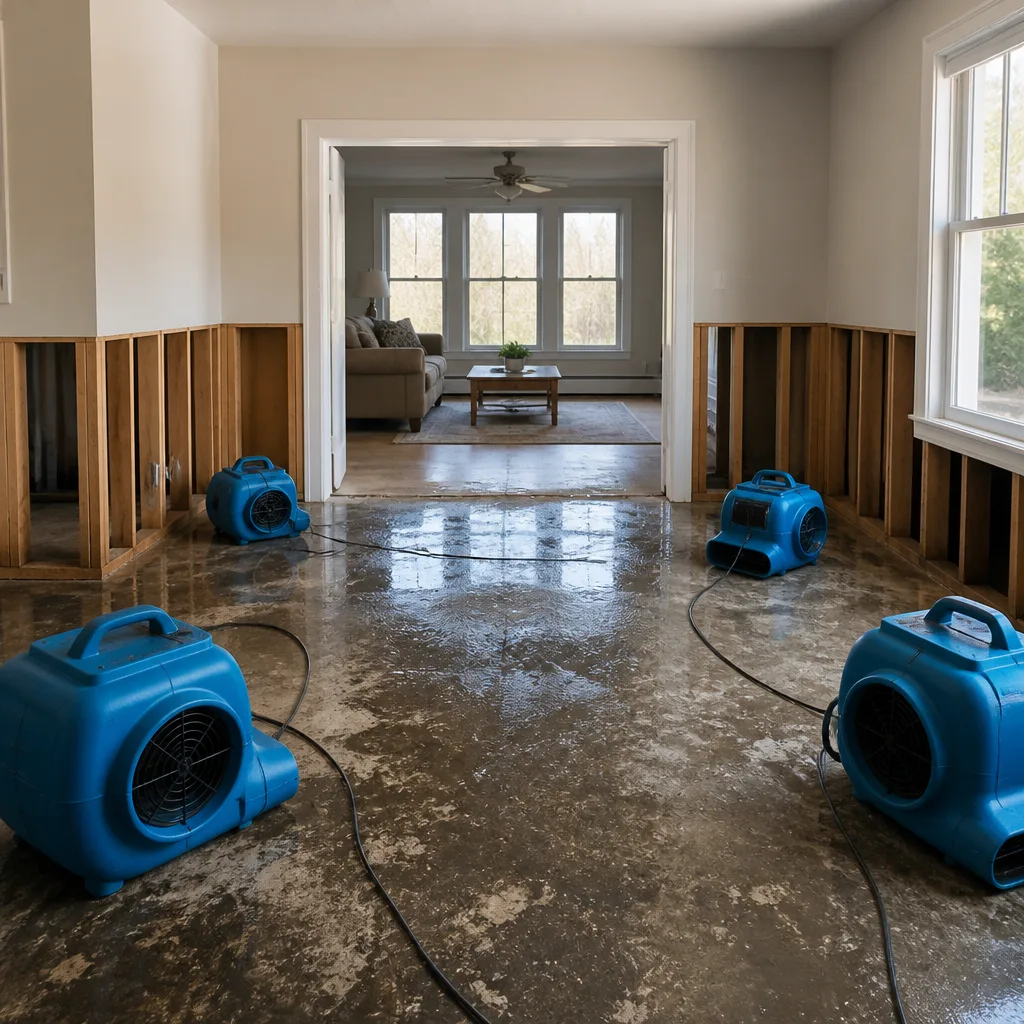 Water damage drying
 Fire & smoke cleanup
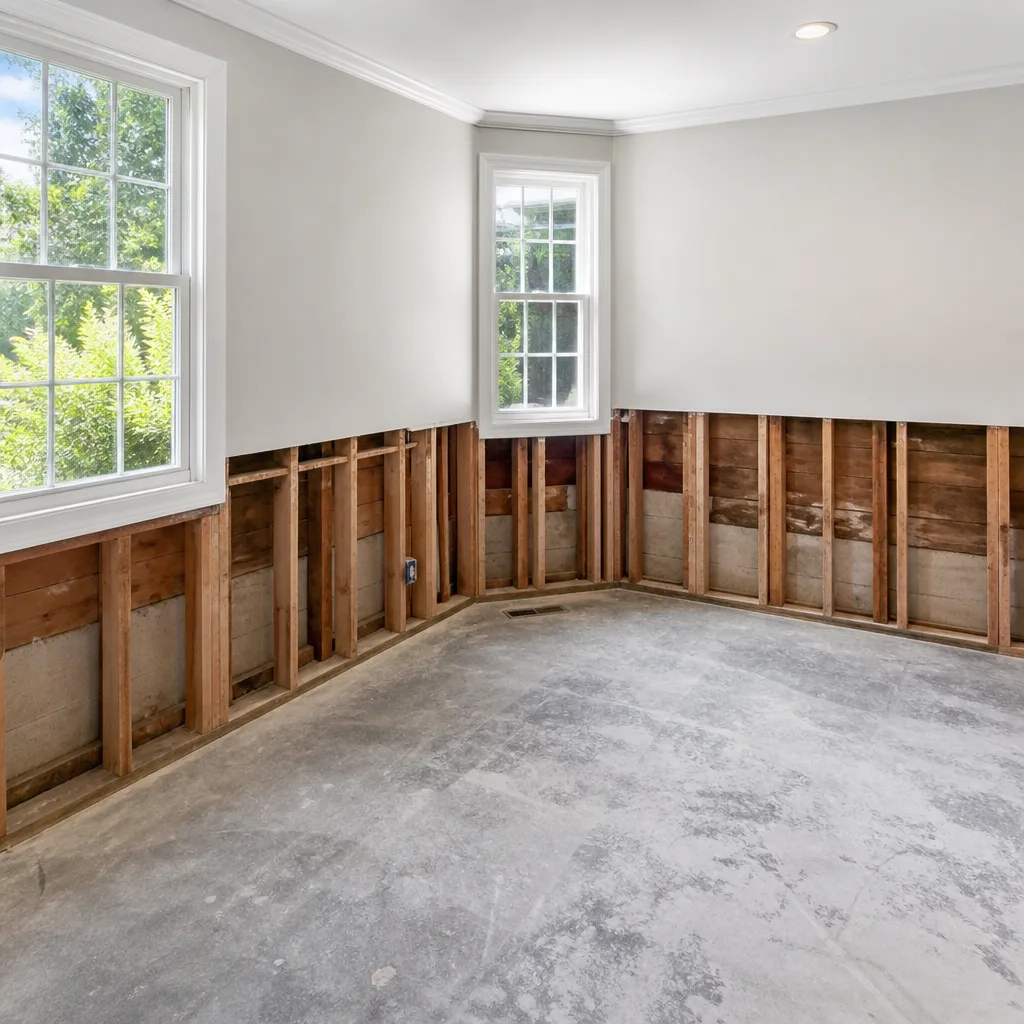 Mold remediation
 Storm response
 Sewage cleanup
 Reconstruction
Free visual inspection and a written scope of work before any mitigation begins - photos, moisture readings, and drying logs go in your claim file
The scope we write is the scope we bill. Anything new gets shown to you, in writing, before we touch it.
Get your free estimateHow to Hire a Damage Restoration Contractor in Orlando: A Step-by-Step Guide
After Hurricane Ian, Florida’s Department of Business and Professional Regulation fielded over 6,000 complaints about unlicensed contractors in a single quarter. Most of those homeowners didn’t discover they’d hired someone without a license until their insurance claim was already denied. Water damage, in particular, doesn’t wait: drywall wicks moisture within hours and mold colonies start forming within 24 to 48 hours in Orlando’s humidity. That combination of urgency and confusion is exactly what scam operators count on. This guide is built to level the field. You’ll learn exactly which licenses matter, which documents to demand before signing anything, how to compare quotes in 48 hours without slowing down emergency work, and the red flags that separate a legitimate water damage restoration in Orlando firm from a storm-chaser who’ll be gone by next hurricane season.
Quick Answer
To hire a damage restoration contractor in Orlando, verify three things before signing: a current Florida MRSR mold-related services license (check it online at MyFloridaLicense.com), IICRC certification for both the company and the technicians who’ll actually do the work, and proof of general liability plus workers’ comp insurance. For a broader overview of what to expect, see our Complete Guide to Damage Restoration in Orlando. Then require a written scope of work with a fixed price, a drying goal stated in grains per pound (GPP), and a clear payment schedule tied to completion milestones, not just time on site. A legitimate Orlando contractor will put all of this in writing before any equipment is unloaded. If they won’t, that’s your signal to call someone else.
Restoration work we handle
Table of Contents
- The Four License and Credential Checks You Must Run Before Signing Anything
- Why an Assignment of Benefits (AOB) on Day One Is a Signal to Hang Up
- The Written Scope of Work Checklist: Seven Line Items Every Legitimate Estimate Must Include
- How to Run a Parallel Quote Process in 48 Hours Without Delaying Emergency Mitigation
- Written Price vs. ‘Time and Materials’: How Orlando Contractors Actually Bill
- The Twelve Questions to Ask Before Any Contractor Touches Your Property
- What Orlando’s Climate and Building Stock Mean for Your Restoration Job
- The Full Hiring Process, Step by Step: From First Call to Final Walkthrough
The Four License and Credential Checks You Must Run Before Signing Anything
Florida licenses damage restoration work differently than most states, which catches a lot of homeowners off guard. A plumber’s license does not authorize mold remediation. A general contractor’s license doesn’t either. The state has a specific credential for this work, and if you’re standing in a flooded kitchen at 2 a.m., that’s the last thing anyone explains to you. Here’s exactly what to verify, and how to do it in under five minutes.
1. The Florida MRSR License. Florida requires any contractor performing mold assessment or remediation to hold a Mold-Related Services Remediation license (MRSR) issued by the Florida Department of Business and Professional Regulation, or to be working under a licensed Mold Remediation contractor. Any company performing mold work without it is operating illegally, and your insurance carrier may refuse to pay for the work. Look it up at MyFloridaLicense.com, click “Verify a License,” and search by the company’s legal name, not the marketing name painted on the truck. A DBA or franchise name often differs from the registered entity.
2. IICRC Certification (firm and technician level). The IICRC, or Institute of Inspection, Cleaning and Restoration Certification, is the credentialing body for water damage restoration. But there’s a distinction most homeowners miss. A company may hold an IICRC firm certification while the technicians sent to your home hold nothing at all. Both matter. Ask to see the IICRC technician’s card with their individual name on it, and verify the firm’s certification on the IICRC’s website. At Wendell, every technician operates under IICRC standards, and we’re happy to show you the credentials before the first fan goes in.
3. General Liability Insurance. Florida’s minimum commercial general liability limits won’t help you much in a real claim scenario involving structural drying, demolition, and reconstruction. Most credible restoration companies carry at least $1 million in general liability coverage, often more. Ask for a Certificate of Insurance (COI) naming you as the certificate holder. It takes the contractor one phone call to their agent to issue it. If they stall or deflect, that’s a red flag worth acting on.
4. Workers’ Compensation Coverage. This one is easy to overlook and expensive to get wrong. If a technician is injured on your property and the company doesn’t carry workers’ comp, Florida law can leave you or your homeowner’s policy responsible for the medical bills. Verify workers’ comp coverage the same way you verify liability: request a current COI and call the carrier listed on it. A two-minute call is worth avoiding a six-figure liability.
In our experience in Orlando, the companies that pass all four checks quickly and without making you ask three times are the same ones that show up on time and stand behind the work. The companies that make license and insurance feel like a hassle are signaling how they’ll handle everything else.
Why an Assignment of Benefits (AOB) on Day One Is a Signal to Hang Up
An Assignment of Benefits, or AOB, is a legal document that transfers your rights to an insurance claim payout from you to the contractor. In theory, it lets a contractor bill your insurer directly without you having to front the money. In practice, Florida courts and the state legislature have spent years trying to unwind the damage from AOB abuse, particularly after hurricanes, when out-of-state contractors descend on affected neighborhoods and pressure homeowners into signing away claim control in exchange for a “free” inspection.
Here’s what actually happens when you sign an AOB: the contractor now owns your claim. They choose what work is done, what it costs, and how the claim is negotiated. You lose the ability to object to an inflated scope, dispute a charge, or switch contractors mid-job without a legal fight. If the insurer denies the claim or disputes the billing, the contractor can file suit against the carrier in your name, and you’re along for the ride. Some AOB contracts also lock in early termination penalties and lien rights that survive even if the work is never completed.
Legitimate Orlando restoration companies don’t need an AOB in the first 24 hours. We can begin mitigation and bill through a standard work authorization that you can cancel in writing, without transferring your policy rights. If a contractor hands you an AOB at the first meeting, take a breath and call another company. The urgency you’re feeling is real, but signing away your claim to feel less urgent is a trade you’ll regret.
Florida’s legislature has passed multiple reforms around AOBs since 2018, but enforcement gaps remain, and storm-chasers still push them hardest in the first weeks after a major weather event. That’s precisely when Orlando homeowners are most vulnerable. The rule we tell every customer: no AOB on day one, and ideally not at all. You can always convert to one later if the claim gets complex, but you can never unsign one.
The Written Scope of Work Checklist: Seven Line Items Every Legitimate Estimate Must Include
Most homeowner disputes with restoration companies start with a single missing document: a written scope of work. You’d be surprised how many Orlando jobs begin with a verbal agreement, a handshake quote, and a work order that reads “dry house” or “remediate mold” and nothing else. That is not a scope. A real scope of work is detailed enough that another contractor could pick it up and finish the job to the same standard. Here are the seven line items to demand.
1. Equipment Count and Type. The scope should list exactly what’s being installed: how many air movers, how many dehumidifiers, and what brand and capacity. At Wendell, we run Dri-Eaz, Phoenix, and XPOWER equipment, and we list every unit and serial number on the job sheet so you know what’s in your home and for how long.
2. Drying Goal in GPP. GPP stands for grains per pound, a measure of the absolute moisture in the air and a far better indicator than relative humidity. A responsible drying goal is a specific GPP target that matches the structural materials being dried. If a scope says only “dry to homeowner satisfaction,” you’re signing up for an argument later.
3. The IICRC Standard Referenced. IICRC standards are the industry’s restoration benchmarks, and the S500 is the key one for water damage. A legitimate scope cites the standard being followed. If the company can’t name the standard, they probably aren’t following one.
4. Antimicrobial Treatment Specification. When water sits, microbial growth starts. The scope must state what antimicrobial product will be used, where it will be applied, and at what concentration. “Antimicrobial treatment as needed” is vague enough to mean nothing.
5. Photo Documentation Cadence. Before-and-after photos aren’t a nice-to-have; they’re how you prove the job was done right, how your insurer verifies the loss, and how disputes get settled. The scope should state that photos will be taken before work begins, at daily intervals during drying, and after completion, and that you’ll receive them. We text photo updates as the job progresses, so you always know where things stand.
6. Payment Schedule Tied to Milestones. You shouldn’t pay the full balance up front, and you shouldn’t pay on a vague “as incurred” basis either. The scope should tie payments to clear milestones: a deposit, a progress payment when drying goals are met, and a final payment only after the completion criteria are satisfied. Each payment amount should be a fixed dollar figure, not a percentage of an open-ended total.
7. Completion Criteria. How do you know when the job is done? The scope needs a defined finish line: “Moisture content of affected framing returns to within 2% of unaffected baseline as measured by a moisture meter” is specific. “When it looks dry” is not. Every repair at Wendell carries our 365-Day Done Right Promise, and that promise only works because we define “done” precisely before we start.
If a contractor pushes back on any of these seven items, you’re learning what the rest of the relationship will look like. A company that’s precise before the job is precise during the job.
How to Run a Parallel Quote Process in 48 Hours Without Delaying Emergency Mitigation
The classic tension in water damage hiring is that you need mitigation to start immediately, but you’re told to get three quotes. That math doesn’t work if quotes take a week, and it doesn’t work if the first contractor has already started popping baseboards while you’re still on hold with the second. Here’s how to run a fast, fair comparison process that doesn’t risk your home while you make the decision.
Step 1: Call two or three companies the moment you notice damage. Describe the situation as you see it and tell each one the same thing: “I’m comparing a couple of licensed companies. Please send someone for a written assessment, and I need the same scope format from each of you.” This sets the expectation that you’re comparison shopping and that vagueness won’t fly.
Step 2: While you wait, stop the source of water if you safely can. Turn off the water supply at the fixture or the main if you can reach it. Cut power to affected areas only if you’re sure the panel is safe to access; if there’s any question about electrical safety, wait for a professional. Towel up standing water or use a wet-dry vac if you have one. Every minute you reduce water exposure reduces the eventual scope.
Step 3: When each contractor arrives, ask for the same seven-item scope checklist we covered above. Standardizing the request means the quotes come back comparable. If one company quotes “extract, treat, dry” in three sentences and another hands you a two-page itemized plan, you already know who the professional is.
Step 4: Compare the scopes side by side, not the bottom-line numbers. A lower price with no equipment count and no drying goal is not a lower price, it’s a different (and probably smaller) job. Look for matching scope items: same number of air movers, same dehumidifier capacity, same antimicrobial treatment, same photo cadence. Adjust for what’s missing.
Step 5: Make the call within 48 hours. After that window, the moisture equation in Orlando’s climate starts working against you. Drywall that was salvageable on Monday may need replacement by Wednesday. The goal isn’t unlimited comparison, it’s fast, informed selection. Get the best-written scope from a licensed, insured firm and authorize the work.
One more thing about this process: it works best when you tell each contractor you’re getting competitive quotes. Good companies don’t mind; they win on specificity. Storm-chasers get nervous, and that nervousness is information.
Written Price vs. ‘Time and Materials’: How Orlando Contractors Actually Bill
There are two basic billing models in damage restoration. The first is “time and materials” (T&M), where the contractor charges an hourly rate for labor plus the cost of materials with a markup, and the total is whatever it is when the job ends. The second is a fixed-price contract, where the scope and price are agreed in writing before work starts and the number on the page is the number you pay. Most Orlando restoration companies operate on T&M. That’s a major reason final bills routinely come in 30 to 50 percent higher than the initial estimate.
Here’s what T&M looks like in practice. A crew arrives, opens walls, sets up equipment, and starts the drying clock. You’re paying for every man-hour on site, every dehumidifier day, every truck roll. If the project takes longer than expected, or the crew is also juggling two other jobs, your bill grows. No one’s necessarily stealing from you. It’s just that the incentive structure points toward more time on site, not faster drying. And you’ve signed an authorization that lets them keep charging until they decide the job is done.
Fixed-price contracts feel riskier up front because the number is often higher than a T&M initial “estimate.” But that’s an illusion. The T&M estimate is a floor, not a ceiling. The fixed price is a ceiling. Wendell works on a fixed-price model because it’s the only way our no-hassle upfront pricing promise makes sense. Before any work starts, you get a written price, and that’s the number you pay. There’s no surprise bill after the equipment comes out, no “final reconciliation” that doubles what you thought you agreed to. The price we write is the price you owe.
When you’re comparing quotes in Orlando, ask every contractor this exact question: “Is this a fixed price or an estimate, and what happens if the job runs longer than you expect?” Listen carefully to the answer. If the words “time and materials” or “billed at cost plus” come up, you’re not looking at a price. You’re looking at a meter. And in water damage work, meters run fast.
There’s one more angle worth understanding: insurance. If your insurer is paying the claim, they’ll evaluate the final invoice against the scope. A fixed-price contract makes the math transparent. A T&M invoice with dozens of line items and changing daily rates invites adjuster questions and delays. Either way, you’re the one stuck in the middle, and the clearer the paperwork, the faster you’re out of it.
The Twelve Questions to Ask Before Any Contractor Touches Your Property
You don’t need to be a restoration expert to evaluate a contractor well. You need to ask the right questions and pay attention to how they’re answered. Here are the twelve we recommend to every Orlando homeowner we talk to. A legitimate company answers all of them quickly and specifically. A storm-chaser stumbles on three or four. The stumbles tell the story.
- What is your Florida MRSR license number, and can I verify it online? They should give you the number without hesitation. Then verify it.
- Do you have IICRC certification at both the firm level and for the technician being sent to my home? Ask to see the technician’s card.
- Can you send me a Certificate of Insurance for general liability and workers’ comp today? If they have coverage, this is easy. If it’s hard, it’s not covered.
- Will the price you quote in writing be the price I pay? If they say “It depends” or “subject to change,” you’re on a T&M meter. Get that in writing or walk.
- What drying goal in GPP will you specify in the scope of work? This is the single most technical question that separates professionals from pretenders.
- Which IICRC standard will the job follow? For water, it’s S500. If they don’t know the number, they aren’t trained to the standard.
- Will you text me before-and-after photos during the job? A company that documents its work has nothing to hide.
- What’s your payment schedule, and when is the final payment due? Final payment should be after the completion criteria are met, not on the last day equipment leaves.
- Who will be on site each day, and how do I contact them? You should have a real person’s name and number, not a dispatch queue.
- Do you handle direct insurance billing and coordinate with adjusters? The answer should be yes, and they should explain how it works.
- What warranty do you put in writing on your repairs? If the answer is “we stand by our work” with nothing in writing, that’s a warranty of conversation. Not a warranty.
- If the repair fails, what happens? At Wendell, every job includes a 365-Day Done Right Promise in writing, plus a free second visit if the repair doesn’t hold. If a contractor won’t answer this question directly, you’re taking a risk you don’t need to take.
That’s twelve questions, but realistically it’s about five minutes of conversation. A good company will answer them without defensiveness because they’re proud of their processes. A bad one will start talking about how busy they are, how long they’ve been in business, and how none of this paperwork really matters. You can find more guides & resources on spotting problems early. All three of those responses are red flags.
What Orlando’s Climate and Building Stock Mean for Your Restoration Job
Orlando is one of the most unforgiving environments in the country for water intrusion. Average annual humidity sits in the 75-80 percent range, which means your home’s materials never really get a chance to dry on their own. Even after the visible water is gone, the elevated moisture content in the air means structural drying has to be driven by equipment, not passive evaporation. A water event that might dry on its own in Phoenix in two days will fester in College Park or Winter Park indefinitely. That’s why IICRC-standard drying equipment, like the Injectidry systems we use inside wall cavities, matters so much in local jobs.
The building stock matters too. Much of Orlando’s housing was built quickly in the 1980s through early 2000s, and that means: gypsum drywall over wood framing with minimal cavity insulation, single-pane windows that sweat, exterior stucco over wood sheathing, and lots of flat or low-slope roofing. Water moves quickly through these assemblies, but it hides even faster. By the time a homeowner sees a water stain on the ceiling in a 1990s house near Baldwin Park, the moisture often has been traveling through the joist bays for days. Stored moisture doesn’t mean structural failure is inevitable, but it does mean the restoration plan has to account for hidden areas, not just the visible wet spot.
Mold is the other Orlando-specific concern. In our climate, mold can begin colonizing damp drywall in 24 to 48 hours, faster than in any arid region. That’s why mitigation speed matters more here, and why delays from contractors who can’t arrive for three days are a genuine risk to your home and your health. If you need mold remediation in Orlando, earlier intervention means a smaller scope and a smaller bill.
Finally, consider the insurance market. Florida’s property insurance crisis has made carriers more aggressive about documentation, deadlines, and dry-standard proof. The faster and more thoroughly your contractor documents the job, the smoother your claim goes. That’s one more reason to insist on photo documentation, written scopes, and clear completion criteria from day one.
The Full Hiring Process, Step by Step: From First Call to Final Walkthrough
Here is the entire process we recommend, condensed into a practical sequence you can follow starting the moment you discover damage. It’s designed to get you from the first call to a fully restored home with the fewest surprises along the way.
Step 1: Assess safety and stop the source. Before you call anyone, check the obvious: is there active water still flowing? Is electrical equipment in contact with water? If you smell gas or see sparks, evacuate and call 911. Otherwise, turn off the water at the source or the main, and if it’s safe, kill power to the affected areas. Do not walk through standing water that may be in contact with energized wiring.
Step 2: Call your insurance company. Your policy likely requires prompt notification, and the insurer may have a preferred list of restoration contractors. You’re not obligated to use that list, but starting the claim early protects your rights and starts the documentation clock.
Step 3: Call two or three restoration contractors. Use the parallel quote process described above. Call us at (850) 771-2670 and you’ll reach a live person, any time, not a voicemail. We’ll schedule an assessment and give you a written scope and price before any work starts.
Step 4: Run the license and insurance checks. Verify the MRSR license online, confirm IICRC certification, and request Certificates of Insurance. This takes five minutes and rules out the worst actors immediately.
Step 5: Review the written scope of work against the seven-item checklist. If it’s missing equipment counts, GPP drying goals, or completion criteria, ask for them to be added before signing. If the contractor won’t, choose the one who will.
Step 6: Authorize the work. Once you’ve selected a contractor, sign the work authorization and the fixed-price scope. At this point, the contractor should be able to start mitigation immediately. With Wendell’s background-checked, uniformed technicians, you’ll know exactly who’s coming and when; you can track arrival time live.
Step 7: Monitor the job through the documentation the contractor promised. During drying, you should receive daily photo updates and moisture readings. If something looks off or you’re not getting the updates, call and ask. You’re not being difficult; you’re being the quality control you paid for.
Step 8: Approve completion only when the defined criteria are met. Don’t sign off because the equipment is packed up. Confirm that the moisture readings match the completion criteria in the scope. Only then should final payment be made.
Step 9: Document everything for your records. Keep the signed scope, the COIs, the photo updates, the moisture logs, and the final invoice in one folder. If you ever need to reference the job for insurance, resale, or a warranty claim, you’ll have everything in one place.
That’s the process end to end. It works because it puts you in control of the information that matters, not because you become a restoration expert overnight. You just need to know what to ask for and what to accept, and now you do.
If you’re looking for a full water damage repair in Orlando contractor that follows these standards on every job, our team at Wendell is happy to walk you through the entire process, in writing, before you commit to anything. We’d rather you compare three written scopes and pick us because ours is the most specific than sign based on a sales pitch.
Common Mistakes to Avoid
- Signing a work authorization without a written scope of work attached. The authorization is the contract; the scope is what the contractor is obligated to do. Without the second, the first is a blank check.
- Accepting an initial verbal estimate and never asking if it’s fixed or T&M. In Orlando, most T&M jobs exceed their initial numbers by a wide margin. The right question is: “Is this number fixed, or can it go up?”
- Paying the full balance before the drying goals are met. Once the money is gone, your leverage is gone. Milestone-based payments tied to documented moisture readings protect you by design.
- Hiring a company that doesn’t carry workers’ comp. One injured technician on your property can become your liability. Verify it before the crew arrives, not after the accident.
- Letting a storm-chaser pressure you into an AOB during a stressful situation. This is the single most common path to losing claim control. The AOB can always wait; the restoration urgency is exactly what they’re leveraging to make you feel it can’t.
- Skipping the license check because the company “looks legitimate.” The worst operators have the best websites and the cleanest trucks. The license number is the thing you can actually verify in 60 seconds at MyFloridaLicense.com.
- Assuming your homeowner’s insurance doesn’t cover the work without checking. Many Orlando policies cover water mitigation, but only when the process is documented correctly from the first day. Waiting to call the insurer just makes the claim harder later.
See the difference
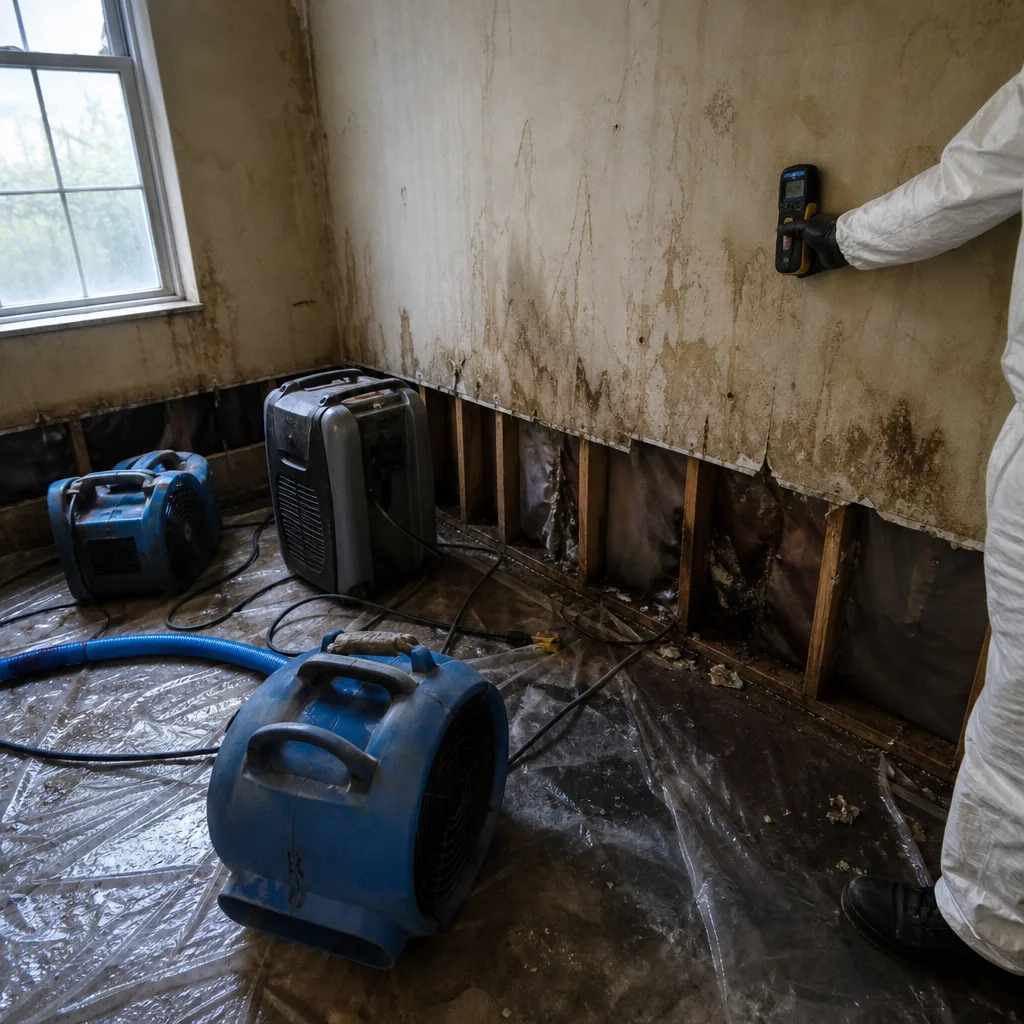 Before
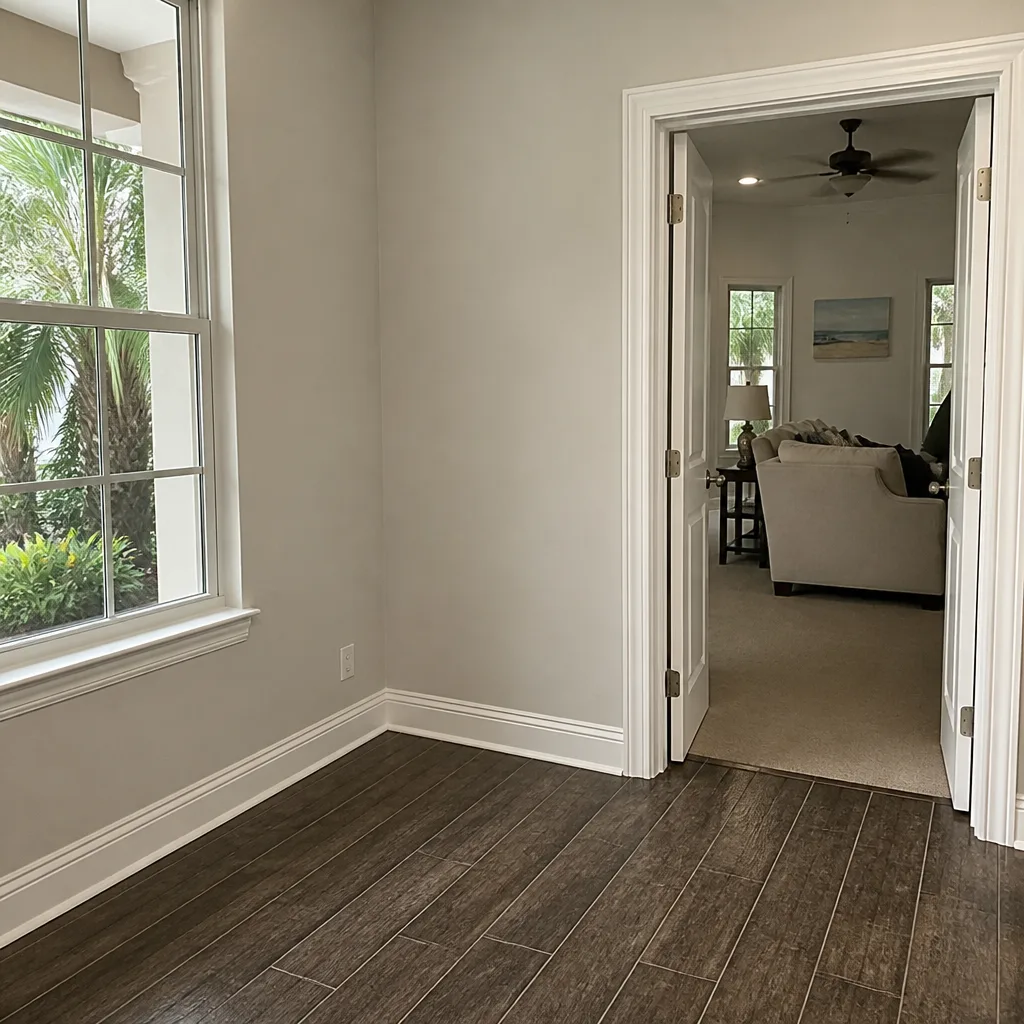 After
After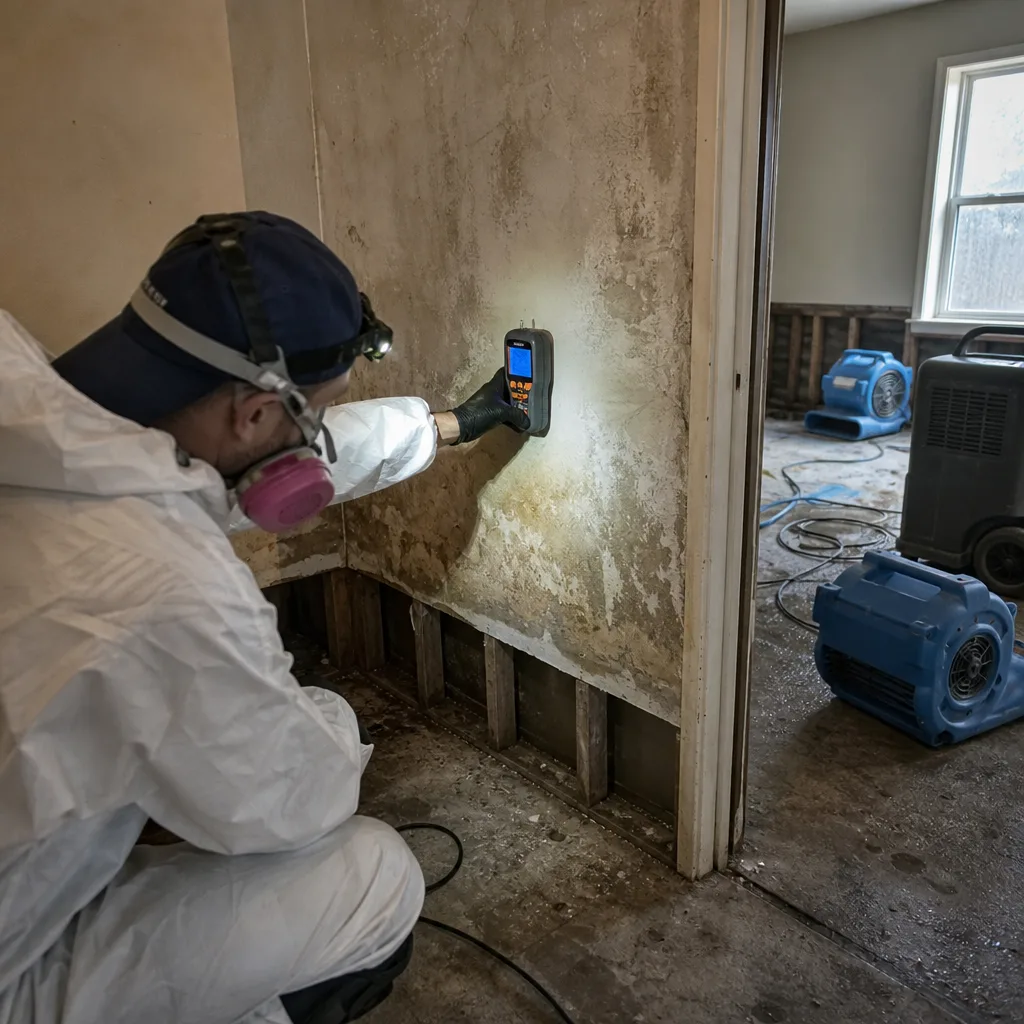 Before
 After
After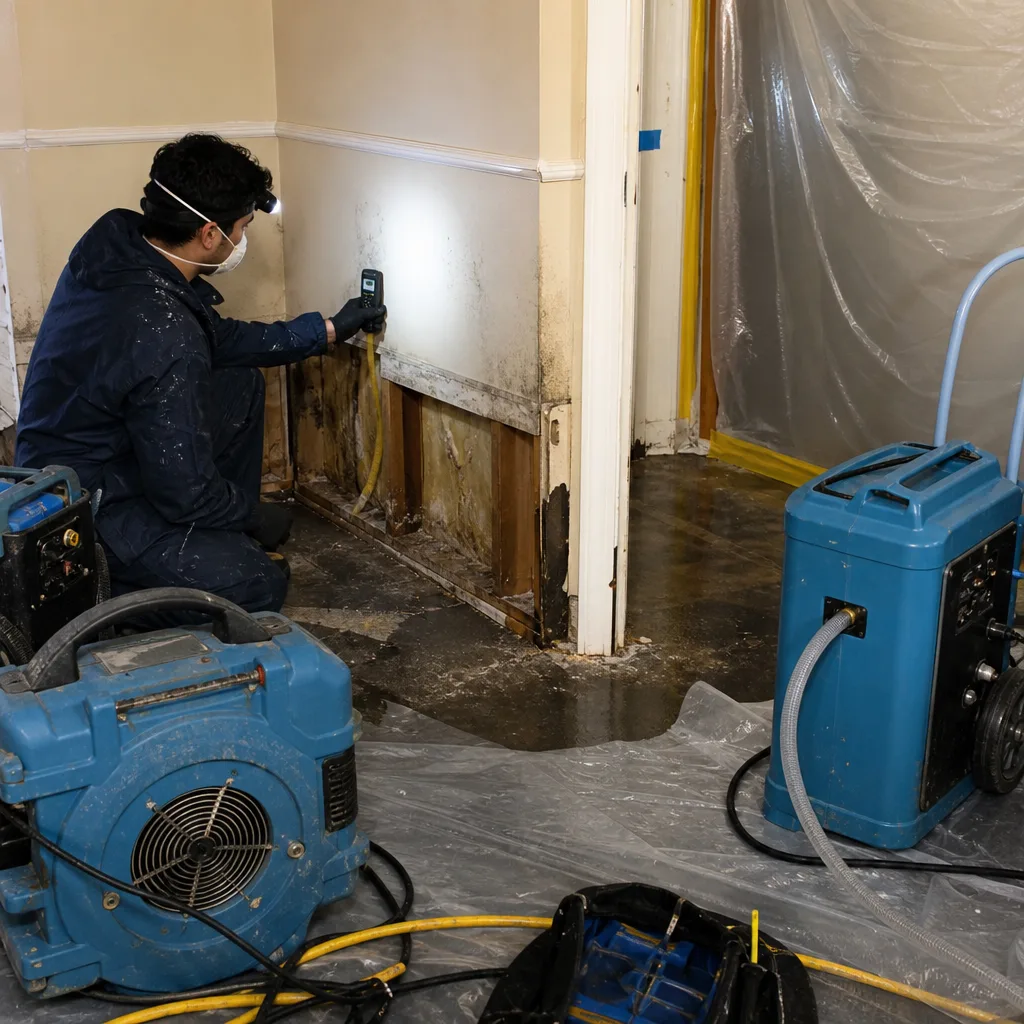 Before
 After
AfterWhen to Call a Professional
If water has been sitting for more than a few hours, if it came from a contaminated source like a sewage backup or an exterior flood, if you see water stains spreading across ceilings or running down walls, or if you smell musty odors that appeared after the water event, call a professional now. Water damage is deceptive: the visible puddle is rarely the extent of the problem. In Orlando’s humidity, even small amounts of trapped moisture can lead to mold within two days. Electrical hazards also compound quickly when water reaches outlets, switches, or panel areas. Don’t open electrical panels or walk through standing water to investigate; wait for a trained professional. Wendell Restoration Orlando offers free estimates throughout the Orlando area. Call (850) 771-2670 and a live person will answer, day or night.
Frequently Asked Questions
Most good Orlando restoration companies can have a technician on site within hours for true emergencies. Wendell answers every call with a live person 24/7, so you’ll know your arrival time the moment you hang up, and you can track the technician in real time on the way. For water damage, same-day response should be standard for any licensed company in the metro area. If a contractor tells you they can’t come for three days, call someone else, because in Orlando’s humidity those three days will expand the scope significantly. For an exact response time to your neighborhood, call (850) 771-2670.
It depends on what caused the water damage and what your policy says, but most standard Florida homeowner policies cover sudden and accidental water damage from burst pipes, appliance leaks, or storm intrusion. They generally do not cover gradual leaks or flood damage unless you have a separate flood policy. Your restoration contractor should document everything carefully from day one, including photos and moisture readings, to support your claim. Wendell coordinates directly with adjusters and handles direct insurance billing to reduce the back-and-forth on your end.
For anything beyond a small, contained spill that you caught immediately and dried within a few hours, you need professional restoration. Store-bought fans and dehumidifiers don’t generate the air movement or moisture removal rates required to dry structural cavities, and in Orlando’s climate, the moisture left behind will find its way into drywall and framing within days. What looks dry at the surface is often still soaked behind it. A professional assessment with moisture meters is the only reliable way to know the difference.
An Assignment of Benefits (AOB) is a legal document transferring your right to collect insurance proceeds from you to the contractor. You should generally refuse to sign one on the first day and approach any AOB request with serious skepticism. Once signed, the contractor controls your claim, and you lose the ability to object to the scope, pricing, or settlement. Many legitimate Orlando companies, including Wendell, complete emergency work without any AOB. For ongoing claim management, you can consider it later with legal advice, but never as a condition of starting emergency mitigation.
The drying process is complete when the moisture content of affected materials returns to the documented baseline for unaffected materials in your home, measured by a moisture meter and confirmed in writing. Relative humidity alone isn’t sufficient; the measurement should include a grain-per-pound (GPP) target stated in the original scope of work. A professional drying job ends with documented readings, not a visual “looks dry” call. If your contractor can’t show you the numbers, the drying isn’t verified.
Look for seven specific items: an equipment count with brand and capacity, a drying goal stated in GPP, the IICRC standard referenced, an antimicrobial treatment specification, a photo documentation schedule, milestone-based payment terms, and written completion criteria. If any of those are missing, ask for them before you sign. A legitimate contractor will add them quickly. If they resist, treat that as a disqualifying signal and keep looking.
The Bottom Line
Hiring a damage restoration contractor in Orlando doesn’t have to be a leap of faith, but it becomes one the moment you skip the license check, accept a verbal estimate, or sign an AOB on day one. The safeguards are knowable and fast: verify the MRSR license, confirm IICRC certification, require Certificates of Insurance, and demand a written scope with a fixed price and specific drying goals. Compare two or three quotes using the same checklist, make a decision within 48 hours, and hold the contractor to documented completion criteria before paying the final balance. Do those things and you’ll be in the small minority of Orlando homeowners who control the process rather than the other way around. That’s how it should be.
Written by Blake Sorensen, Owner at Wendell Restoration Orlando, serving Orlando since 2006.