
Last updated October 16, 2026
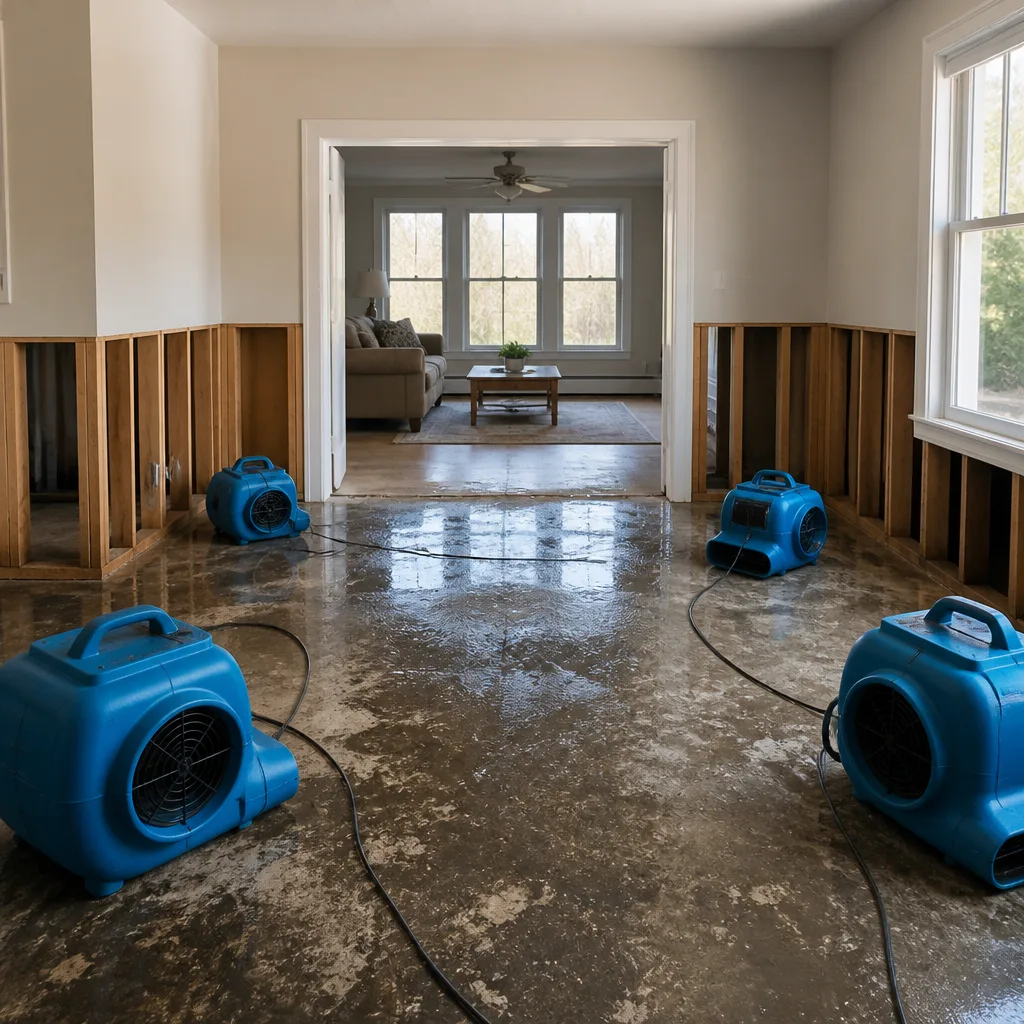 Water damage drying
 Fire & smoke cleanup
 Mold remediation
 Storm response
 Sewage cleanup
 Reconstruction
Free visual inspection and a written scope of work before any mitigation begins - photos, moisture readings, and drying logs go in your claim file
The scope we write is the scope we bill. Anything new gets shown to you, in writing, before we touch it.
Get your free estimateDamage Restoration Warning Signs: A Orlando Homeowner’s Reference Guide
Most Orlando homeowners don’t discover water damage. They discover the consequence of it: a ceiling that gave way at 2 a.m., a mold test that came back positive before closing, a floor that suddenly feels like a sponge underfoot. The frustrating part is that the warning signs were there for weeks, sometimes months. They just don’t look like warning signs. They look like a faint smell, a slightly higher water bill, a water stain you meant to check on. This guide walks you through every sensory cue, every hidden tell, and every number you should track so you catch damage during the cheap phase, not the demolition phase. For more guides & resources, visit our blog.
Quick Answer
The most reliable early warning signs of water damage in Orlando homes are a water bill that climbs without explanation, a musty smell that appears only when the AC runs, paint bubbling at window sills or baseboards, and water stains on ceilings that fade but keep returning. Any one of these means moisture is active somewhere it shouldn’t be. If you’re seeing one, you’re usually three to eight weeks away from visible failure.
Restoration work we handle
Table of Contents
- The 12 Sensory Warning Signs, Ranked by Urgency
- How to Read a Water Bill Spike Like a Leak Detector
- Visual Signs Specific to Stucco-Exterior Orlando Homes
- The Ghost Stain: What a Faded Water Mark Actually Means
- Where Orlando Homes Fail First: Corners, Transitions, and Mechanical Rooms
- The Mold Connection: Why Water Damage and Mold Are the Same Problem
- Common Mistakes to Avoid
- When to Call a Professional
- Frequently Asked Questions
The 12 Sensory Warning Signs, Ranked by Urgency
Before anything looks wet, it usually smells, sounds, or feels wrong. These signs are ordered from most urgent to least, based on what we see in Orlando homes every week. A sulfur smell near the water heater is not a nuisance. It’s a gas line issue or bacterial activity in standing water, and both need a response today.
1. Sulfur or Rotten-Egg Smell Near the Water Heater
If you smell sulfur near the tank, you’re dealing with one of two things: a gas line issue (natural gas is odorized to smell like rotten eggs) or bacterial growth in the tank itself. Bacteria that produce hydrogen sulfide thrive when the anode rod is depleted and the water sits at a temperature that lets them breed. A failing pressure relief valve or a slow leak at the tank base creates the damp, warm environment where these smells concentrate. Either way, this odor is a genuine safety signal, not a cleaning issue.
2. Musty Smell Only When the AC Kicks On
This is the warning sign Orlando homeowners dismiss most often, because Central Florida air is humid and everyone assumes their AC smells a little. But a musty smell that appears only when the system runs is not ambient humidity. It is condensation cycling through an already-wet air handler, evaporator coil, or ductwork. The smell is microbial growth, and by the time you can smell it, colonies are established. In our experience, remediating mold that has spread into ductwork averages $4,200 in Central Florida, before you even address the source of the moisture. The Mold Remediation in Orlando process starts with finding why the system is wet, not just killing what grew in it.
3. A Toilet That “Rocks” Slightly When You Sit
A toilet should be dead solid. If it moves even a quarter inch, the wax ring seal underneath has likely failed or the flange is cracked. Every time that toilet shifts, it breaks the seal a little more, and a tiny amount of water seeps into the subfloor with every flush. You won’t see it. You won’t smell it right away. But the plywood under that toilet is soaking it up, and by the time the vinyl or tile starts to stain, you’re usually looking at subfloor replacement, not a wax ring swap.
4. Paint Bubbling at the Sill Line or Baseboards
Paint bubbles when moisture behind it turns to water vapor and pushes against the film. It’s not a paint failure. It’s a moisture failure. On baseboards, it usually means water is wicking up from the slab or from a leaking supply line inside the wall. At window sills, it’s a flashing or sealant issue letting rain or AC condensation migrate into the wall cavity.
5. A Floor That Feels Warm in One Spot
If you have a tile or concrete floor and one area feels noticeably warmer than the rest, you might have a hot water line leaking under the slab. The warm spot is the pipe’s heat transferring through the concrete, helped along by the water saturating the area. This is a slab leak sign that often appears weeks before any visible wetness or cracking.
6. Baseboards That Have Pulled Away From the Wall
When the drywall or framing behind a baseboard absorbs water, it swells. The baseboard can’t swell with it, so it delaminates, gaps, or the caulk line splits. A baseboard that’s separated from the wall by even an eighth of an inch, especially at an exterior wall or in a bathroom, is moisture at work.
7. Doors or Windows That Suddenly Stick
Wood swells when it absorbs moisture. In Orlando’s humidity, some seasonal movement is normal. But a door that only started sticking in the last month, or a window you can no longer open easily, can mean the framing around it is wet. If it’s isolated to one door or one frame, not a whole-house seasonal shift, treat it as a moisture signal.
8. The Sound of Running Water When Nothing’s On
Turn off every faucet, every appliance, the ice maker, the irrigation system. Then stand near a wall and listen. If you hear a faint hiss or running water, there’s water moving through a pipe where it shouldn’t be. This is how slab leaks are often discovered: a subtle sound behind the wall or under the floor, no visible water anywhere.
9. A Ceiling Stain That’s Slightly Yellow, Not Brown
People associate water damage with dark brown stains. But early, slow leaks often present as faint yellow or tea-colored rings, because the water is carrying only small amounts of dissolved material from drywall or insulation. By the time a stain is dark brown, the leak has been active for a long time and has saturated a large area.
10. Grout Lines That Keep Cracking in the Same Spot
Grout doesn’t crack because it’s old. It cracks because the substrate under it is moving. If the same crack keeps reappearing after you’ve repaired it, the subfloor beneath that tile is either swelling from moisture or rotting. There’s no decorative fix for that.
11. Slightly Warped Cabinet Bottoms Under Sinks
Open the cabinet under every sink in the house and look at the bottom panel. If it’s swollen, dark, or the laminate is lifting, there’s been a slow drip at some point. It may be active right now. A slow drain drip or supply line weep can run for months without anyone noticing, because the cabinet is closed and the water evaporates into the air.
12. A Slight Slope Where the Floor Meets an Exterior Wall
In slab homes, a floor that feels like it slopes toward an exterior wall can be a sign that the foundation has been affected by long-term moisture. This is a slower-moving issue than a supply line leak, but it’s often the result of poor drainage, gutter failures, or sprinkler overspray that’s been saturating the soil against the slab for years.
How to Read a Water Bill Spike Like a Leak Detector
Your water bill is the cheapest leak detection tool you own. It reads every drop, all day, whether you’re home or not. The trick is knowing what the numbers mean before you see water anywhere.
In Orlando, the average household of four uses between 6,000 and 12,000 gallons per month, including irrigation. A single running toilet can push through 2,000 to 4,000 gallons a day. A pinhole slab leak might only be 100 to 300 gallons a day, but it’s running 24/7, every day, for months.
The GPD Math: Reading Your Meter as a Diagnostic Tool
Here’s the step-by-step method we walk homeowners through on the phone, because it answers one question: is this a toilet, or is this a pipe in the wall or slab? For a deeper dive on choosing the right approach, see DIY vs Professional Damage Restoration: The Orlando Homeowner’s Decision Guide.
- Find your water meter. It’s typically near the curb or sidewalk, under a concrete or plastic lid.
- Turn off all water in the house. Every faucet, every appliance, the irrigation timer, the ice maker, anything that draws water.
- Read the meter and write down the number. Include every digit.
- Wait 15 minutes. Don’t run anything. Don’t flush. Don’t wash hands.
- Read the meter again.
If the number moved, you have a leak somewhere between the meter and your fixtures. The next test is simpler and narrows it down fast:
- Shut off the main water supply valve inside the house (usually near the water heater or where the line enters the slab).
- Read the meter again and wait another 15 minutes.
- If the meter is still moving with the main valve off, the leak is between the meter and the house: a yard line or service line leak.
- If the meter stops with the main valve off, the leak is inside the house: a toilet flapper, a supply line, an appliance, or a slab leak.
Then there’s the usage-level math. If your bill jumped from 8,000 gallons to 16,000 gallons in a month, that’s about 267 extra gallons per day. A running toilet typically accounts for 2,000 to 5,000 gallons per day, so a moderate bill spike is usually not a toilet. It’s more likely a slow slab leak, a dripping supply line inside a wall cavity, or an irrigation zone that’s running when you think it’s off. When homeowners call us after noticing a spike and the math points that direction, we typically find the source during a Water Damage Repair in Orlando inspection, often before any drywall or flooring is visibly wet.
Visual Signs Specific to Stucco-Exterior Orlando Homes
Most water damage guides written for national audiences assume wood siding or brick. Orlando’s housing stock is different. Single-family homes built from the 1980s forward are overwhelmingly concrete block with stucco cladding, and stucco doesn’t show water damage the way wood lap siding does. It hides moisture until it fails in predictable, specific ways. Here’s what to look for on a stucco exterior.
Efflorescence: The White Chalky Residue That’s Not Just Cosmetic
Efflorescence is the white, chalky, crystalline deposit that appears on stucco, concrete, or masonry. It forms when water moves through the material and carries dissolved salts to the surface, where the water evaporates and leaves the salt behind. A little efflorescence on a foundation wall after heavy rain is common. But efflorescence that appears in vertical streaks under windows, along the roofline, or around vents and pipes means water is entering the wall system and traveling through it. The wall is being hollowed out from the inside, salt by salt.
Hairline Cracks at Window Corners
Stucco cracks. In Central Florida, temperature swings, settling, and hurricane season wind loads all stress the material. Most hairline cracks are non-structural and harmless. But hairline cracks that start specifically at the corners of windows or doors, especially if they angle outward at a 45-degree shape, are a flashing or sealant failure. Water enters those cracks, works its way behind the stucco, and then runs down the wall cavity to the sill or header. Regular patching with caulk is a temporary fix; the sealant joint around the window frame is usually the actual failure point.
Paint Bubbling at the Sill Line
On the interior, paint bubbling at the bottom of a window frame means water is pooling inside the wall cavity and the moisture is being driven inward. On the exterior, peeling or bubbling paint at the sill line under a window means the sill pan flashing was never installed, or has failed, and water is running down behind the stucco face. In Orlando’s afternoon thunderstorm season, a single window with failed flashing can direct enough water into the wall over a summer to rot the framing around the window and saturate the insulation below it.
What These Signs Share
All three of these stucco signs point to the same root issue: water penetrating the exterior envelope and getting trapped inside the wall system. Stucco is porous and designed to absorb some moisture and release it through evaporation. But when water gets behind the stucco, through a crack or failed sealant joint, it’s stuck between the stucco and the house wrap or framing. In Orlando’s humid climate, that water doesn’t evaporate quickly. It hangs around, feeds mold, rots the sheathing, and eventually shows up as an interior stain, a soft spot, or a musty smell you can’t place. If you need a closer look, Wendell Restoration Orlando home inspections are free and the assessment includes moisture readings at every window corner and sill transition.
The Ghost Stain: What a Faded Water Mark Actually Means
The “ghost stain” is one of the most misread signals in a Orlando home. You see a faint, yellowish or light brown mark on the ceiling. It’s not wet. It’s not growing. It just looks like an old stain. Most people assume the leak was fixed and the stain was left behind, or it was a one-time incident. Here’s what that assumption costs.
Water stains don’t fade naturally. A stain that has lightened over time means the area has dried, been re-wet, and dried again. The cycle of wetting and drying gradually dilutes the stain’s color, but the moisture source is still there, active, on a slow cycle. The stain is not evidence of a solved problem. It’s evidence of an intermittent leak that runs when conditions align: a roof leak that only opens during certain wind-driven rain events, a condensation issue that only occurs during high-humidity periods, a supply line that only drips when the water pressure spikes at night.
What makes ghost stains dangerous is the moisture that doesn’t reach the visible surface. A slow leak in a ceiling cavity saturates the insulation above the drywall first. That insulation holds water against the drywall and the adjacent framing for days or weeks at a time, even after the visible stain dries. Mold grows in that dark, damp cavity long before the stain ever looks black. By the time the stain darkens and spreads, the affected area behind it is often four to six times larger than what you can see.
When our technicians evaluate a ceiling stain in Orlando, they’re not just looking at the mark. They’re using a moisture meter to map the area around it, often finding elevated readings 3 to 5 feet away from the visible stain. That’s the hidden footprint of the leak. Moisture mapping, not visual inspection, is what separates a small ceiling patch from a full insulation removal and drywall replacement. If you have a stain that’s faded but not gone, treat it as an active leak until a moisture meter says otherwise.
Where Orlando Homes Fail First: Corners, Transitions, and Mechanical Rooms
We’ve walked through enough Orlando homes to know where the failures cluster. They’re not random. Water damage in Central Florida homes follows predictable patterns, because the construction methods, climate, and daily-use patterns are consistent across the region. Here’s what our technicians look for in a free assessment walk-through, and what you should check at home.
Where the Wall Meets the Slab, at Every Exterior Corner
The most common point of water entry in a slab-on-grade South Florida home isn’t the roof or a window. It’s the joint where the exterior wall meets the floor slab, particularly at corners. During a heavy Orlando downpour, water sheets down the exterior wall, hits the ground, and splashes up against that joint. If the exterior sealant has failed, or the grade slopes toward the house, water finds its way under the wall plate and into the interior. The telltale sign is baseboard discoloration or slight cupping at an exterior corner, usually in a room you don’t use daily.
The Water Heater Closet
In many Orlando homes, the water heater lives in a closet off the garage, a hallway, or even a bedroom hallway, often sitting in a drain pan that’s supposed to catch a tank failure. The problem is that the drain line for that pan is frequently clogged, undersized, or missing entirely. A slow leak at the tank’s base fills the pan, the pan overflows, and water runs under the adjacent flooring. The first sign is often a musty smell in the closet, not water on the floor. We recommend checking the pan once a season: if there’s water in it, the pan drain is clogged and the tank is already leaking. For a full maintenance schedule, see Seasonal Damage Restoration Care for Orlando: Year-Round Homeowner’s Guide.
The AC Air Handler, and the Drain Line That Connects to It
The condensate drain line is the most common source of “mystery” water damage in Orlando. Your AC pulls gallons of moisture out of the air every day during summer. That water has to go somewhere, and in most homes it runs through a PVC drain line to a plumbing stack or outdoors. When that line clogs (and it will clog; algae and mineral buildup are constant in Florida’s water), the condensate backs up into the drain pan under the air handler. That pan has its own secondary drain, which also clogs. Then the pan overflows, and water runs through the ceiling or into the wall below the air handler. The first sign is usually a wet spot on the ceiling under a second-floor air handler, or a musty smell in a first-floor closet.
Under Every Sink, at the Valve Stems
Angle stops, the little shut-off valves under your sinks and toilets, are the single most overlooked leak source in Orlando homes. They’re cheap, they’re original to the house in many cases, and they fail slowly. The leak usually starts at the stem packing, where a tiny amount of water seeps out every time the valve is turned, or drips continuously if the valve is old enough. That drip runs down the pipe and into the cabinet floor or the wall. By the time a homeowner opens the cabinet and sees wet stains, the drip has been active for months.
The Garage, at the Transition Where the Drywall Meets the Concrete
Garages are the most abuse-tolerant room in the house, which is exactly why damage hides there. Water heaters, washing machines, and water softeners all live in the garage in many Orlando homes, and any leak at an appliance connection or a washing machine hose runs along the floor and soaks into the drywall at the base of the wall. Because the garage floor is unsealed concrete, a slow leak doesn’t pool. It spreads, evaporates, and leaves mineral deposits behind. If the bottom 6 inches of your garage drywall is discolored, soft, or flaking, there’s been water on that wall repeatedly.
The Mold Connection: Why Water Damage and Mold Are the Same Problem
Homeowners often think of water damage and mold as two separate problems. They’re not. Mold is what water damage becomes when it’s not dried properly and quickly. In Orlando’s climate, that transformation happens fast, sometimes faster than you’d believe.
The math matters here. Mold spores need three things to grow: a food source (drywall paper, wood, carpet backing), the right temperature (between 60 and 85 degrees Fahrenheit), and moisture. Orlando’s indoor temperatures sit in that range nearly year-round. So the only variable that matters is moisture. Remove it within 24 to 48 hours, and mold never gets a foothold. Let it sit, and you have a growing biological problem on top of a structural one.
The moisture that feeds mold doesn’t have to be visible. A slow leak inside a wall cavity creates an environment where the relative humidity inside that cavity can stay at 80% or higher, day after day. The drywall can look completely normal from the outside while mold grows on the paper backing inside the cavity. This is why we use psychrometric drying, which is a fancy way of saying we track the air’s moisture level so we know when your home is truly dry, not just surface-dry. Our equipment from B-Air and Injectidry is designed to pull moisture out of wall cavities and under flooring, not just from the air in the room.
This is also why IICRC standards exist. The Institute of Inspection, Cleaning and Restoration Certification sets specific moisture thresholds for different materials, below which mold can’t grow. A professional restoration company working to IICRC standards measures those thresholds with moisture meters and documents them. A general contractor with a fan can’t tell you whether the framing inside your wall is dry. That’s the difference between a repair that lasts and a mold problem that returns six months later. If you’re dealing with both, Water Damage Restoration in Orlando and mold remediation are handled together, not as sequential projects.
Common Mistakes to Avoid
- Painting over a water stain without addressing the leak. Primer and paint will cover the discoloration for a few weeks, but the moisture source is still active behind the drywall. The stain will return, and the damage behind it will have grown in the meantime.
- Assuming a high water bill is the irrigation system. Most people blame the sprinklers first, because they’re outdoors and invisible in daily life. But in Orlando homes with a sudden bill jump, the leak is as likely to be a running toilet or a slab leak as an irrigation zone.
- Running a dehumidifier and calling it fixed. A dehumidifier removes moisture from the air, not from inside walls, floors, or drywall. If the water is inside the building materials, the dehumidifier is just managing the symptom while the structure stays wet.
- Ignoring a musty smell because you “can’t find anything.” If you can smell microbial growth, it’s already established. The source is hidden: inside a wall, under flooring, in the ductwork, behind a cabinet. Not seeing it doesn’t mean it isn’t there.
- Waiting for a ceiling stain to darken before acting. By the time a stain is dark brown and spreading, the insulation above it is saturated, the drywall is compromised, and the affected area is significantly larger than the visible mark.
- Skipping the secondary drain line on the AC. Most homeowners check the primary condensate line, if they check any. The secondary drain pan under the air handler is where the overflow goes when the primary clogs. If the secondary is clogged too, you’re hours from water running through your ceiling.
When to Call a Professional
Some water damage is visible and obvious: a supply line burst, a water heater that emptied itself, a roof leak during a storm. If you can see the source and shut off the water, you can manage the immediate response. But most of the warning signs in this guide are not emergencies you can see. They’re signals of hidden, active moisture that require moisture mapping to locate and professional-grade drying equipment to resolve. Call a professional when you have a water bill spike you can’t explain with the meter test, a musty smell you can’t source, a stain that fades and returns, or any of the stucco signs that indicate water penetration. Not sure who to call? Read How to Hire a Damage Restoration Contractor in Orlando: A Step-by-Step Guide first. Wendell Restoration Orlando offers free estimates in Orlando. Call (850) 771-2670 and a live person picks up, not a voicemail.
Frequently Asked Questions
The most common hidden sign is a musty or earthy smell that appears only when the AC system runs, which signals condensation cycling through a wet air handler or ductwork and usually means mold is already growing somewhere in the system. Other frequent early indicators include a water bill that climbs without explanation and paint bubbling at baseboards or window sills.
A pinhole leak in a supply line typically runs 100 to 300 gallons per day, which is 3,000 to 9,000 gallons per month. A running toilet can push through 2,000 to 5,000 gallons per day, or 60,000 to 150,000 gallons per month. Even a slow drip under a sink adds up to several hundred gallons monthly.
Yes. A faded water stain is evidence of a recurring, intermittent leak that has gone through multiple wet-dry cycles. The moisture source is still active, and the area behind the stain is often significantly larger than the visible mark. Treat any ceiling stain, faded or dark, as an active leak until a moisture meter reading says otherwise.
In Orlando’s climate, mold can begin growing within 24 to 48 hours of a water event, because indoor temperatures sit in the 60 to 85 degree range where mold thrives and relative humidity stays high. Fast, professional drying that removes moisture from inside building materials, not just from the air, is the only way to prevent mold from establishing.
Costs depend entirely on where the leak is and how long it’s been active. A leaking angle stop under a sink might be $150 to $300 to replace, while a slab leak that’s been saturating flooring and drywall for months can run into the thousands. Getting a written estimate before any work begins is the only way to know your number up front.
Coverage depends on your policy, but many Orlando homeowners’ policies cover sudden and accidental water damage from burst pipes or appliance failures, while excluding damage from slow, ongoing leaks that were not addressed promptly. Photo documentation and a clear written assessment from a restoration company strengthen an insurance claim, and we coordinate directly with adjusters to make sure the full scope is captured.
The Bottom Line
Water damage in Orlando homes is almost always discoverable before it becomes a crisis. The signs are there: a water bill that tells a story, a smell that appears at predictable moments, a stain that won’t stay gone, a floor that feels warmer than it should. The problem is that most homeowners are not trained to read these signals, and the signals themselves look and feel like minor annoyances. Reading them well means cheaper repairs, less demolition, and a home that doesn’t hide problems in its walls. If any of these warning signs sound familiar, call (850) 771-2670 for a free assessment. You’ll get a written price before any work starts, and a technician who shows up when they say they will.
Written by Blake Sorensen, Owner at Wendell Restoration Orlando, serving Orlando since 2006.
See the difference
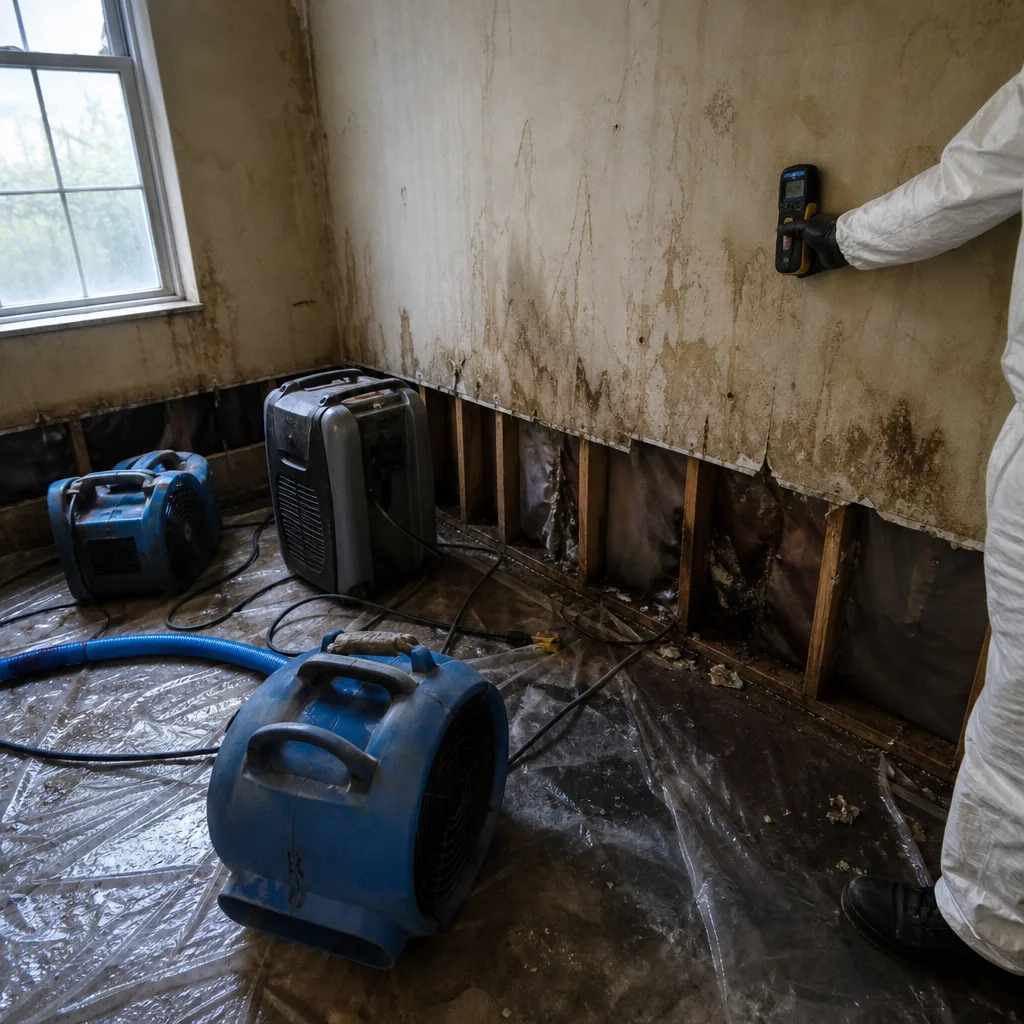 Before
 After
After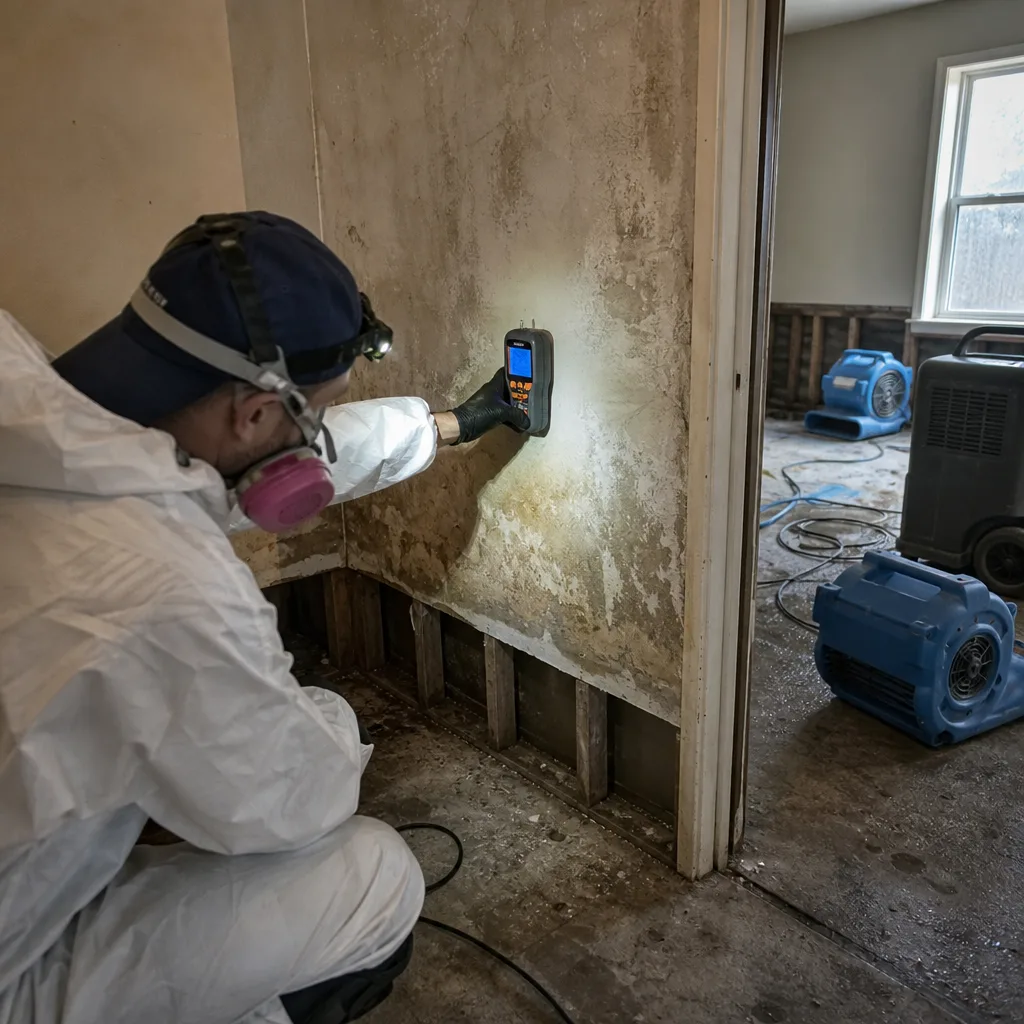 Before
 After
After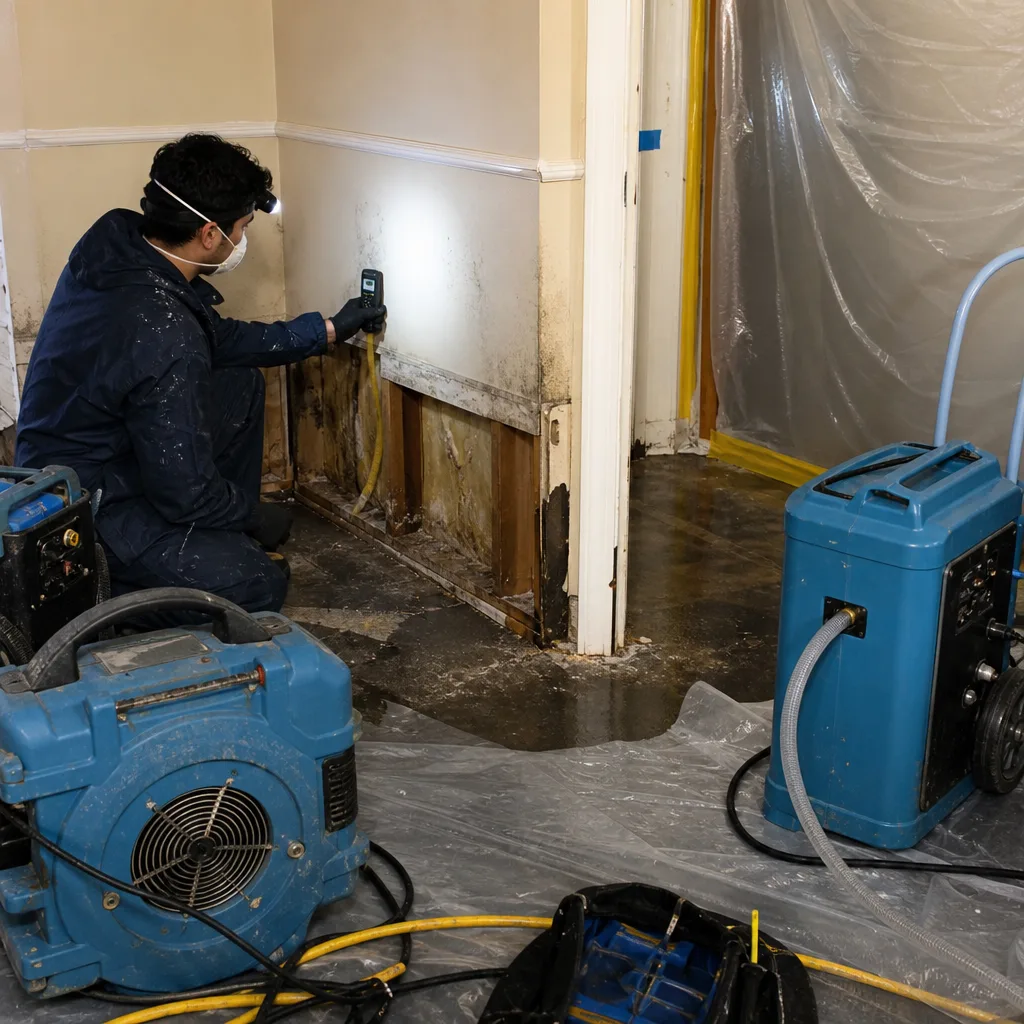 Before
 After
After