
Last updated October 16, 2026
 Water damage drying
 Fire & smoke cleanup
 Mold remediation
 Storm response
 Sewage cleanup
 Reconstruction
Free visual inspection and a written scope of work before any mitigation begins - photos, moisture readings, and drying logs go in your claim file
The scope we write is the scope we bill. Anything new gets shown to you, in writing, before we touch it.
Get your free estimateDamage Restoration Permits, Codes & Inspections in FL: What You Need to Know
Here’s a stat that should keep every Orlando homeowner up at night: Florida Statute 489 requires a permit for any structural, electrical, or plumbing restoration work exceeding $1,000 in a primary residence. That threshold is laughably low for damage restoration. A single day of water extraction and drywall replacement blows past it before lunch. Yet fewer than 40% of restoration jobs in unincorporated Orange County are pulled with the correct permit. What you’re about to read is the difference between a repair your insurance actually covers and a repair that quietly torpedoes your home’s resale value five years from now, and you can find Damage Restoration Warning Signs: A Orlando Homeowner’s Reference Guide for more guidance.
Restoration work we handle
Quick Answer
In Florida, damage restoration work that alters structure, electrical, plumbing, or mechanical systems requires a building permit when the total job value exceeds $1,000, which virtually all water, fire, and mold restoration projects do. In Orlando and Orange County, that means drywall replacement, subfloor repair, and any post-flood electrical work must be permitted through the city or county building department, inspected, and signed off before you can consider the job legally closed. Skipping this step can void your insurance payout, stall a future home sale, and leave you personally liable for code violations discovered later.
Table of Contents
- Florida Permit Thresholds: The $1,000 Rule That Changes Everything
- Orange County and City of Orlando: What Actually Triggers a Permit
- The 50% Rule: How FEMA Regulations Can Force a Full Code Upgrade
- Owner-Builder vs. Contractor-Pulled Permits: Why Insurance Companies Care
- What Happens When Unpermitted Work Is Discovered
- Inspection Sequencing: Aligning IICRC S500 Protocol with Orange County Code
- Step-by-Step: The Right Way to Permit Damage Restoration in Orlando
- Common Mistakes to Avoid
- When to Call a Professional
- Frequently Asked Questions
- The Bottom Line
Florida Permit Thresholds: The $1,000 Rule That Changes Everything
Florida Statute 489 is the legal backbone of contractor licensing and permitting in this state, and its trigger point is far lower than most homeowners assume. Any work that alters load-bearing structure, electrical systems, plumbing lines, or mechanical equipment in a primary residence and exceeds $1,000 in total value requires a permit. Not optional. Not “if the contractor thinks it’s serious enough.” Required by law.
Here’s what that means in real terms for damage restoration:
- Water extraction alone: Usually under $1,000 if it’s a small leak caught fast. No permit needed for extraction itself.
- Drywall replacement: A flooded bedroom with 4 feet of drywall cut and replaced is almost always a $1,000+ job. Permit required.
- Subfloor repair: Rotted OSB or plywood under a bathroom or kitchen after a slow leak. Structurally adjacent work. Permit required.
- Electrical after flooding: Any outlet, breaker, or wiring touched within 18 inches of floodwater. Permit required, no exceptions.
- Mold remediation: The removal itself may not need a structural permit, but any drywall or insulation replacement during the rebuild does.
What surprises us most is how consistently homeowners hear the opposite from the first contractor who shows up at 2 AM with a truck full of dehumidifiers. The person standing in your flooded living room has a financial incentive to start work immediately, and pulling a permit means waiting for plan review and inspection scheduling. An honest company tells you that upfront. Our own water damage restoration process in Orlando includes a permit assessment in the written price we give you before any work starts, because we’d rather lose the job to a cheaper unpermitted bid than put you in a legal bind.
Orange County and City of Orlando: What Actually Triggers a Permit
Florida’s statewide statute sets the floor. Orange County and the City of Orlando layer their own specific rules on top. If you live inside Orlando city limits, you’re dealing with the City of Orlando Permitting Services Division. If you’re in unincorporated Orange County, it’s the Orange County Division of Building Safety. If you’re in one of the smaller municipalities like Winter Park, Apopka, or Ocoee, you may have a third set of local amendments.
These are the specific triggers we see trip up Orlando homeowners most often:
- Drywall replacement beyond 16 square feet: The city and county both treat this as finish work that technically requires a building permit when it’s damage-related, because the framing behind it has to be inspected for moisture and microbial contamination before the wall gets closed back up.
- Any electrical work below a flooded line: In Orlando’s climate, flooding doesn’t dry out fast. The city wants wiring inspected before power is restored. This is a life-safety issue, and the inspector’s sign-off is part of what keeps your homeowner’s policy valid.
- Subfloor and structural member repair: Orlando’s high water table means subfloor rot is common in slab-on-grade homes after flooding, and in pier-and-beam homes, even more so. Any joist, beam, or sheathing replacement is structural work requiring a permit and a framing inspection.
- HVAC ductwork replacement after water intrusion: Ducts that got wet are a mold factory. Orange County mechanical code requires a mechanical permit for duct replacement, and the inspector will want to see the old ductwork pulled, not just dried.
When we work on water damage repair in Orlando, the permit is not an afterthought. It’s part of the scope we agree on in writing before the first fan gets plugged in. If you’re comparing bids and one company “doesn’t think a permit is necessary” for a job that clearly crosses the $1,000 threshold, that’s not a favor. That’s a liability being handed to you wrapped in a discount.
The 50% Rule: How FEMA Regulations Can Force a Full Code Upgrade
If your Orlando home sits in a FEMA-designated flood zone, you need to understand the Substantial Improvement Rule, commonly called the 50% Rule. It’s not a suggestion from your insurance adjuster. It’s federal regulation enforced through local building departments, and it can turn a $15,000 repair into a $150,000 code-compliance project if you don’t understand it before work starts.
Here’s how it works:
- FEMA establishes a market value for your home. In Orlando, this is typically assessed through the Orange County Property Appraiser’s records, adjusted for condition and recent sales.
- Any repair or improvement project is evaluated against that value. If the cumulative cost of work over any period exceeds 50% of the home’s market value, the entire structure must be brought up to current FEMA floodplain regulations.
- “Cumulative” is the word that catches people. Multiple small repairs over 5, 10, even 15 years can count against you. A kitchen flood fix in 2020 and a bathroom mold rebuild in 2024 may combine to cross the threshold.
- Compliance with current flood code often means elevating the home, which in Orlando’s older neighborhoods like College Park or Delaney Park can be economically devastating for a pier-and-beam house built in the 1940s.
This is why a contractor who “just wants to get you dry” can accidentally saddle you with a compliance obligation you didn’t know existed. When you pull a permit, the building department runs the math. When you don’t, the math still exists. It just waits until the next sale, the next refinance, or the next flood claim to surface. We’ve seen Orlando homeowners discover at a closing table that their unpermitted 2018 water damage repair now triggers a 50% Rule review, killing the sale.
Owner-Builder vs. Contractor-Pulled Permits: Why Insurance Companies Care
Florida allows a homeowner to act as an “owner-builder” and pull their own permit for work on their primary residence. On the surface, it looks like a way to save money. In practice, it’s a red flag to insurance underwriters and a recurring headache in Florida damage restoration.
Here’s what’s actually different:
- Liability chain: When a licensed contractor pulls the permit, the contractor’s license, insurance, and bond are on the hook for the quality of the work. The state knows who did what. When you pull an owner-builder permit, you are legally the contractor. Every defect, every code violation, every future failure is yours alone.
- Insurance scrutiny: Florida insurers have learned to look for owner-builder permits on damage restoration claims. The words “owner-builder” in a permit history suggest the work may not have been done to professional standard, and adjusters in this state are authorized to reduce or deny payouts on that basis. It’s not paranoia. It’s documented underwriting practice after Hurricane Ian and Hurricane Nicole claims.
- Resale disclosure: Florida requires sellers to disclose unpermitted work. An owner-builder permit is not unpermitted work, but it shifts the burden of proof. The buyer’s inspector will dig into whether the work was actually done correctly, and the buyer’s lender may require a structural engineer’s report before funding.
In our experience across Orlando, the homeowners who pull owner-builder permits for water damage restoration are usually the ones who later tell us they wish they’d known what it would cost them at their next transaction. A permit pulled by a Florida-licensed contractor is a clean paper trail. It tells the insurance company and the future buyer that a professional accepted accountability for the work.
What Happens When Unpermitted Work Is Discovered
You get away with it until you don’t. That’s the honest answer. And the “don’t” moment is almost always one of three things: an insurance claim on new damage, a home sale with a diligent inspector, or a lien dispute with the contractor who did the work.
Here’s the cascade in each scenario:
- Insurance payout: You file a claim for new water damage. The adjuster’s investigation turns up evidence of prior unpermitted restoration work, usually visible in drywall seams, new subfloor under old tile, or wiring that doesn’t match the home’s age. Florida Statute 627.409 allows an insurer to void a policy for misrepresentation or concealment of material facts, and unpermitted structural work is material. Your claim gets denied. In the worst cases, your policy gets rescinded and your premiums become unaffordable with any carrier.
- Home sale: The buyer’s home inspector flags the work. The buyer’s lender won’t fund without a permit history. You’re now paying to have the work inspected retroactively, which in Orange County means opening walls, paying a structural engineer, and fixing whatever the inspector finds, all while your $450,000 contract hangs in the balance. In a cooling market, the buyer walks. In a hot market, you eat $20,000 in concessions.
- Contractor dispute: The company that did the unpermitted work files a lien for unpaid balance. You contest it. The lien dispute goes to court, and now the unpermitted work is on the record. The judge doesn’t care that the contractor was the one who suggested skipping the permit. You’re the homeowner. You’re the one with the legal obligation.
We don’t say this to scare anyone. We say it because every one of these scenarios has walked through our office in Orlando, and in every case, the homeowner thought they were saving money by moving faster.
Inspection Sequencing: Aligning IICRC S500 Protocol with Orange County Code
There are two rulebooks in a proper damage restoration, and they don’t always speak the same language. The IICRC S500 is the water damage industry’s standard of care. It tells us how to dry: psychrometric drying to track the air’s moisture content, antimicrobial treatment to prevent mold, and equipment placement based on measured humidity in the affected space, not guesswork. The Orange County building code tells us what the building must look like after the dry-out: structural integrity, electrical safety, moisture content in wood below 14%, and no visible microbial growth.
The sequencing matters more than most homeowners realize:
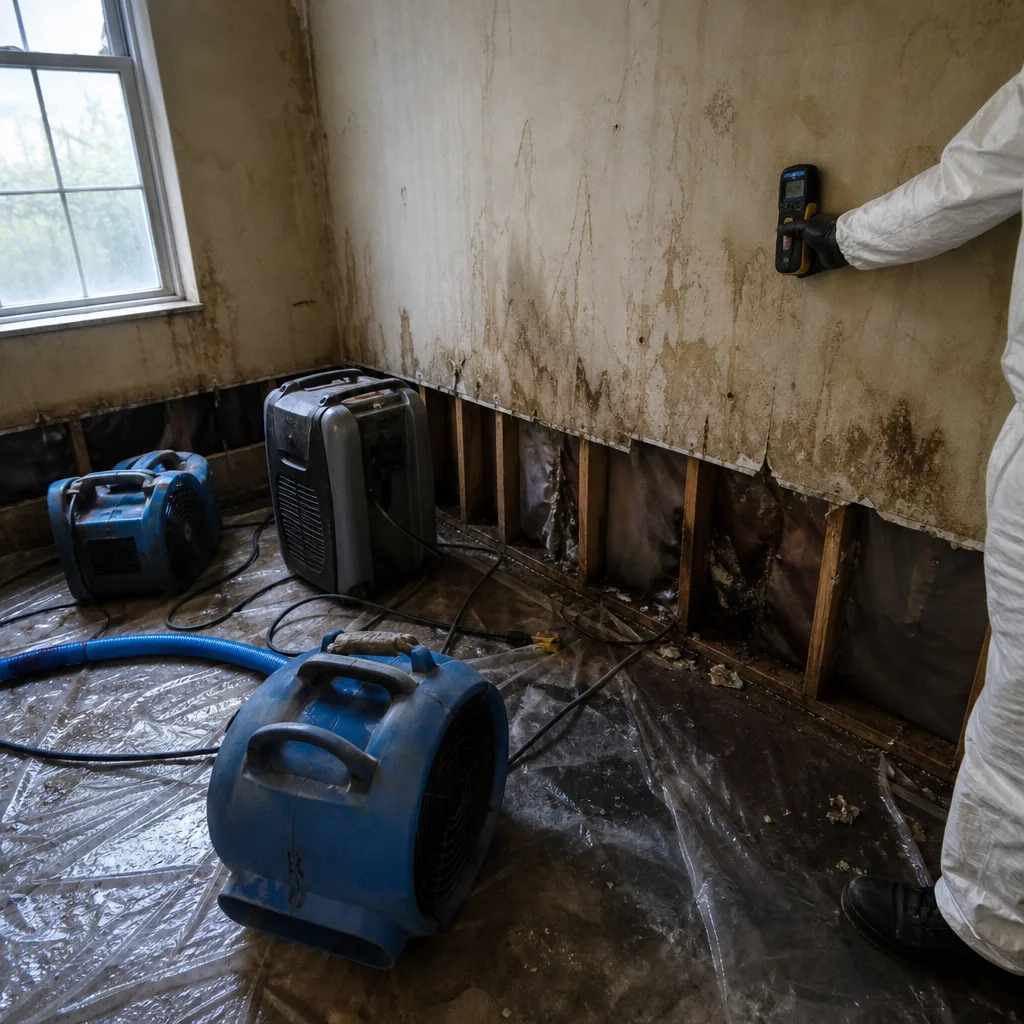
- Extraction and drying phase: IICRC S500 governs. We measure, we document, we dry. No permit required for this phase, but documentation is everything. Every reading is evidence for your insurance claim.
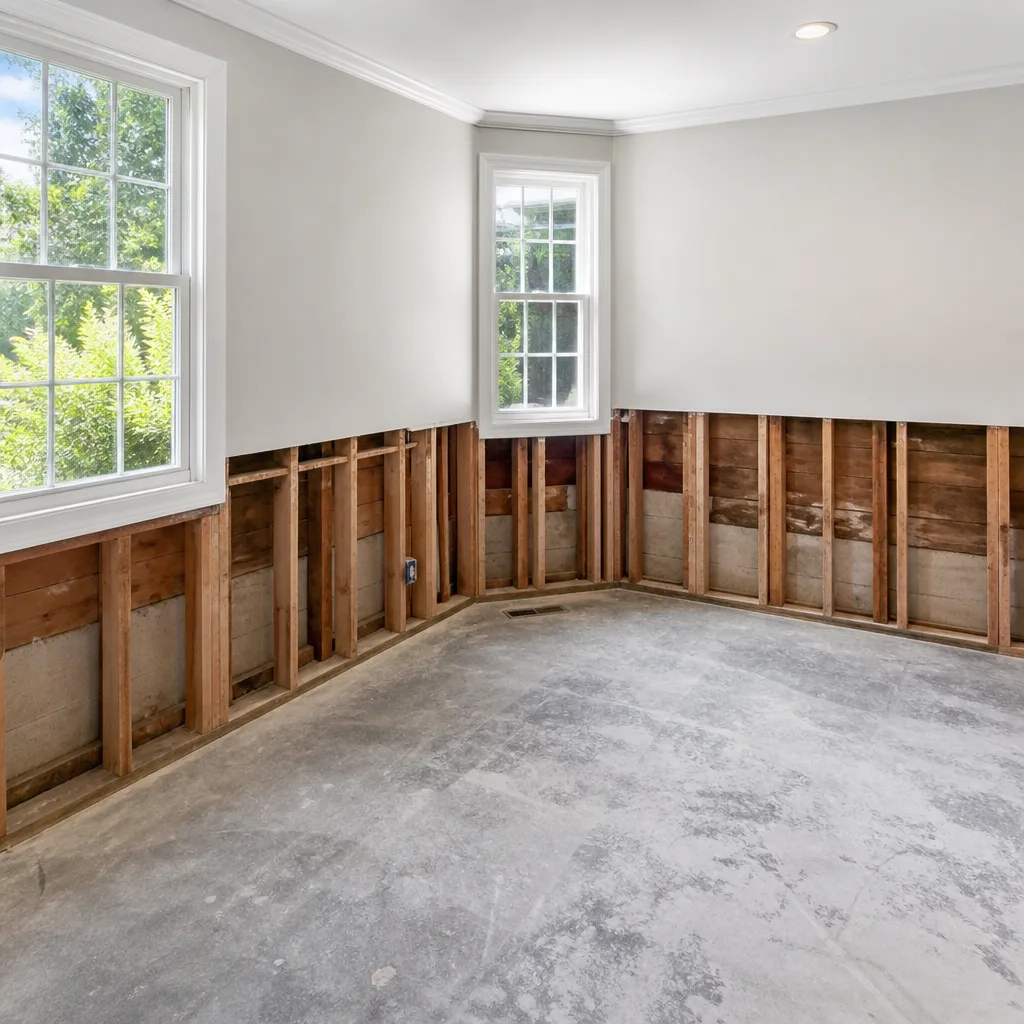
- Demolition phase: This is where the permit conversation starts. Cutting out drywall to expose framing is not just a drying tactic; it’s finish work that creates a need for inspection before rebuilding. In Orange County, we open only what we need to open, and we photograph everything before it goes to the dumpster.
- Rebuild phase: Framing, electrical, plumbing, insulation, drywall. Here the building inspector’s sign-off is the legal gatekeeper. The inspector wants to see the framing with the wall open, wants to see the moisture readings on the studs, wants to see that the electrical was handled by a licensed electrician after water touched the wiring.
- Mold clearance: This is a third-party test, typically air and surface sampling after remediation, and it’s crucial but it is not a structural inspection. Getting a passing mold clearance report does not satisfy the building department’s requirement for a framing or electrical inspection. These are separate boxes on the closing checklist.
The mistake we see repeatedly in Orlando is a homeowner who gets a mold clearance report and thinks the job is done. It’s not. The mold is gone, but the wall was rebuilt without an inspection, and now you have a cosmetic fix hiding an unpermitted structural repair behind freshly painted drywall. That’s the exact scenario that detonates a real estate deal two years later.
Step-by-Step: The Right Way to Permit Damage Restoration in Orlando
If you’re going to do this correctly, here’s the sequence we follow when we handle damage restoration in Orlando. We share it because knowing what “right” looks like is the best defense against a contractor who wants to cut corners.
- Assess the scope honestly before any work starts. Is this a drying job or a rebuild job? If drywall, wiring, subfloor, or structure is involved, assume a permit is needed. Get that in writing.
- Determine jurisdiction. Are you inside Orlando city limits or unincorporated Orange County? The permitting office is different, and the fees and review times differ too. Your contractor should know this without Googling it at your kitchen table.
- Pull the permit before demolition. The building department wants to know the work is happening before it happens. This is not a “retroactive permit” situation. Retroactive permits are for discovering unpermitted work from a previous owner, not for work you’re about to do.
- Document everything pre-demolition. Photos of every wall that’s coming out, every outlet that got wet, every floor that’s being pulled up. Your insurance claim and your permit inspection both run on evidence.
- Sequence the inspections. Framing inspection with the wall open. Electrical inspection after wiring is replaced. Mechanical inspection if ductwork is touched. Final inspection after everything is closed up and painted. Each one is a scheduled appointment with a building inspector, and missing one means reopening a wall.
- Get the sign-off in writing. Certificate of completion from the building department. Keep it with your closing documents. This is the piece of paper that protects your resale value and your insurance standing.
Common Mistakes to Avoid
- Trusting the first contractor who says “you don’t need a permit for this.” You almost certainly do if it involves structure, electricity, or plumbing over $1,000. What the contractor is really saying is “I don’t want to wait for the inspector.”
- Thinking flood insurance covers code upgrades automatically. The National Flood Insurance Program includes some code compliance coverage, but only if the work is permitted. Unpermitted work forfeits that coverage and your claim gets reduced accordingly.
- Replacing drywall without a moisture reading on the framing behind it. In Orlando’s humidity, that’s how you get mold blooming inside a closed wall six months later. A moisture meter reading belongs in your documentation.
- Letting the rebuild start before the inspector sees the open wall. Once the drywall is up, the inspector’s job gets a lot harder, and some Orange County inspectors will require you to open it back up. That’s a few thousand dollars in demo and re-drywall fees you didn’t budget for.
- Assuming a mold clearance test counts as a building inspection. It doesn’t. Mold clearance proves the air is clean. It says nothing about whether the wiring was replaced to code or the subfloor was installed with proper fasteners.
- Pulling an owner-builder permit to save money on a significant restoration. The short-term savings disappear when your insurance company questions the claim or your buyer’s lender demands a structural engineer’s letter. The liability you take on as owner-builder in Florida is not a discount. It’s a transfer of risk.
When to Call a Professional
There are plenty of home projects where a permitted professional is nice to have but not legally required. Damage restoration is not one of them. If your restoration involves any of the following, you need a licensed professional pulling the permit: water that reached electrical outlets or the breaker panel, any drywall removal that exposes framing, any subfloor or joist repair, any ductwork replacement, any work in a FEMA flood zone where the 50% Rule could apply, or any job where your insurance company is paying and can audit the permit record.
Wendell Restoration Orlando offers free estimates in Orlando, and every estimate includes a permit assessment so you know upfront whether your project requires one. Call (850) 771-2670 and we’ll tell you over the phone what you’re dealing with, what it likely costs, and whether a permit is in your future. The Wendell Restoration Orlando home page has more on how we work, and if you’re mid-emergency right now, our Water Damage Restoration in Orlando service page covers the immediate steps to take.
Frequently Asked Questions
Yes, if the restoration involves structural, electrical, or plumbing work exceeding $1,000 in total value, which most water damage rebuilds do, you need a permit from the City of Orlando or Orange County building department. Drying and extraction alone typically don’t require a permit, but any drywall, subfloor, wiring, or ductwork replacement does. Call (850) 771-2670 and we’ll tell you over the phone whether your specific situation crosses the threshold.
The 50% Rule is a FEMA regulation that requires your home to be brought into full compliance with current floodplain codes if cumulative repairs exceed 50% of its market value, and it applies only if your home sits in a designated FEMA flood zone. In Orlando, that includes areas along the Econlockhatchee River, Boggy Creek, and certain lakefront properties in neighborhoods like Azalea Park and Engelwood Park. If you’re in a flood zone, always check cumulative repair value before starting new work.
No, your homeowner’s insurance will typically not cover unpermitted restoration work, and discovery of unpermitted structural repairs can lead to claim denial or even policy rescission under Florida Statute 627.409. Insurers in Florida have become aggressive about checking permit history after major water damage claims. The safest path is always a permitted job with documentation.
In Orange County and the City of Orlando, a standard building permit for restoration work takes between 2 and 10 business days depending on the scope, with same-day over-the-counter review available for simple drywall and subfloor permits in many cases. Electrical and mechanical permits often require plan review that adds a few days. A restoration company familiar with the local building department can typically pull the permit faster than a homeowner navigating the system for the first time.
A mold clearance is a third-party air and surface test that confirms remediation was successful; a building inspection is a code enforcement review by an Orange County or City of Orlando inspector that confirms the rebuild met structural, electrical, and plumbing code. Clearing mold does not clear the rebuild, and skipping the building inspection leaves you with unpermitted work that can surface later at a sale or insurance audit.
Legally, yes, Florida allows homeowners to pull owner-builder permits on their primary residence, but doing so for damage restoration shifts all liability for work quality to you personally and attracts extra scrutiny from insurance adjusters who flag owner-builder restoration projects more aggressively. A contractor-pulled permit keeps the accountability chain on a licensed professional with state-required insurance. Call (850) 771-2670 if you want a straight answer on which route makes sense for your job.
The Bottom Line
The permit question in Florida damage restoration is not paperwork for paperwork’s sake. It’s the mechanism that decides whether your insurance pays, whether your home sells, and whether your contractor is legally accountable for what’s inside your walls. Orlando homeowners who ignore the $1,000 threshold, the 50% Rule, or the owner-builder trap are gambling with their largest asset on the advice of people who don’t have to live with the consequences. Make the call before you make the cut. Every time.
Written by Blake Sorensen, Owner at Wendell Restoration Orlando, serving Orlando since 2006.
See the difference
 Before
 After
After Before
 After
After Before
 After
After